Installation, 2009
In a gallery’s window, a camera films the street. Its image is projected on a large screen behind it. As soon as one or more visitors enter the room, the video’s speed is disturbed by their movements and gestures. If the visitor stops, the image is frozen but a vibration, which reacts to the slightest gesture, lives on. While image and sound are frozen, the camera goes on recording the image of the street: if the visitor moves again, the video starts up again, speeded up, and becomes gradually synchronized with the real time outside. Passers-by see themselves in a mirror controlled by other observers, who are themselves part and parcel of the scene seen through the window. The illusion of a power over time becomes the springboard for a generalized loop of exhibition and collective interaction.
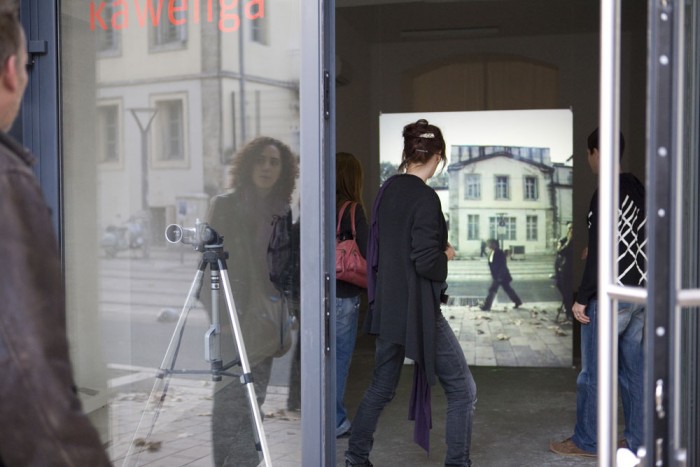
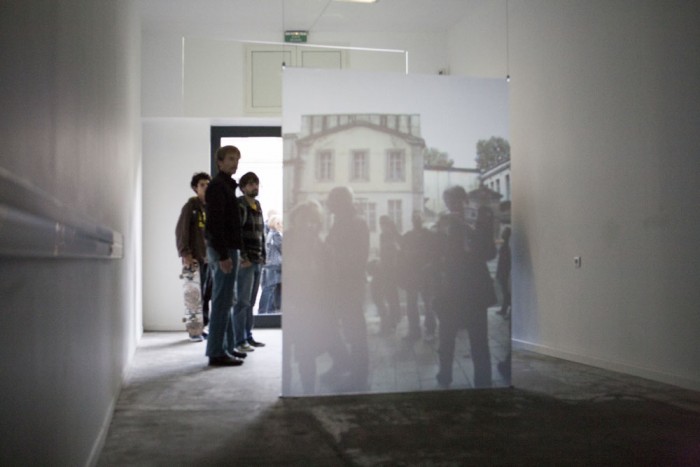
Point d’orgue was created in 2009 within the frame of a residency at Kawenga (Montpellier, FR).