Monthly Archive for November, 2000

The Nibelungen Treasure

Interactive installation, 2000
Olivier Auber, Emmanuel Berriet, Thierry Fournier

The Nibelungen Treasure is based on the medieval text of the Nibelungen Lied and the myth it has become: an invisible monument in the german history and in the city of Worms, where the Lied takes place.?Visitors entering the installation see the city of Worms from underneath, as if the ground were transparent. Beneath their feet, the bottom of the world stretches into infinity like an impossible chaos. In this space, between the town and the bottom of the world, develops the imaginary space of the myth. ?

The visitor moves intuitively in this space, as if he were floating, by means of a circular joystick that he can manipulate in all directions. All the visual and musical elements are generated in real time, in relation to the visitor’s movements on the interface. All these elements generate the elements of an oratorio for 4 singers and electronic music that is built up and constantly modified. Each visitor constructs his or her own version of the musical piece, whose score is therefore both geographical and spatial. The visitor influences the content and the form of the score, and the way its parts link and mix. The instrumental gesture of the visitor leads into an experience of time: a continuous circulation in the inner matter and construction of music. The music and soundtrack of the whole museum has been also created within the same project.

Performers: Armelle Orieux (soprano), Laura Gordiani (alto), Jean-François Chiama (tenor), Eric Guillermin (bass).

Video recording and musical extracts from the installation:

Audio clip: Adobe Flash Player (version 9 or above) is required to play this audio clip. Download the latest version here. You also need to have JavaScript enabled in your browser.

Audio clip: Adobe Flash Player (version 9 or above) is required to play this audio clip. Download the latest version here. You also need to have JavaScript enabled in your browser.

Audio clip: Adobe Flash Player (version 9 or above) is required to play this audio clip. Download the latest version here. You also need to have JavaScript enabled in your browser.

Audio clip: Adobe Flash Player (version 9 or above) is required to play this audio clip. Download the latest version here. You also need to have JavaScript enabled in your browser.

Audio clip: Adobe Flash Player (version 9 or above) is required to play this audio clip. Download the latest version here. You also need to have JavaScript enabled in your browser.

Audio clip: Adobe Flash Player (version 9 or above) is required to play this audio clip. Download the latest version here. You also need to have JavaScript enabled in your browser.


Core

Electronic piece, 2000

(…) it’s all about time and movement and space they all form the same patterns together at the same time so it makes the heart beat faster and the breath speed up and the body warm up and it generates heat like fire so thats where the movement and gestures relate (…) its all about air and breath and breath generates life and allows more space opens up more space in the body in the pores enters air and water and fire they mingle a continuous spiralling of the spine spiral waves waves continuous waves (…)

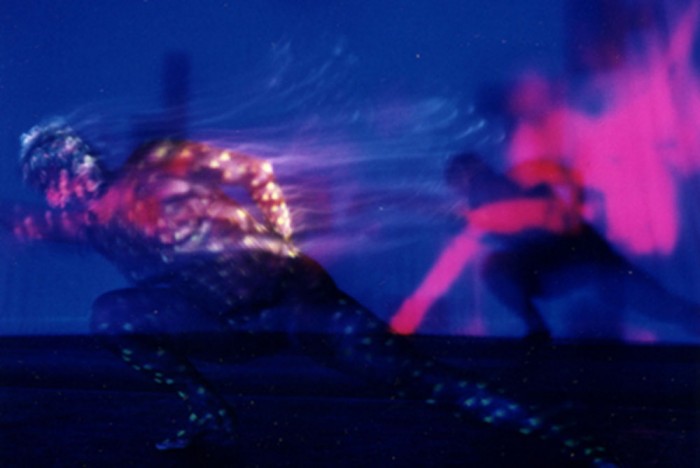
Core was composed after an interview with the Canadian dancer and performer Alyson Wishnovska, talking about her sensation during movement and dance.

The composition of the piece is written like a counterpoint between spoken voice and electronics: vibration and momentum, changes from stillness to movement, phases of keeping and losing control, in the very substance of the music. The piece is very gestural, where the interplay with the computer and the analog filters plays an important part in the concert.

Related to: The Moult of the Angel, To Agrippine, Electric Bodyland – See also the credits page.

Extracts :

Audio clip: Adobe Flash Player (version 9 or above) is required to play this audio clip. Download the latest version here. You also need to have JavaScript enabled in your browser.

Audio clip: Adobe Flash Player (version 9 or above) is required to play this audio clip. Download the latest version here. You also need to have JavaScript enabled in your browser.

Architecture of Paradise

Musical piece for 4 voices and electronics, 2000

Architecture of Paradise is a five section piece for 4 vocal soloists and electronics, created within Marie Sester’s installation presented at the SFMOMA in 2002. The piece is based on excerpts of Plato’s Timeus-Critias, which describes the role and story of Atlantis. The text is sung in its English version, by the soprano and alto. It is read in English and French by the two actresses. Beyond its original context, it evokes the concept of an ideal city, and its consequences in matters of political domination – considerations which remain absolutely topical.

The piece develops a circular tension between several parts: the soprano-alto duo, the intimate reading of the text by the actresses, the electronics (oscillations, filters and saturations) and the real time transformations of the voices.

Performers: Armelle Orieux (mezzo-soprano) Laura Gordiani (alto), Vanda Benes et Lyndee Mah (spoken voices). Related to: Siren, Ping-Pong, The Nibelungen Treasure, Core – See also the credits page.

Extracts:

Audio clip: Adobe Flash Player (version 9 or above) is required to play this audio clip. Download the latest version here. You also need to have JavaScript enabled in your browser.

Audio clip: Adobe Flash Player (version 9 or above) is required to play this audio clip. Download the latest version here. You also need to have JavaScript enabled in your browser.