Sightseeing

Video, 1080p with sound, 8′, 2018-2026
Network installation with live webcam and mp3 sound file (mp3, 8′), 2018-2026

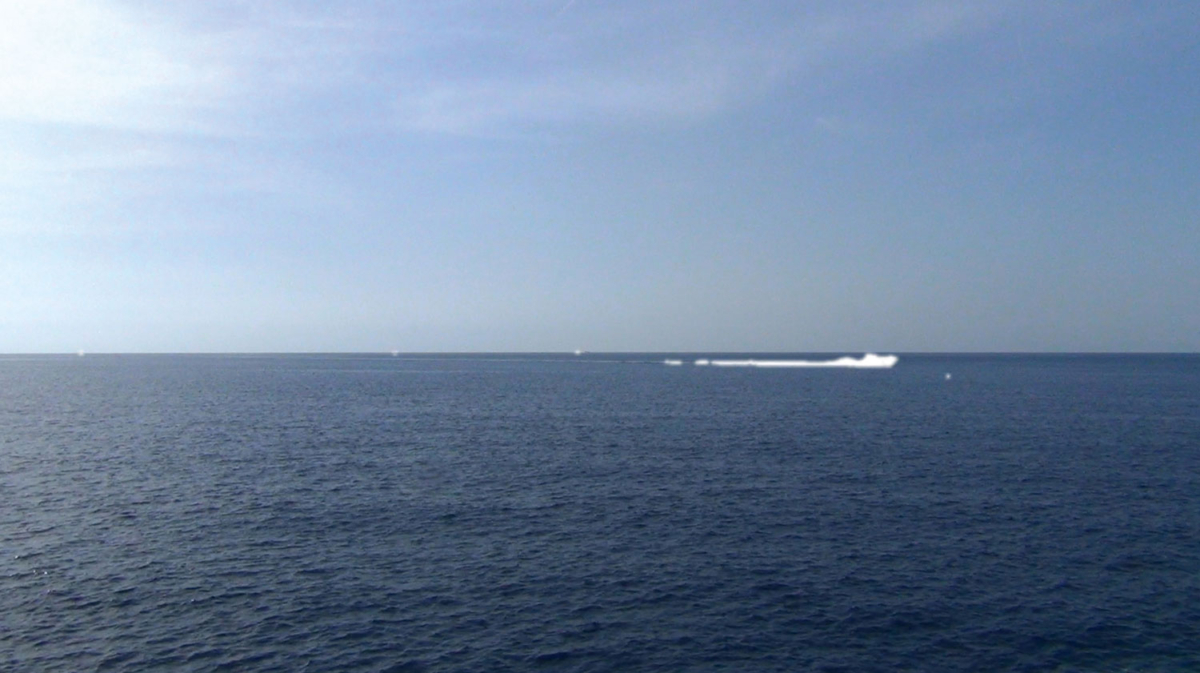
A surveillance camera films a beach and burns out. We hear its voice, as if it were alive. Its level of intelligence has led it to doubt and no longer know what to do (“Damn. I have a discrimination problem”): What is it? What should it be looking at? What constitutes suspicious behavior? What is its purpose?

It no longer understands anything, evoking both the overexploited click workers who feed AI and the “bullshit jobs” described by David Graeber.

Penser voir was created at the invitation of the Acoustic Cameras project, which invites artists and musicians to invest in live webcam feeds from around the world, adding sound or musical creations to them.

The Penser voir project consisted of reversing this protocol, making the camera itself the subject of the work and giving it a voice. The work can therefore be viewed live on the Acoustic Cameras website and in video form, as above.

*

Penser voir has been exhibited regularly in France and abroad since 2018: Carte blanche CAPA Aubervilliers 2018, Théâtre du Granit 2020, Experimenta Grenoble 2020, Festival Ososphère 2022, ISEA Barcelona 2022, Maquinas Misticas Madrid 2022, École supérieure d’art d’Aix en Provence 2023.

Lacunes

4K video, 10’25, 40-inch screen, music and direction by Thierry Fournier, 2025.


Lacunes, video, 4K, 2025 (excerpt)

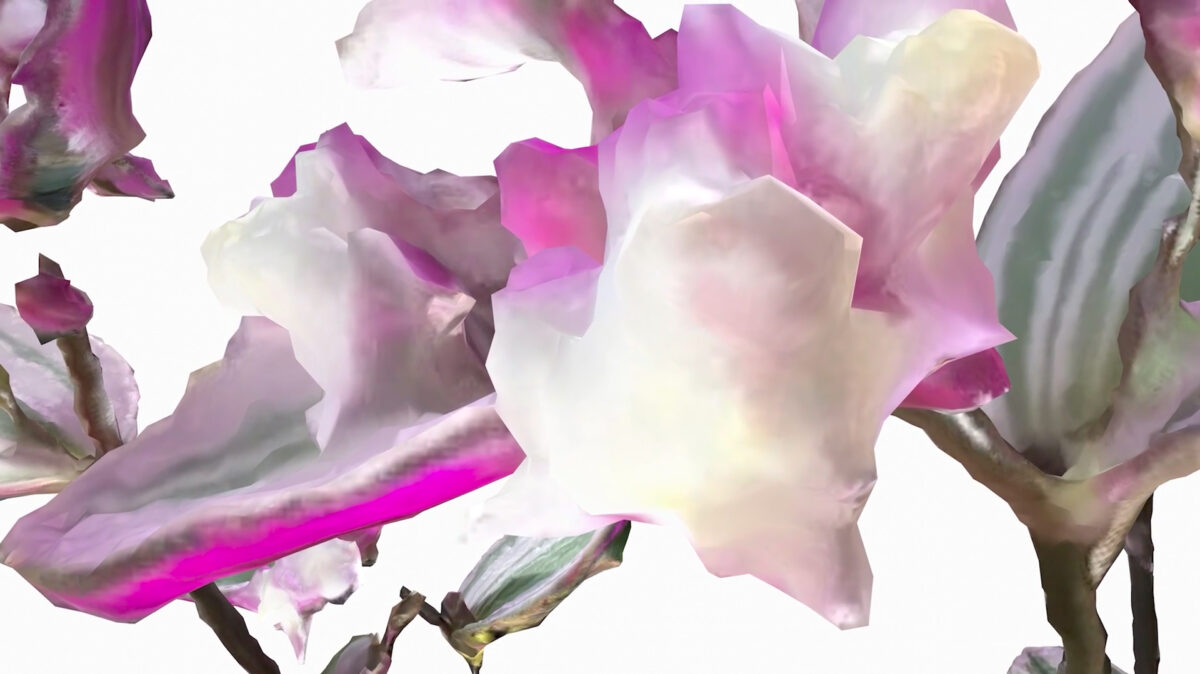
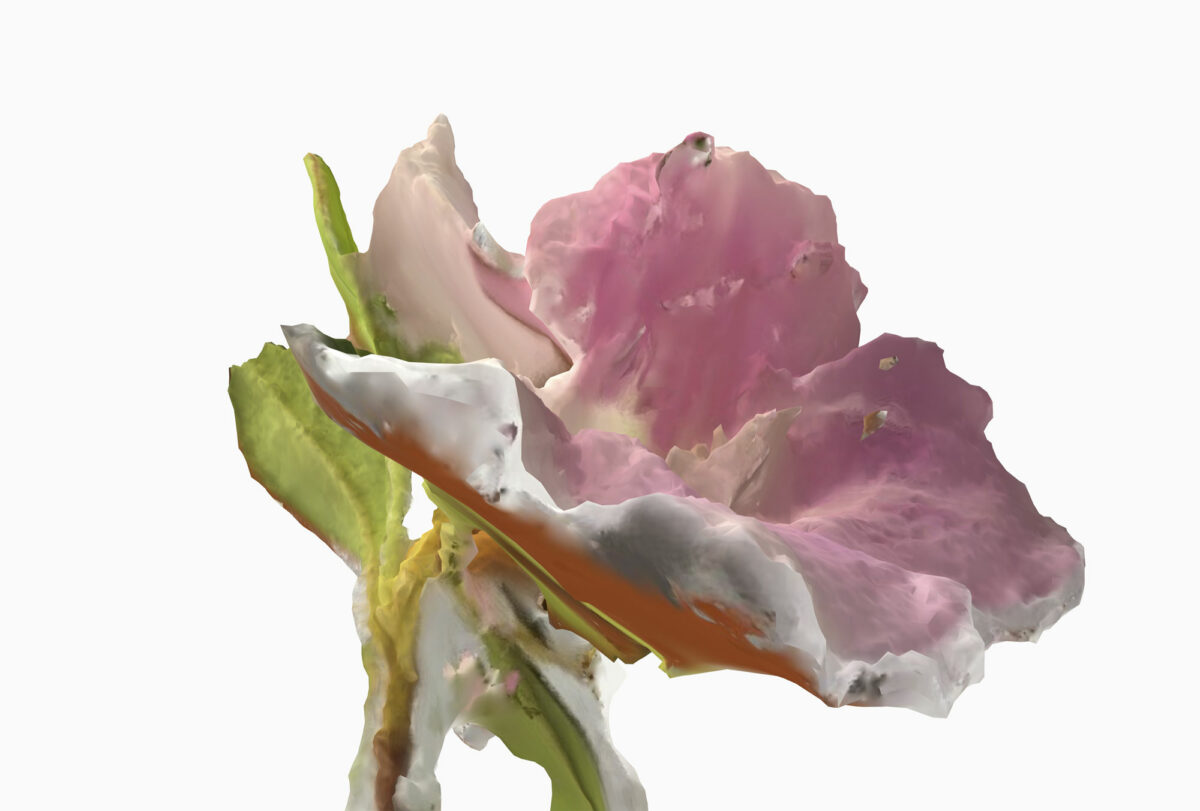
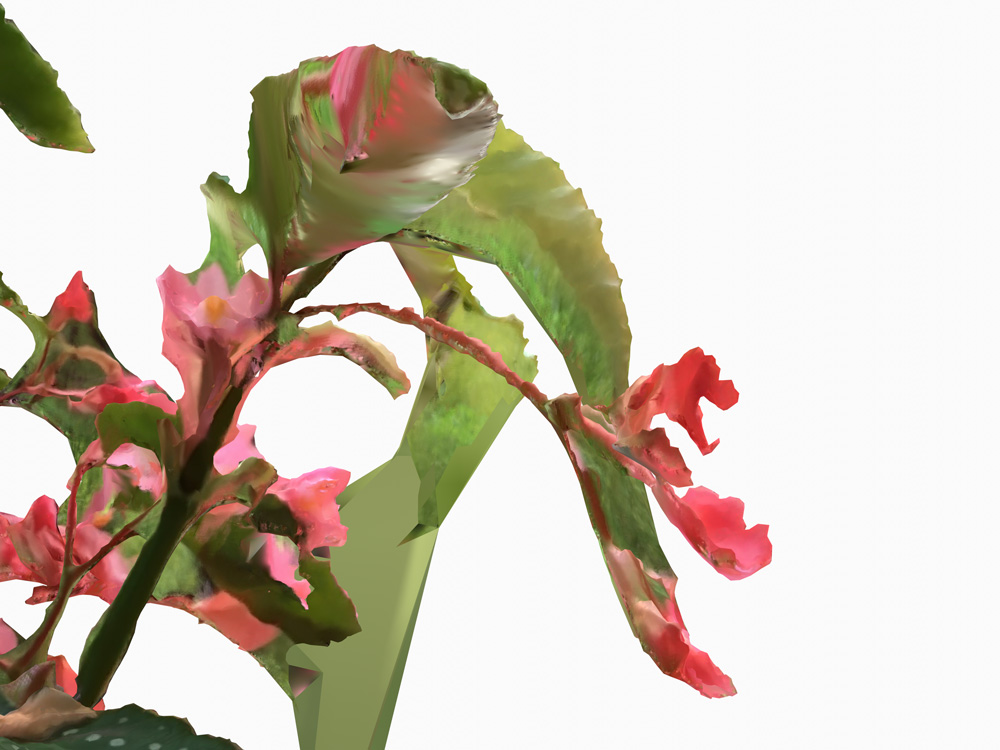
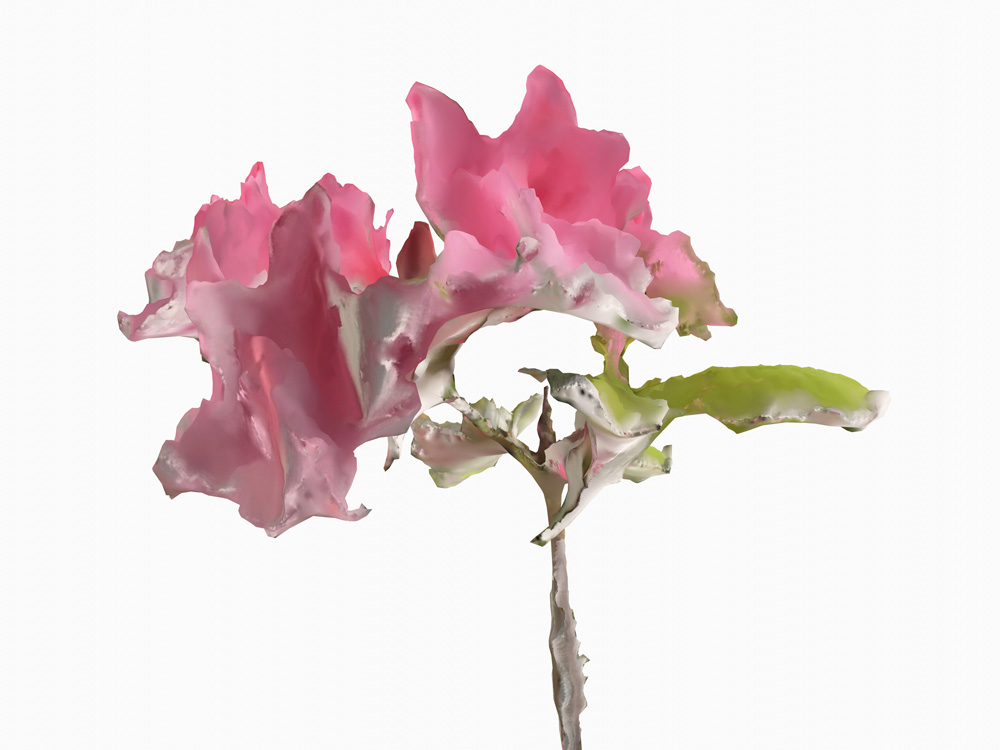
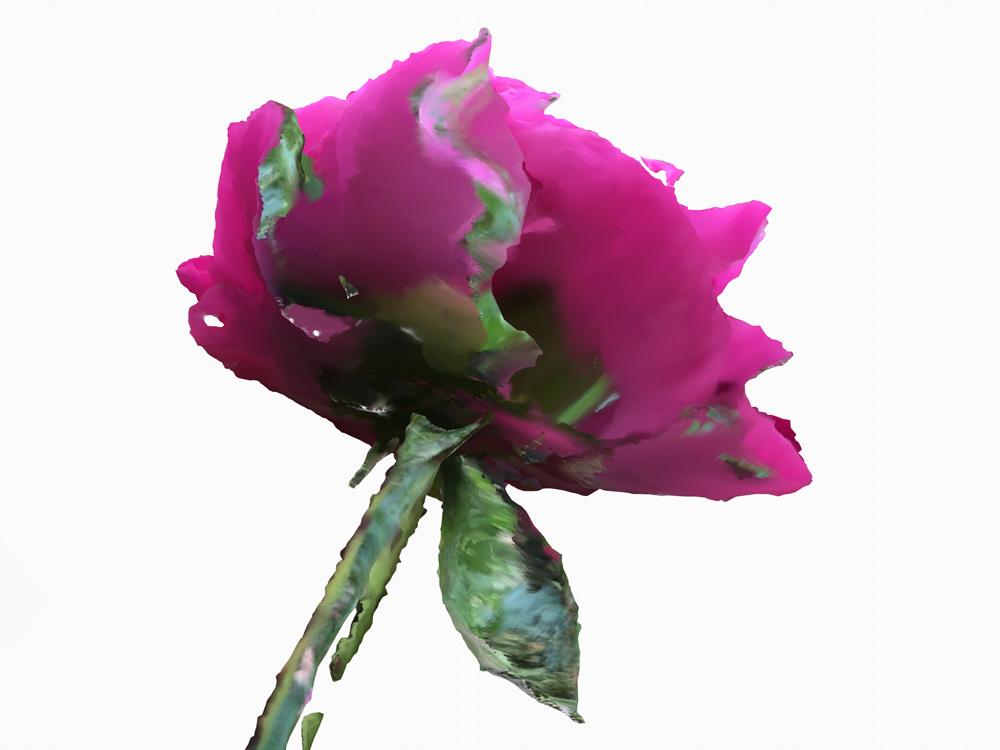
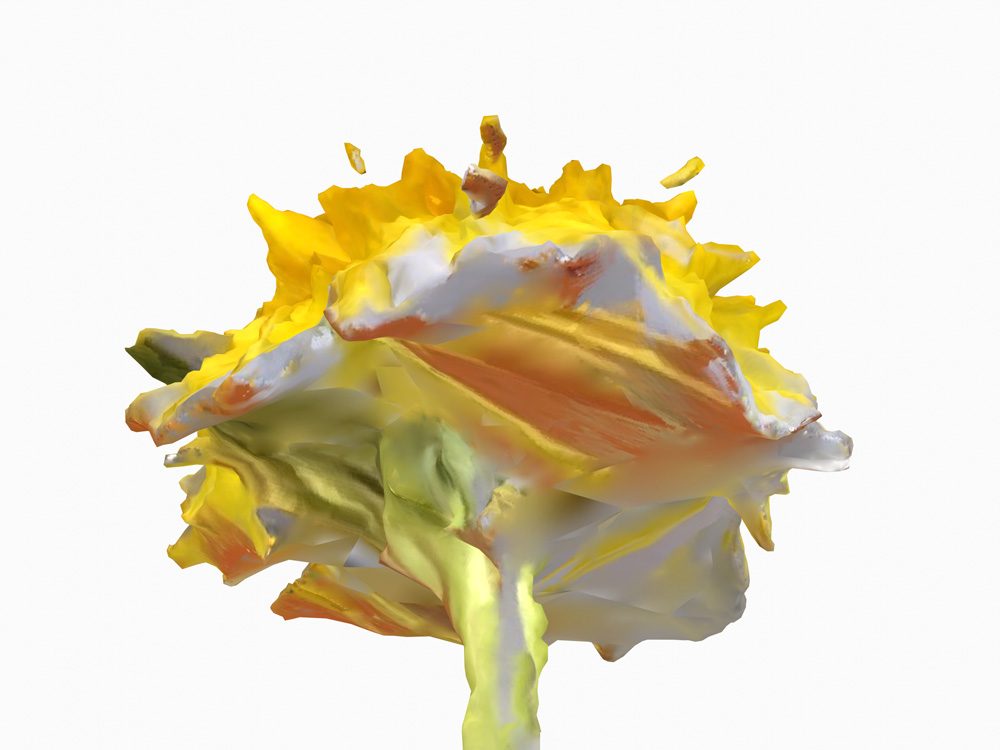
Representations of plants are most often two-dimensional: herbariums, botanical drawings, photographs, etc. The Lacunes project proposes to approach the representation of flowers as organisms, considering their space and physicality.

The flowers are scanned in 3D using a photogrammetry device: around 200 photographs are taken of each flower, from which a program reconstructs a 3D model, from which the Lacunes images are then extracted without retouching. These images are also flat, but they can be viewed from any angle in the 3D model.

However, the inability of this device to reproduce all the details of the flowers, particularly the areas hidden from the lens, generates gaps, which the program compensates for by creating interpolations of shape and color. A pictorial gesture then appears, in the signature of the algorithm and its own limitations in representing reality. This is where the “gaps” that give the project its title appear: the limits of the machine’s vision, which are also those of human vision. These flowers become three-dimensional organisms, in a vision that is both highly detailed and uncertain, raising the question of their corporeality.

The film Lacunes re-enacts the non-human nature of this vision, creating an automated journey through a program within a 3D model of a mass of flowers (a spider plant, Tradescantia zebrina). The organic plant body becomes a landscape: space no longer has scale, movement is not human. The music, meanwhile, unfolds an inner universe, made up of breaths, creaks, and resistance, which extends the organic nature of what is filmed.

Lacunes

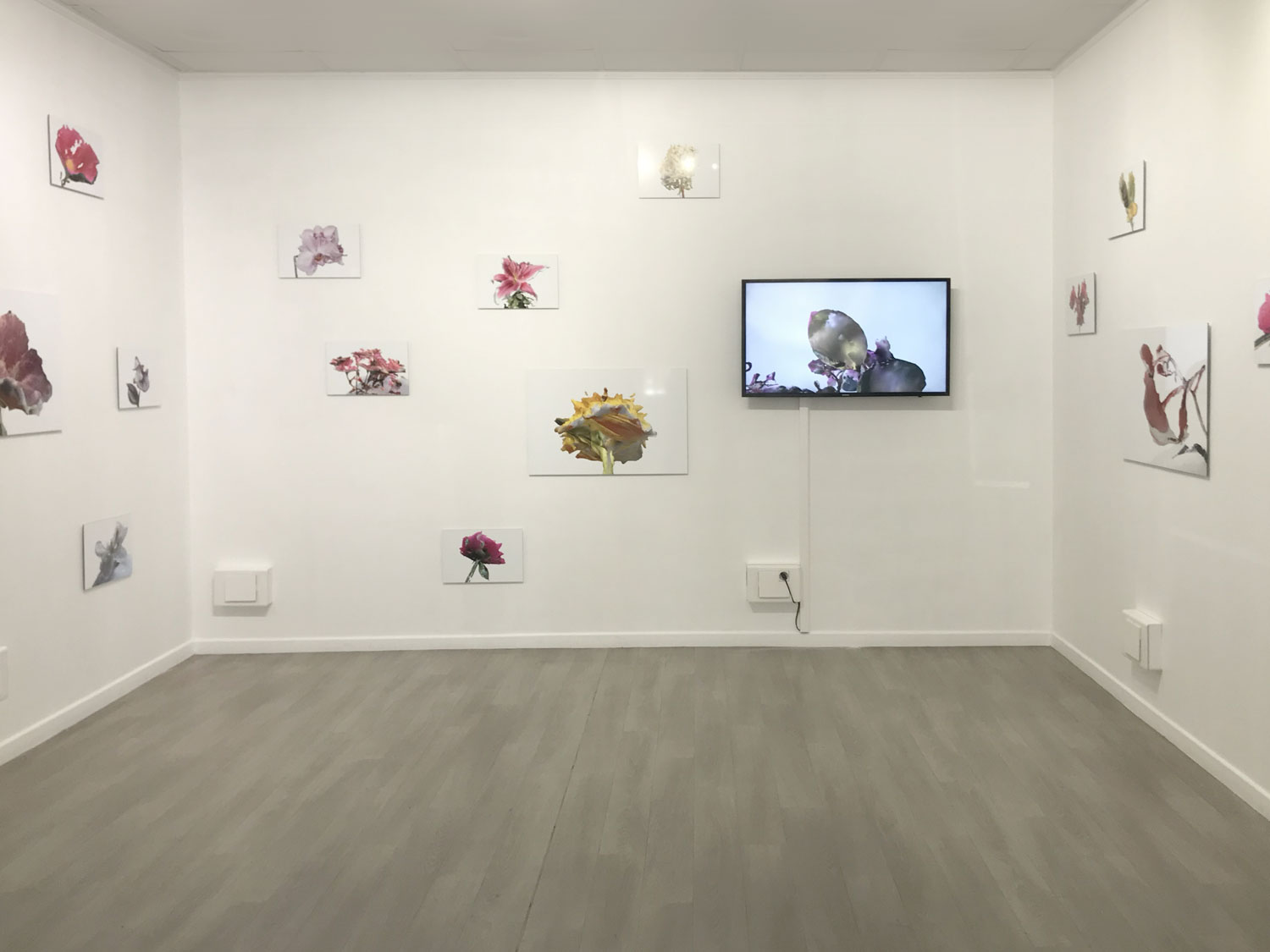
Series of giclees on Hahnemühle Bamboo 290g paper mounted on Dibond, dimensions 24 x 36 and 48 x 72 cm, 2025. HD film with sound, 10’25, directed and music by Thierry Fournier, 2023-2025.

Representations of plants are most often two-dimensional: herbariums, botanical drawings, photographs, etc. The Lacunes project proposes to approach the representation of flowers as organisms, considering their space and physicality.

The flowers are scanned in 3D using a photogrammetry device: around 200 photographs are taken of each flower, from which a program reconstructs a 3D model, from which the Lacunes images are then extracted without retouching. These images are flat in turn, but they can be taken from any angle in the 3D model.

However, the inability of this device to reproduce all the details of the flowers, particularly the areas hidden from the lens, generates gaps, which the program compensates for by creating interpolations of shape and color. A pictorial gesture then appears, in the signature of the algorithm and its own limitations in representing reality.

This is where the gaps that give the project its title appear: the limits of the machine’s vision, but also those of human vision. These flowers become three-dimensional organisms, in a vision that is both highly detailed and uncertain, raising the question of their corporeality.

*

Lacunes is linked to the place and the project Commune présence curated in the Perche area by Juliette Fontaine and Thierry Fournier. Production of prints: Biennale Siana – Printing: Studio Aza – 3D: Thomas Gendre.

Thierry Fournier, Lacunes, inkjet prints on Canson art Gloss (excerpts) © Thierry Fournier / ADAGP

Thierry Fournier, Lacunes, exhibition view, SIANA 2025 © Thierry Fournier / ADAGP

Only Richard

Feature film, 1h41, 1:2.39, 2023, French + English subtitles.
Directed by Thierry Fournier
After Richard II by William Shakepeare, translation François-Victor Hugo (1872). Adaptation and stage direction Thierry Fournier and Jean-François Robardet.

Cast: Emmanuelle Lafon (Richard’s voice), Pierre Carniaux, Eloïse Chabbal, Aurélie Claude, Charles Gonin, Mathieu Guigue, Sophie Jaskierowicz, Marianne Kaldi, Emilie Legret, Alexia Mérel, Claire Moindrot, Judith Morisseau, Tram Ahn Ngô, Sandrine Nicolas.

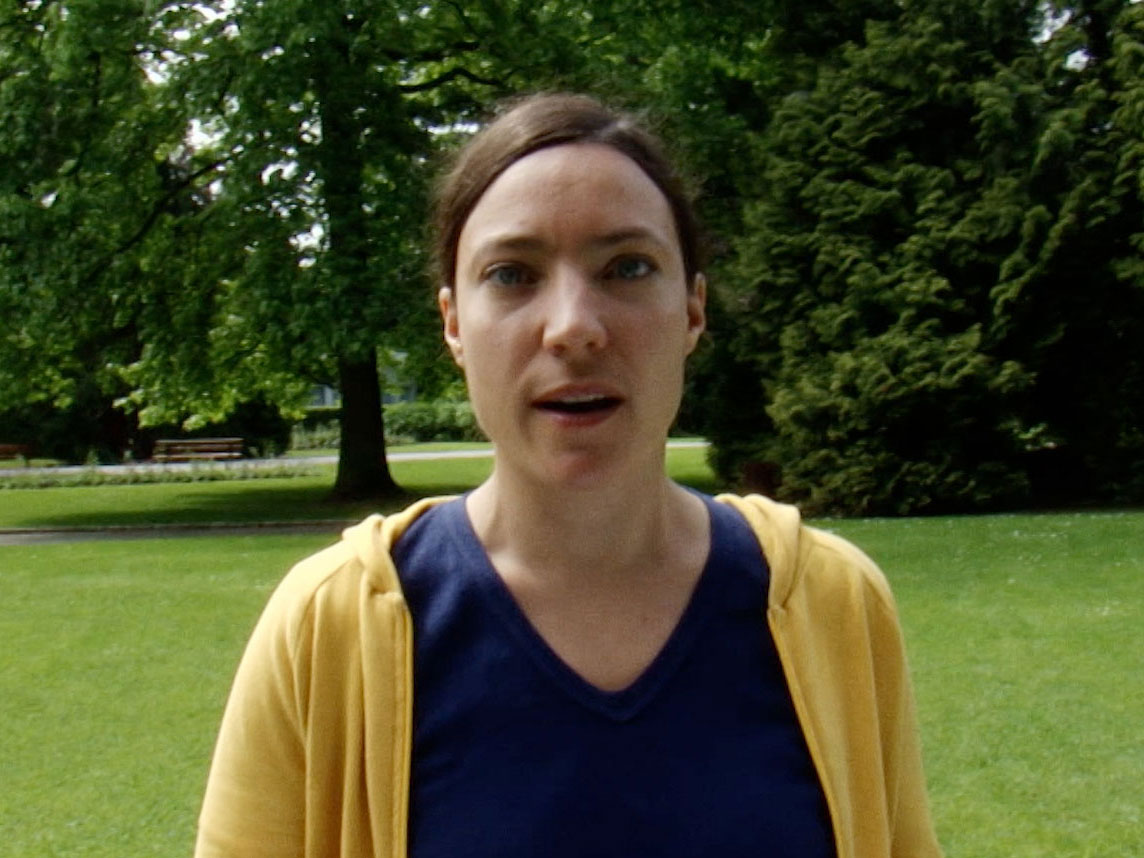
William Shakespeare’s “Richard II” depicts the narcissistic delirium of a solitary power. The first feature film by visual artist Thierry Fournier, “Only Richard” stages it by confronting Richard, in subjective camera and whose voice is played by Emmanuelle Lafon, and his people who address him, embodied by actors and students, in a park and a forest.

Shot in a few days with a single camera, a great economy of means and performers reading as if in an assembly, this film proposes a poetic and political confrontation of which the screen would be both the mirror and the interface. A confrontation unfolds between actors and amateurs, a machine and living beings, non-humans and humans, the divine and the profane. It raises multiple questions about power, technology and politics, gender, the manipulation of speech and image, presence and absence in the world.

Production: Thierry Fournier & Pandore Production, with support from Ensad Nancy, Région Lorraine, Chartreuse-CNES, Dicréam, Le Fresnoy studio National des Arts Contemporains.

The Unbeknownst

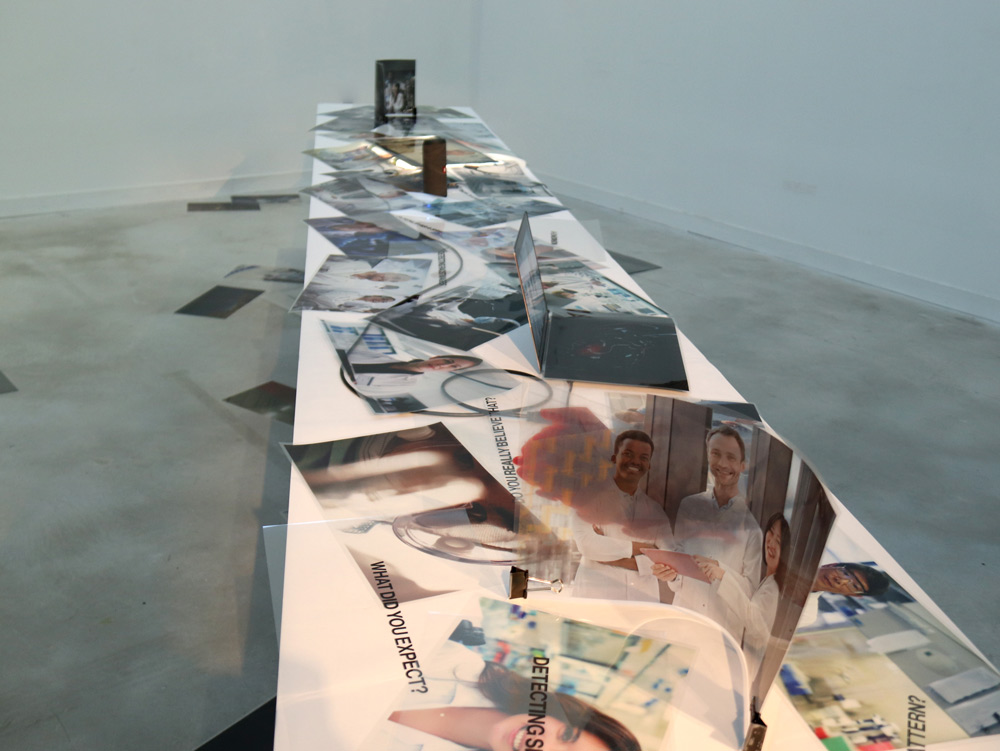
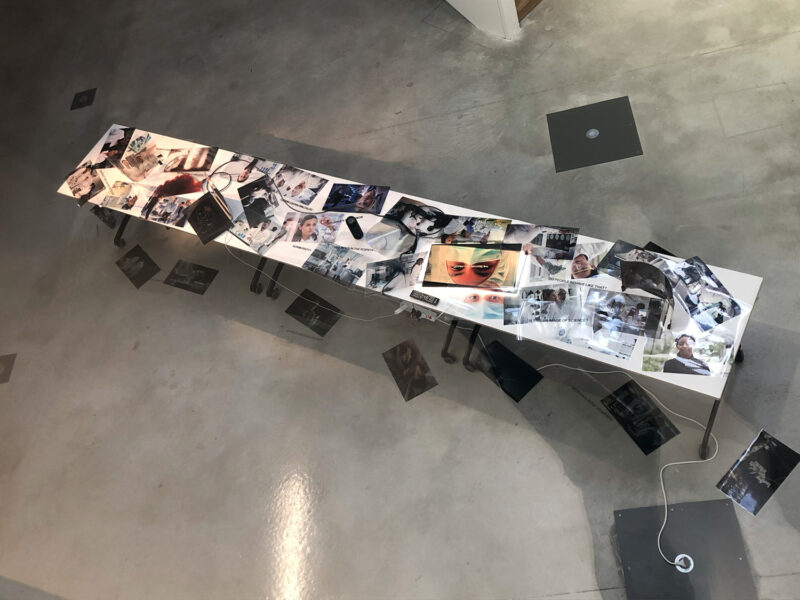
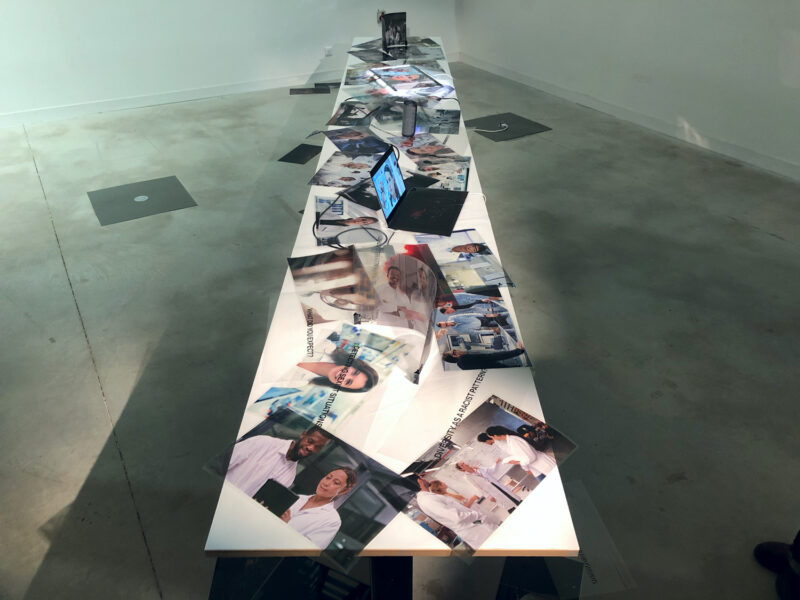
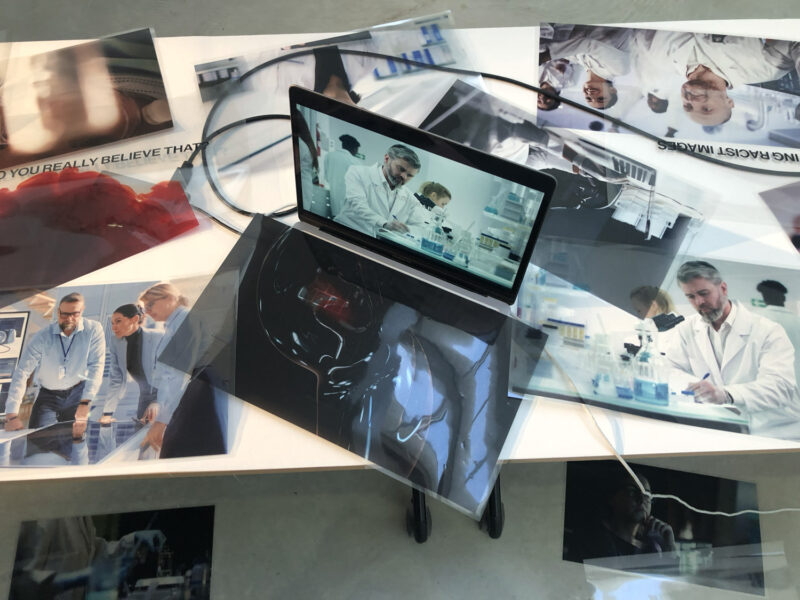
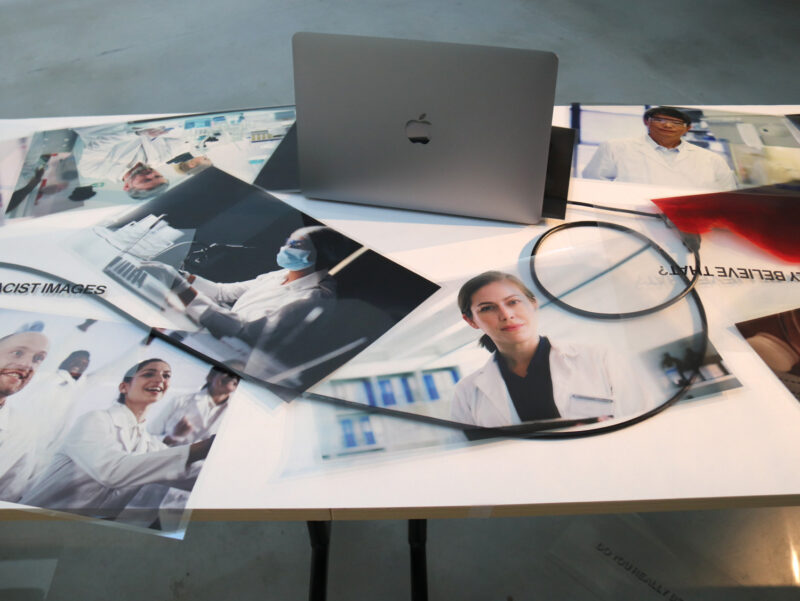
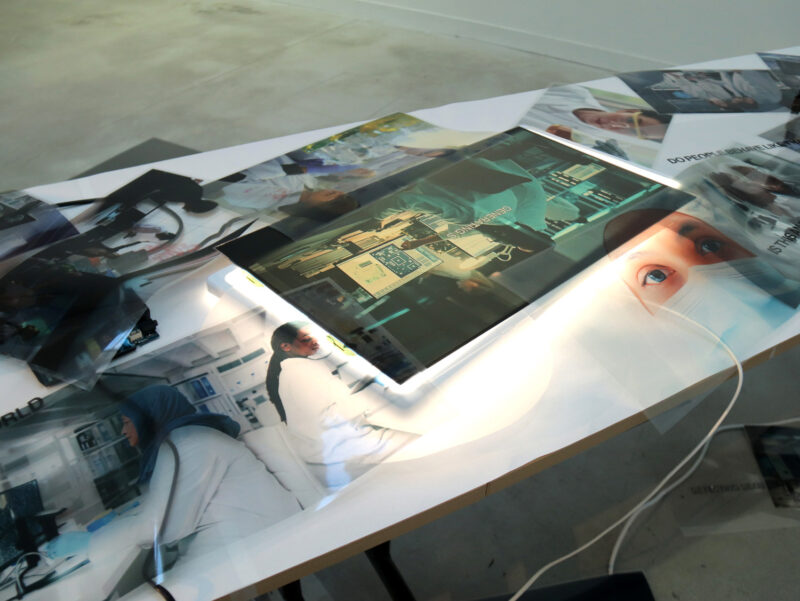
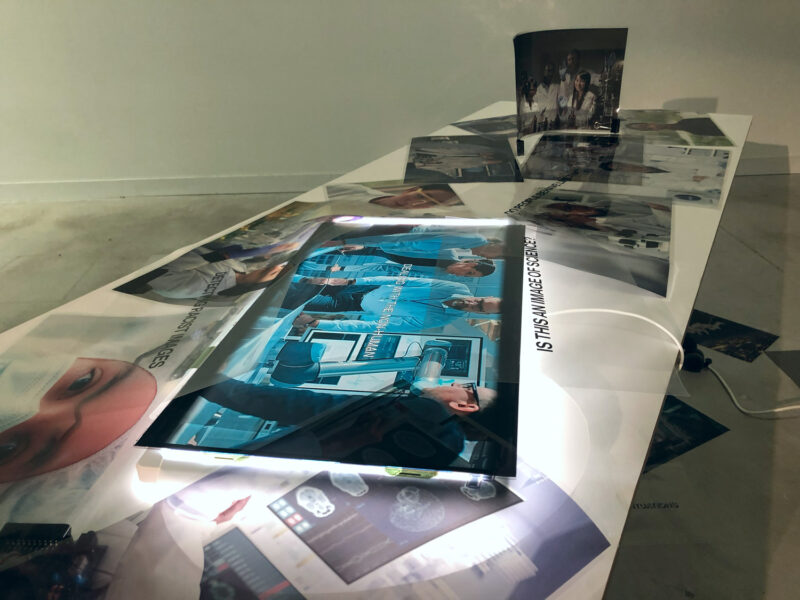
Installation: 4K generative film with sound, 24-inch recycled LCD screen, 60 x 40 cm LED plate, transparent prints, paper, tracing paper, adhesive, cables, laptop, bluetooth speaker, tables, 500 x 70 x 80 cm, 2022 .

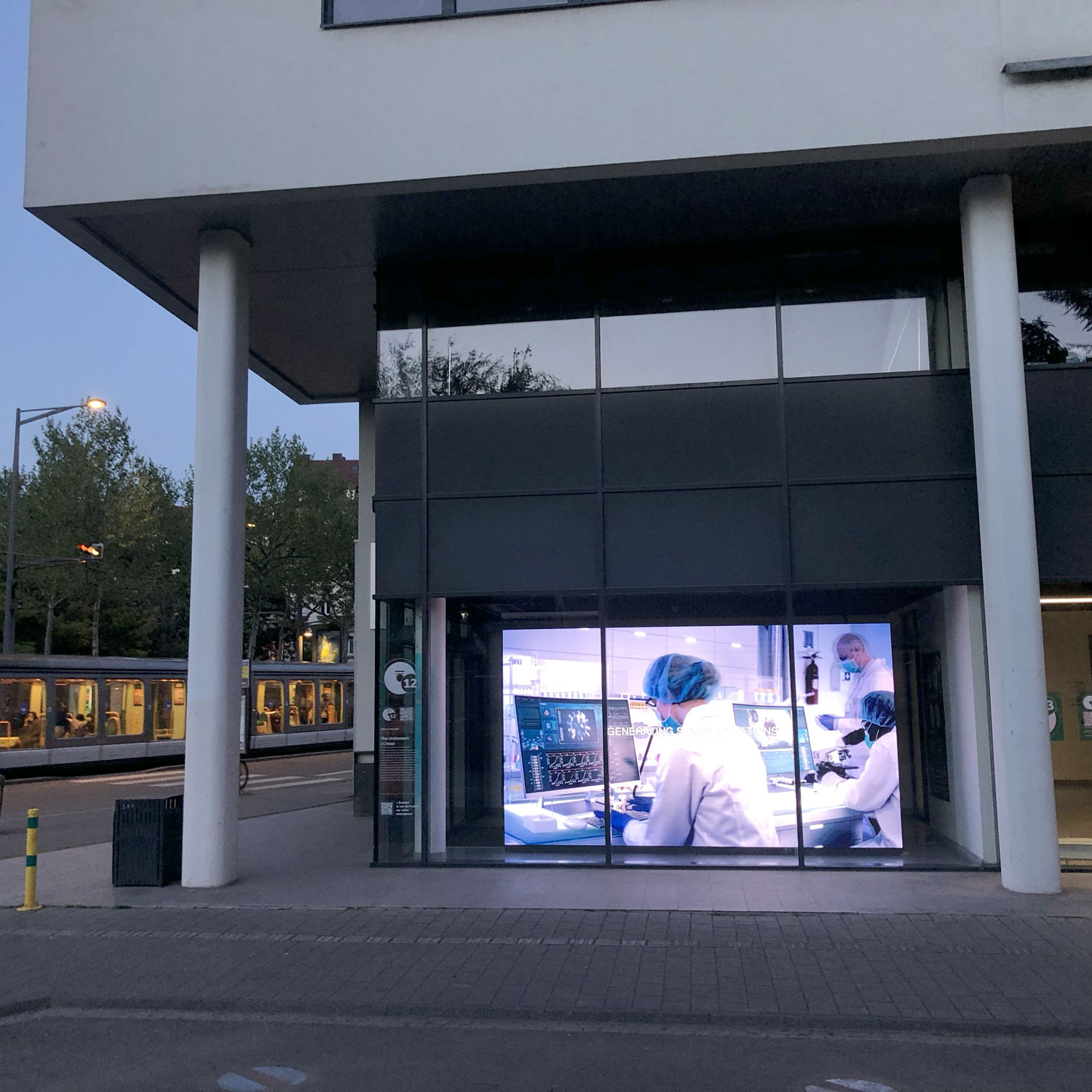
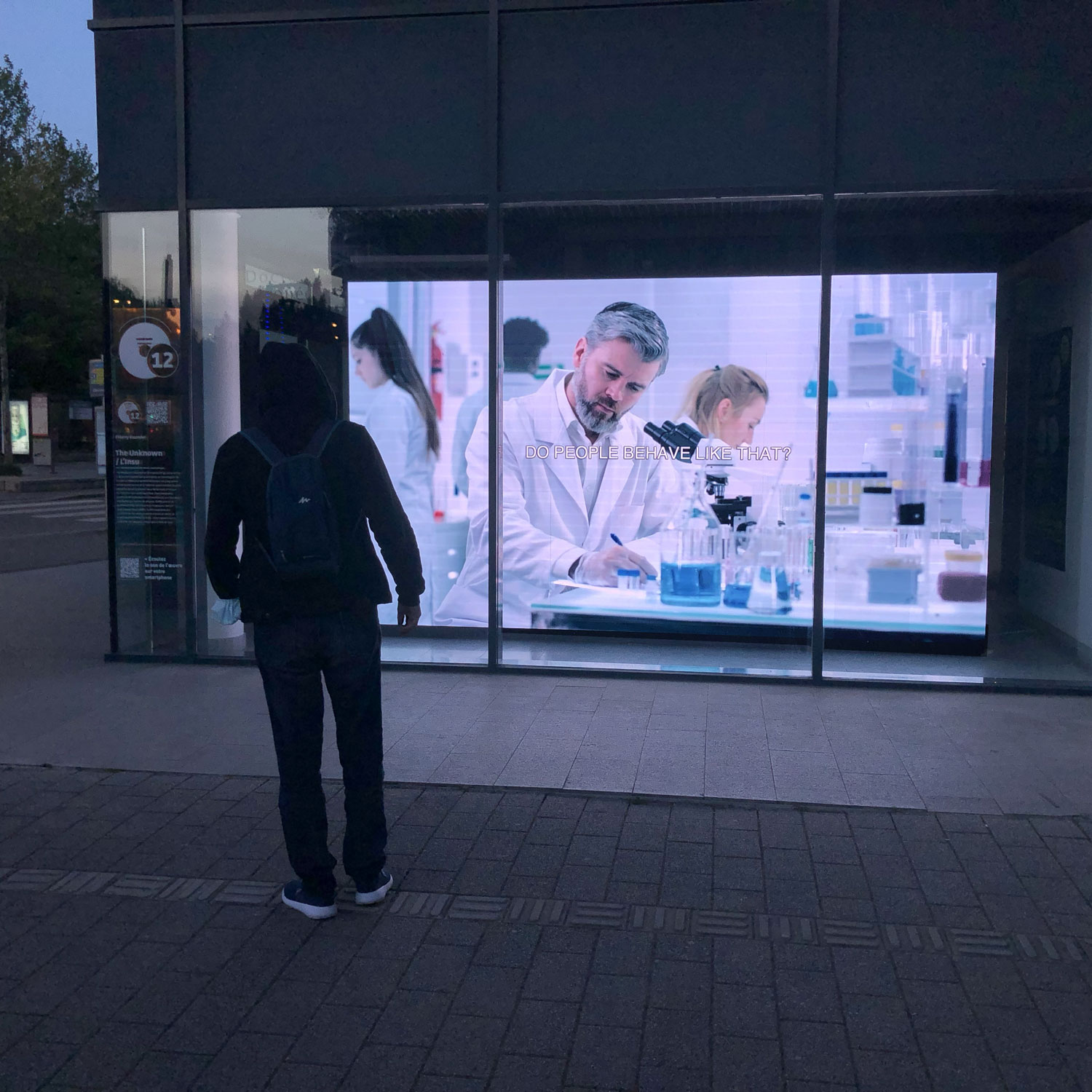
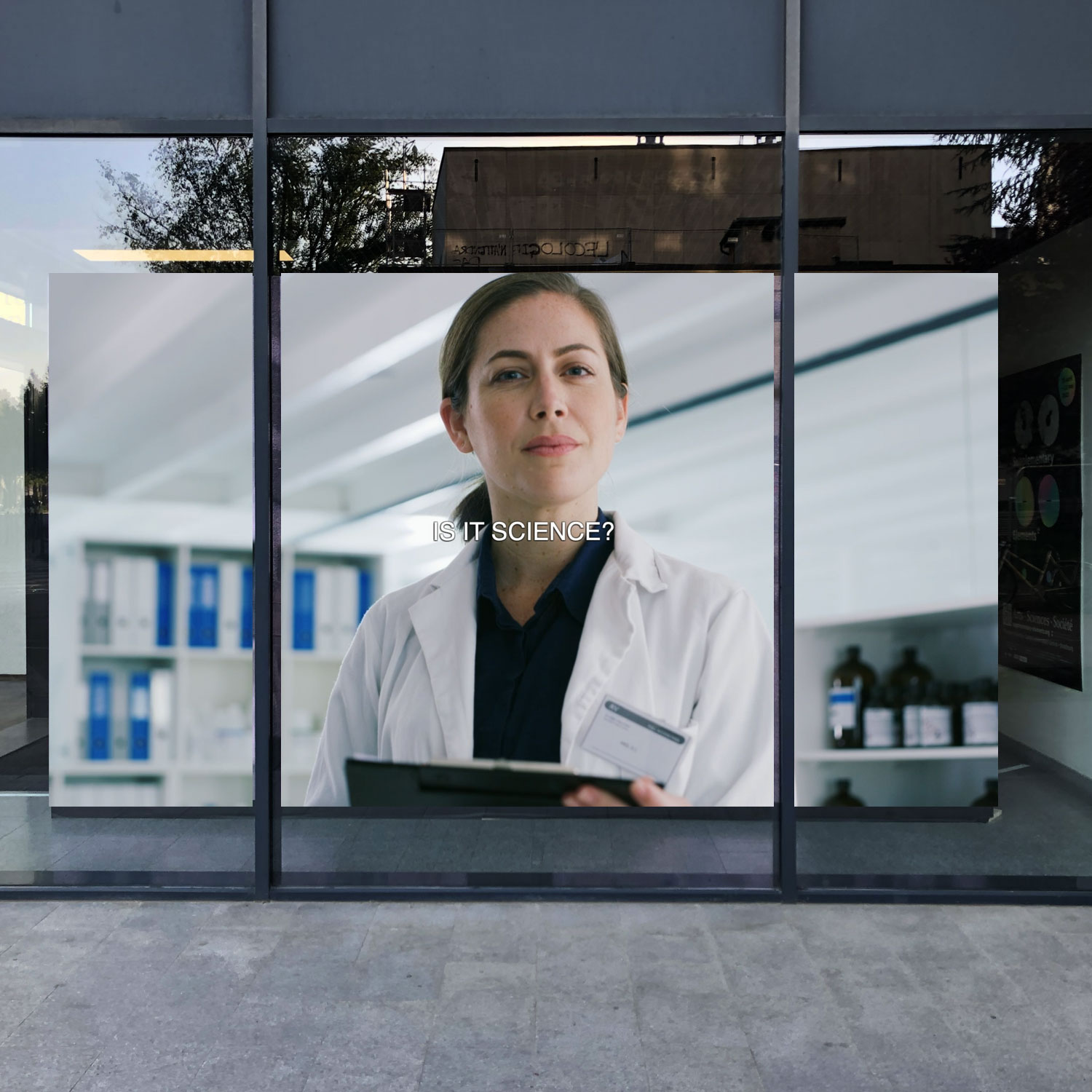
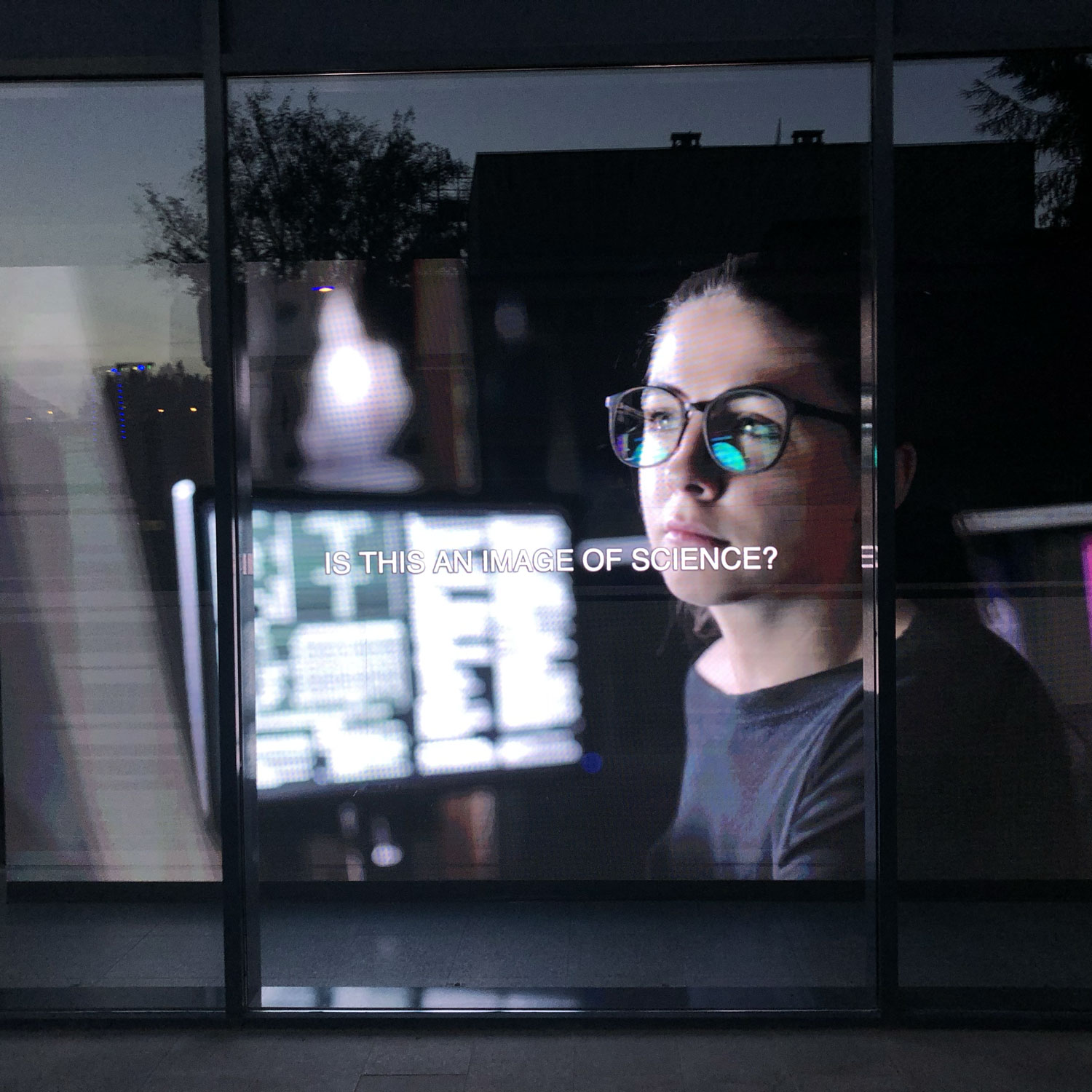
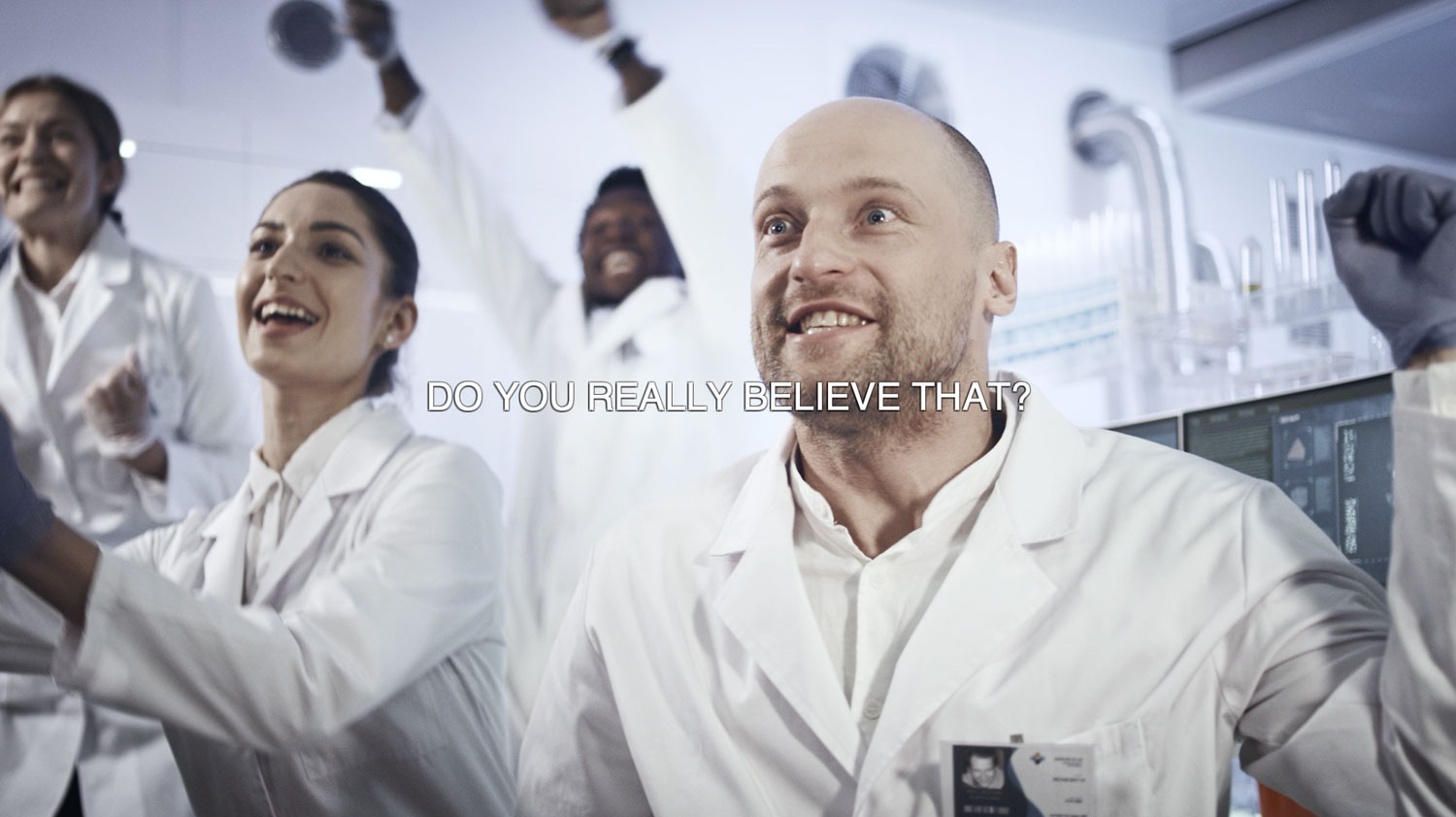
Unbeknownst addresses the ideologies conveyed about science and research by stock images.

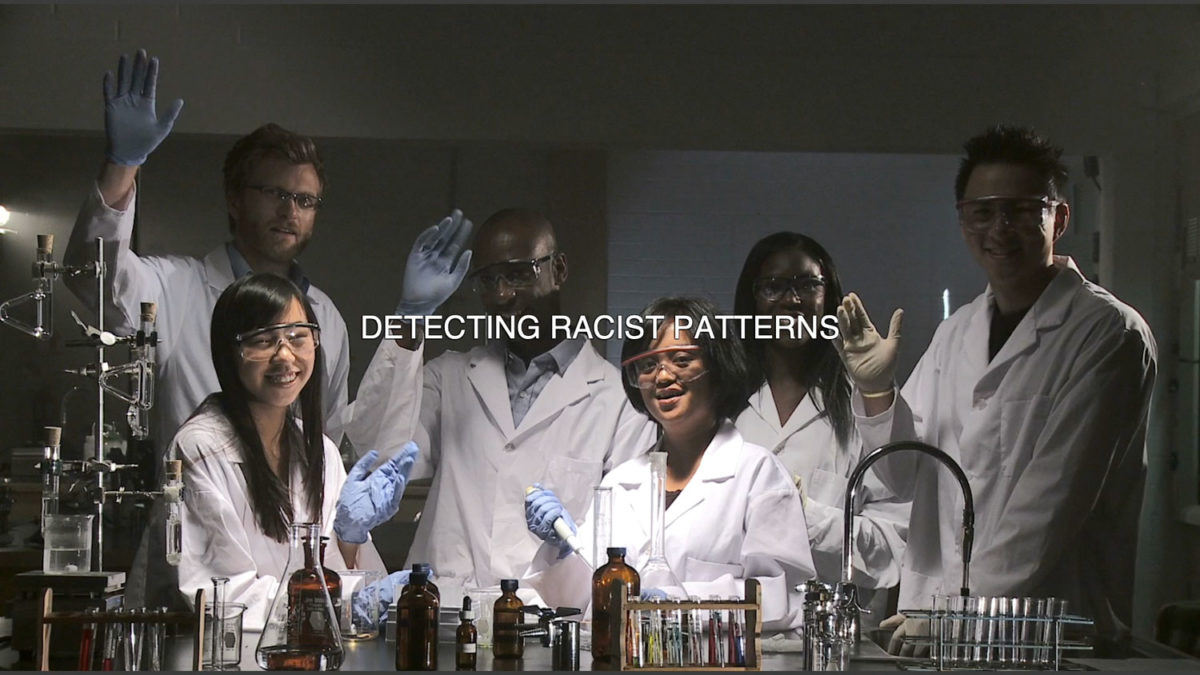
A generative program endlessly edits stock videos about science: laboratories, researchers, etc. Their slick and interchangeable, technicist and deceptively inclusive aesthetic could apply equally well to corporations or startups. These images, stripped of reality and of any conflict, convey an ideology of progress, efficiency and performance. On these videos, the film superimposes sentences that question them.

The installation presents this film on a very long table, on a laptop, a disassembled screen and 75 prints on transparencies of images from the film and sentences. It forms like a constantly renewed flow that would always be identical. What is the impact of these images? How do they contribute to a collective imagination of science and to the expectations of society?

The Unknown

The Unknown
Generative video, 4K, sound, infinite duration, 2022

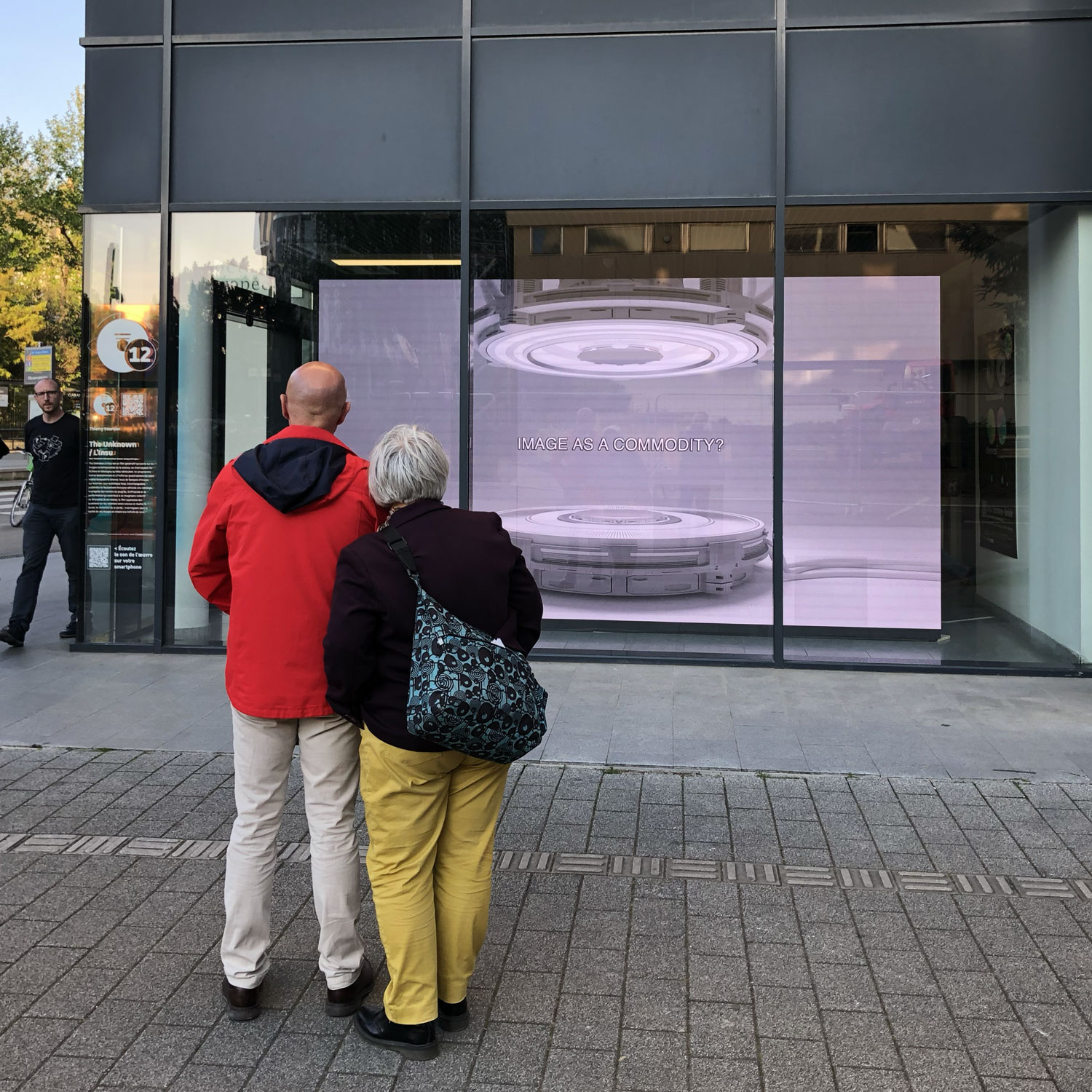
The Unknown is a generative film that questions the fictions and ideologies conveyed about science by image banks. A programme randomly and endlessly edits a large number of video shots from image banks evoking science: laboratories, researchers, gestures, images of space, etc. Their smooth, interchangeable, positivist and falsely inclusive aesthetics could just as easily be applied to companies. Like contemporary ‘mythologies’, these images, which are free of reality and conflict, convey an ideology, impregnated with notions of progress, efficiency and performance.

They also have a performative dimension and contribute to a collective imagination of science. The film superimposes questions on the relationship between science and reality, uncertainty, doubt, the search for truth… These texts do not respond to the images, but aim to put them in tension. The Unknown thus aims to question the relationships between science, images, the search for truth, and the notion of uncertainty. Are these images true or false, real or staged? In a post-truth era, how can we interpret them and what do they tell us about our expectations? How do our fictions and our research intertwine today? Do these images have a political dimension?

Extract from a video recording (please put the sound on) :

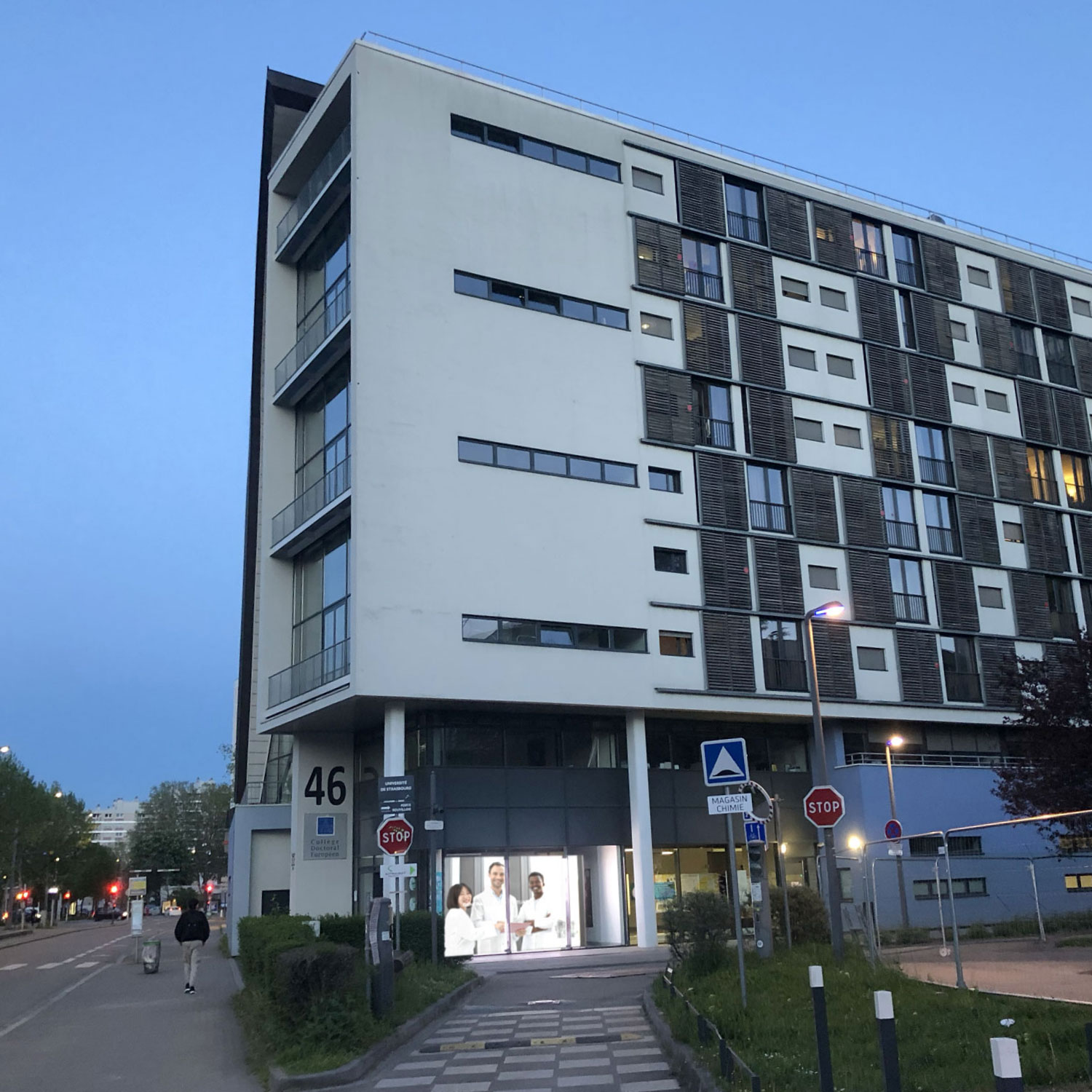
Production: University of Strasbourg.
In situ installation, group show Supplementary Elements, University of Strasbourg, April 25th – May 22th, 2022, curated by Emeline Dufrennoy

Ungrave

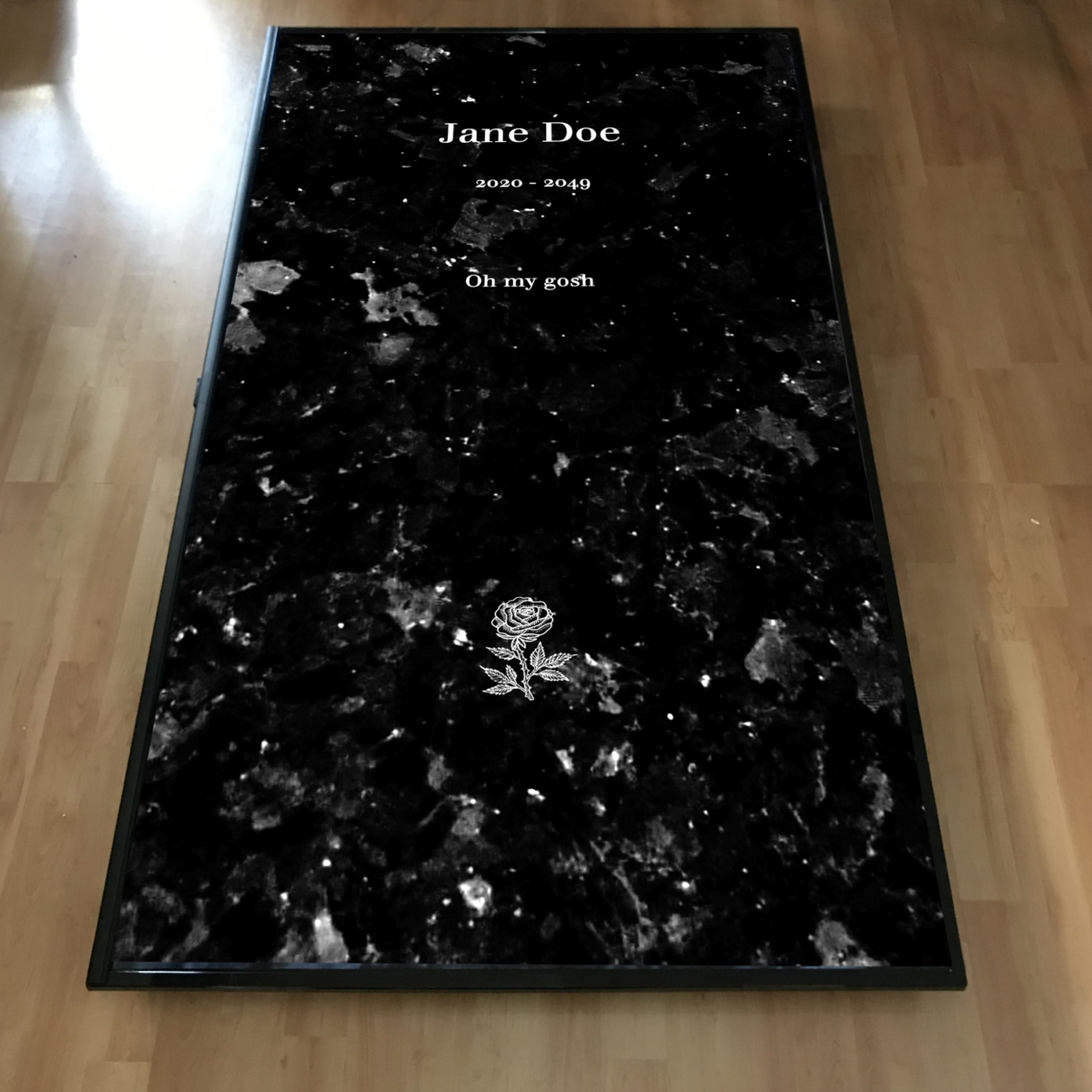
Installation: 65 inch LCD screen, USB key, wood, program-generated video (1080p, 14h), 145 x 80 x 8 cm, 2020

On the ground, a very large screen shows the image of a tombstone whose inscriptions are constantly being rewritten, as if it had remained alive. Its first name, dates and epitaph are constantly erased and rewritten, often very quickly.

While the dead are those who, by definition, never respond anymore, Ungrave establishes the fiction of a zombie death, whose technology would have perverted the very principle and which would continue to bug ad vitam æternam, constantly questioning its existence and the best way to sum it up. The project evokes ironically the transhumanist ideology of an unlimited rewriting of life, where everything would still be possible, even after death. It is also a vision of hell, where traditionally the souls continue to wander and act, without never being able to get this over with or finding peace.

The name on the tombstone is alternatively John or Jane Doe. The date of death varies constantly, but the date of birth is always 2020, evoking a person who is somehow already promised to a “becoming-program”, in the Deleuzian sense of the term.

Produced with the support of Biennale Chroniques, 2020

The Invisible Hand

Series of 8 digital images, fine art giclee print on dibond, 75 x 50 cm, 2020
Created from photographs and courtesy of NnoMan, Amaury Cornu, Benoît Durand, Anne Paq, Julien Pitinome, Kiran Ridley and Charly Triballeau.

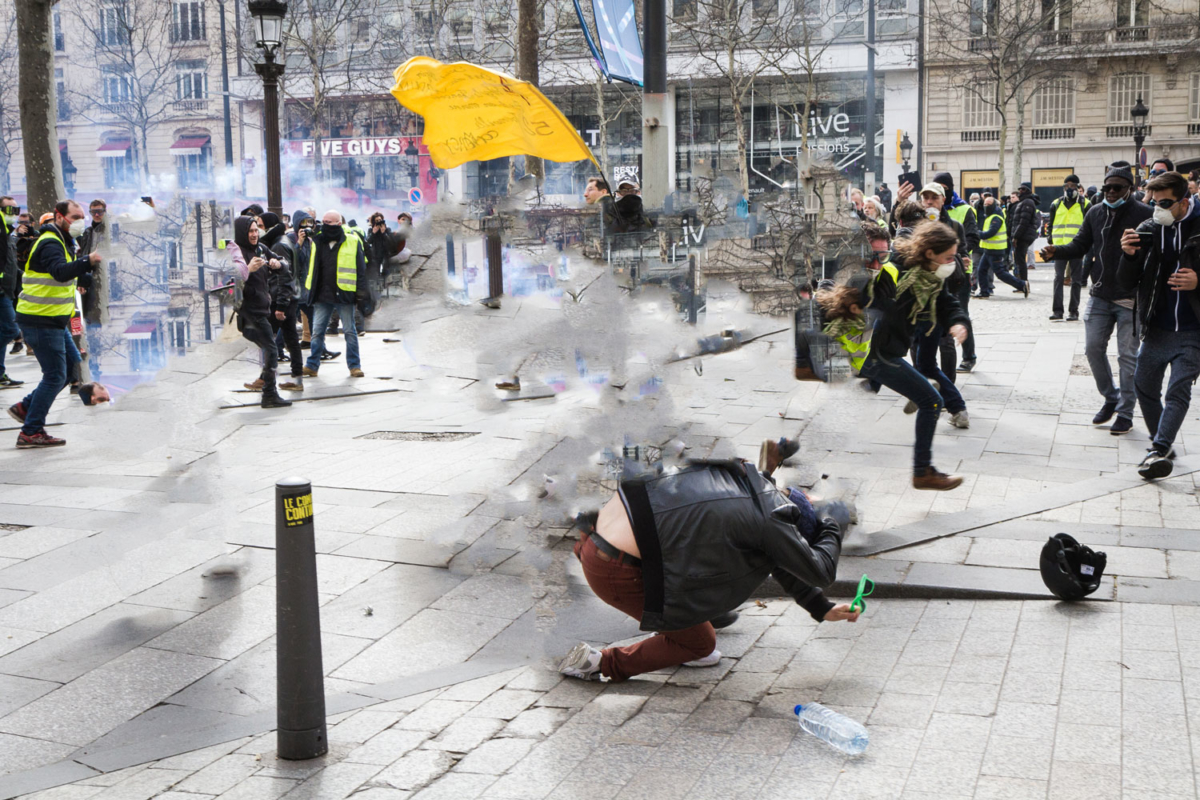
The Invisible Hand (La Main invisible) transforms press photographs that bear witness to police violence, completely erasing the police officers from the image. Raising the question of censorship and pretending to submit to it, the image shows people under the assault of spectral entities that no longer have bodies or faces. These bodies are then assaulted by spectral entities that are like a metaphor for wider violence – the term “invisible hand” evoking that of capitalism in particular.

This series has involved close collaboration with the original photographers. It has been exhibited many times since 2020 and also illustrates the special issue Manières de voir #182 of French political magazine Le Monde Diplomatique in May 2022, Feu sur les libertés / Fire on Freedoms.

Feature image : Thierry Fournier, La Main invisible #3, 2020, after a photograph by Amaury Cornu, Yellow vests demonstration, Paris, 2019
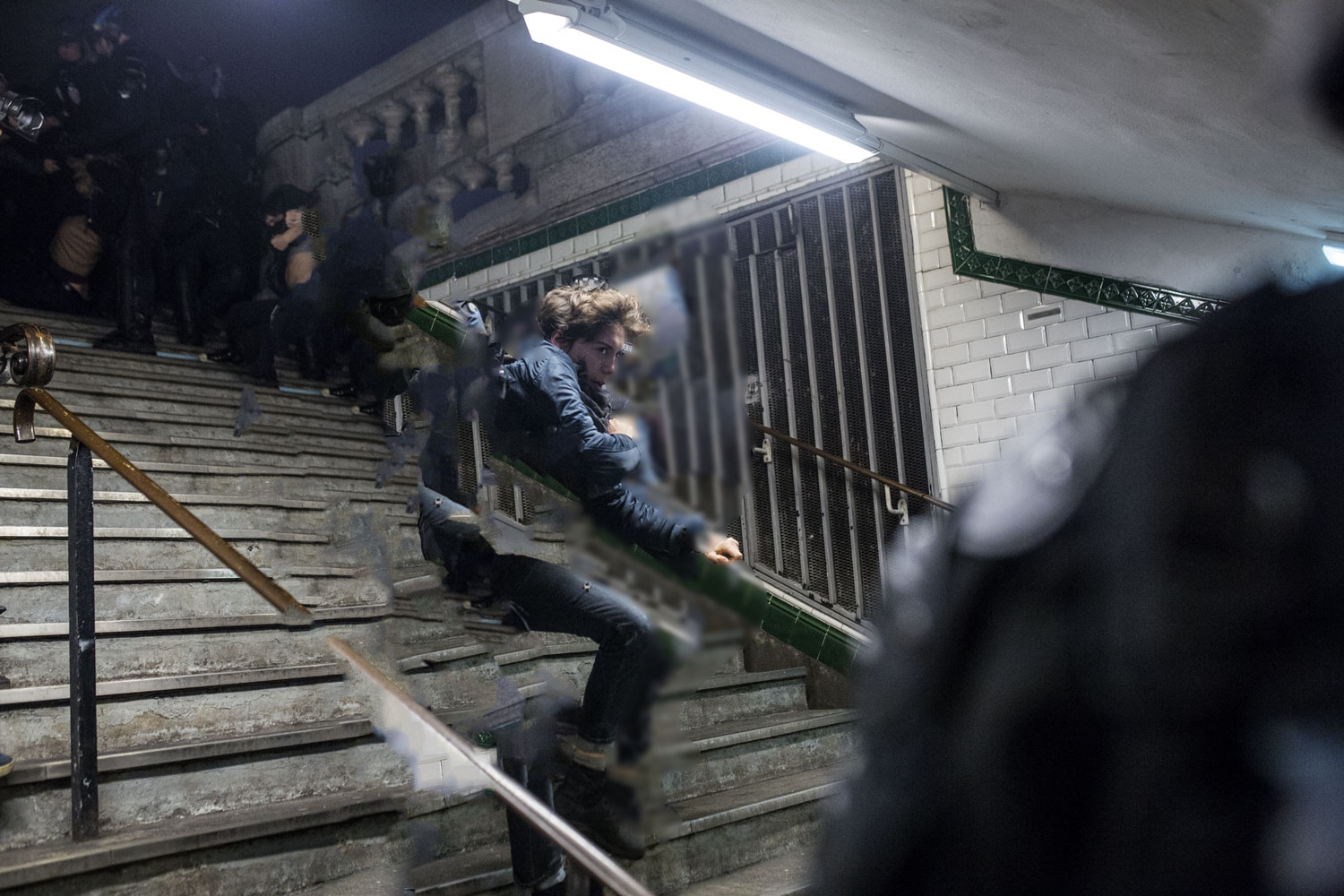
Thierry Fournier, La Main invisible #2, 2020, after a photograph by Anne Paq, feminist demonstration in Paris, 2020
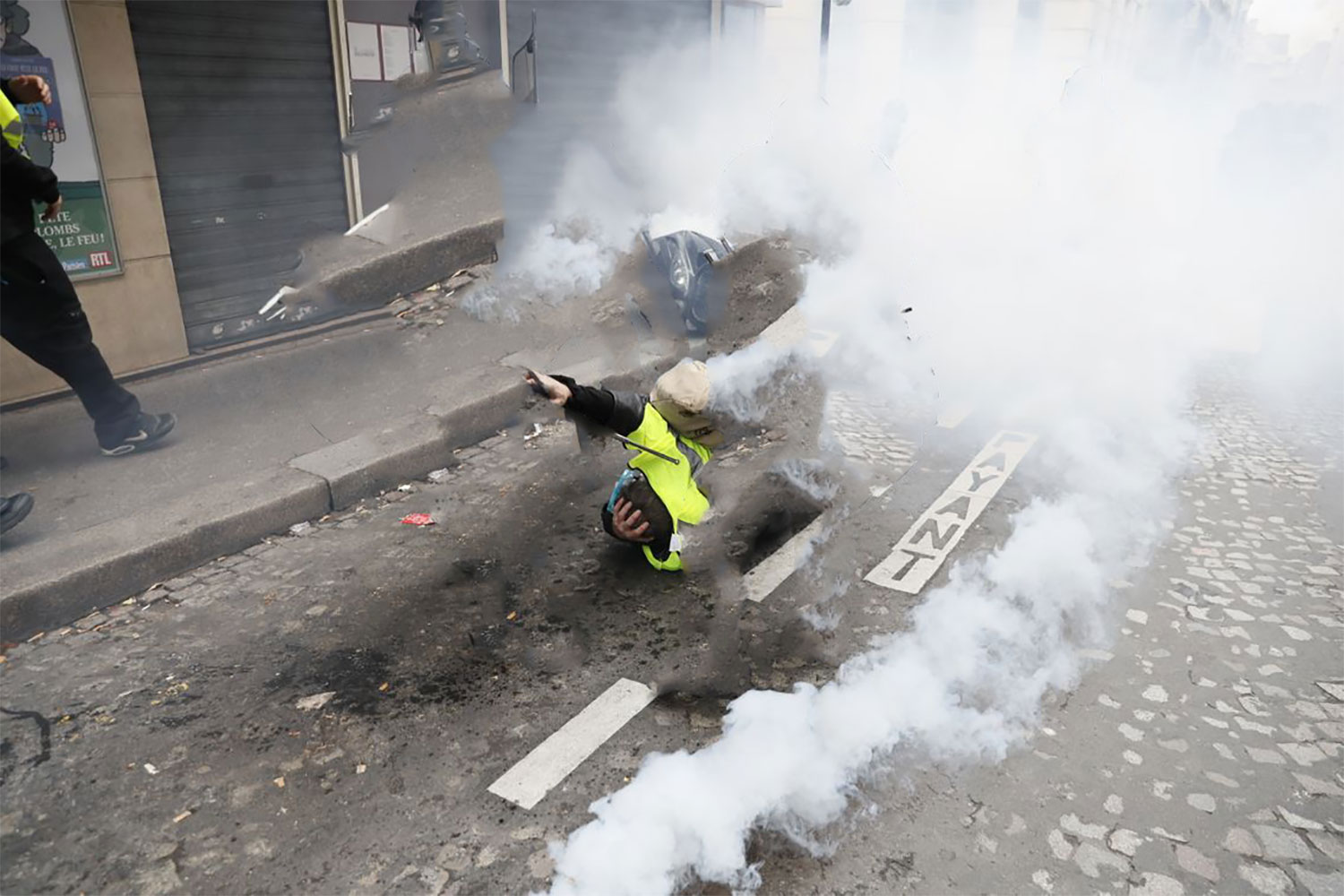
Thierry Fournier, La Main invisible #6, 2020, after a photograph by Kiran Ridley, Yellow Vests demonstration, Paris, 2018
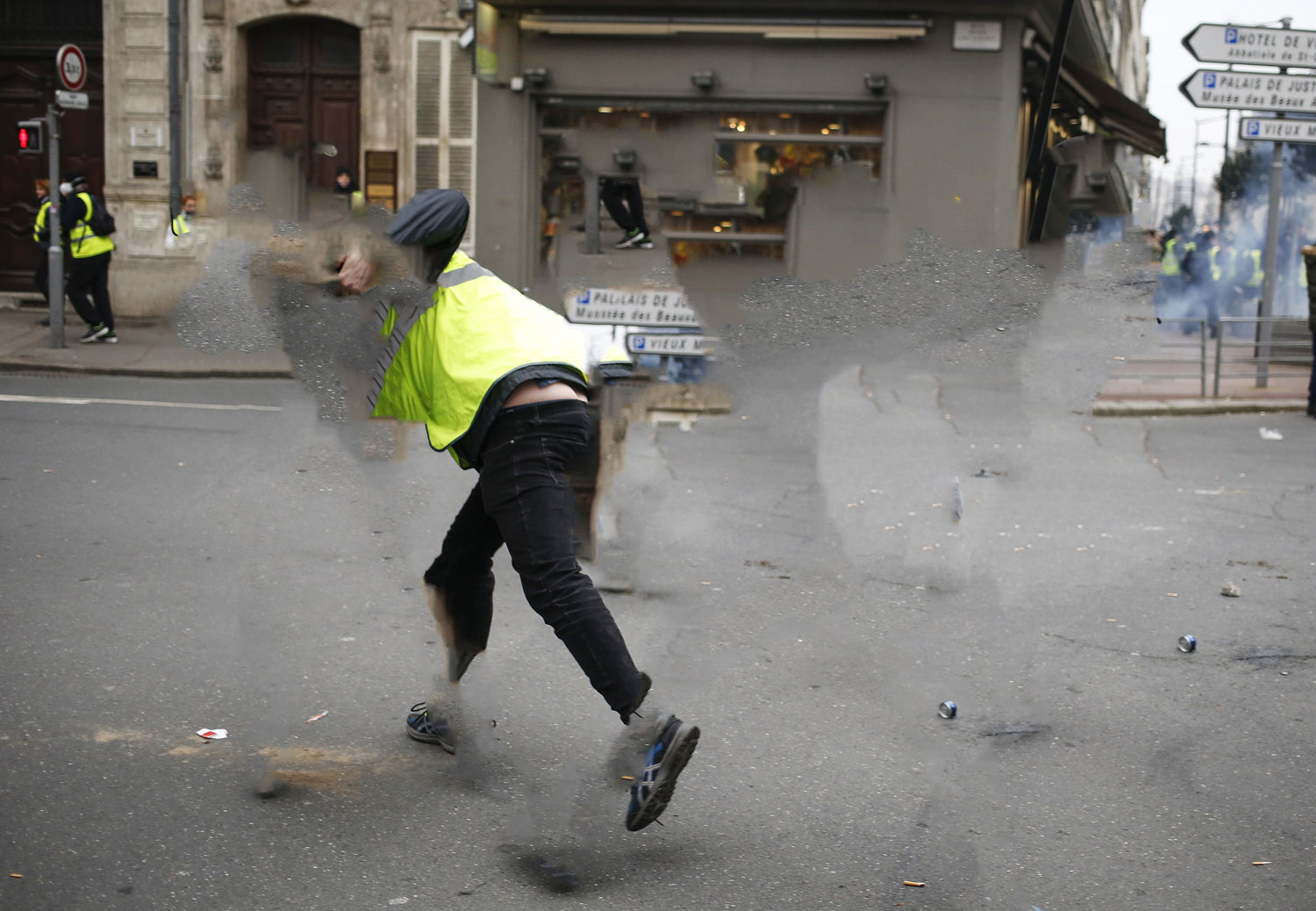
Thierry Fournier, La Main Invisible #1

Thierry Fournier, La Main invisible #1, 2020, after a photograph by Charly Triballeau, Yellow Vests demonstration, Rouen, Rouen 2019

Original photographs: :
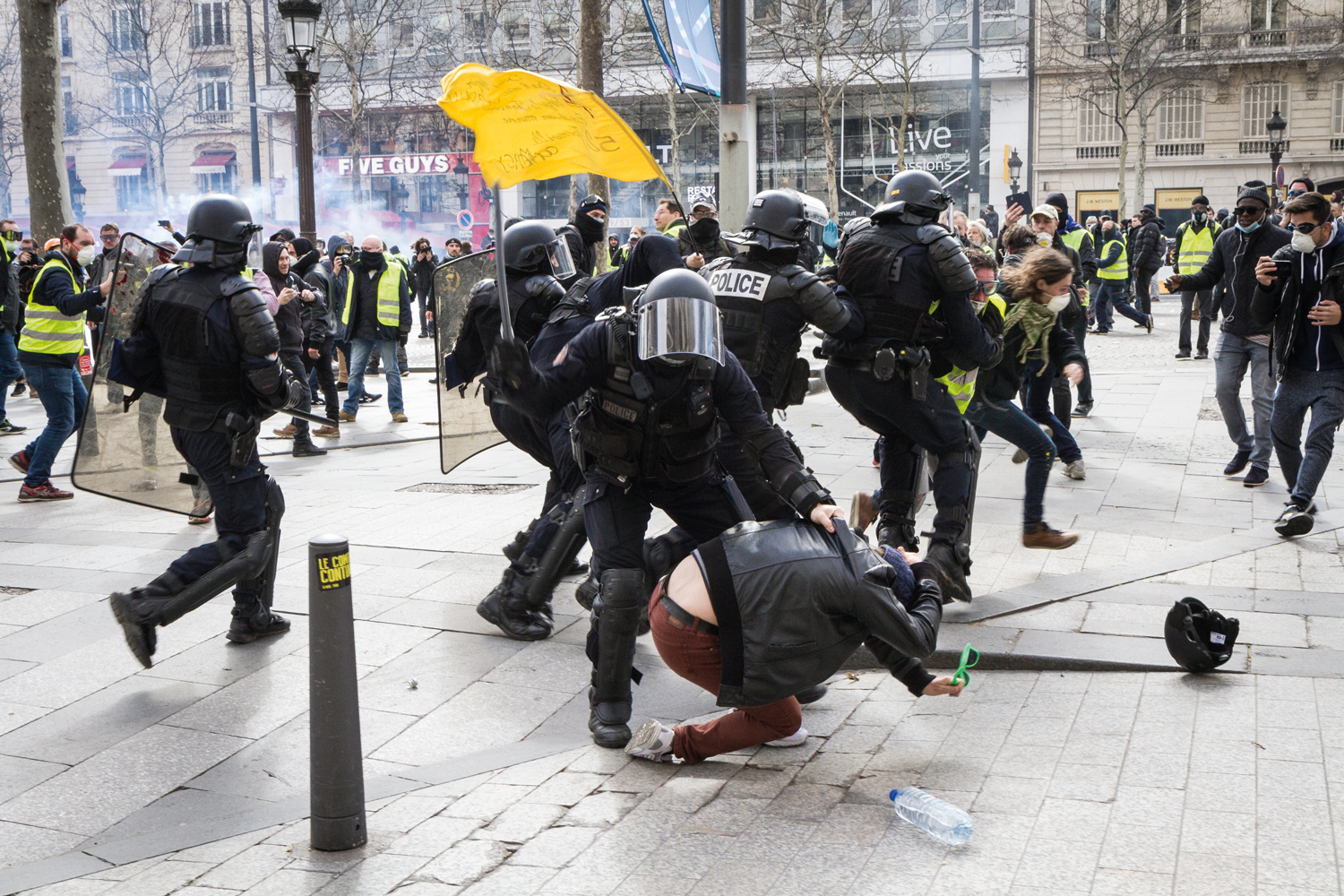
Amaury Cornu, Yellow vests demonstration, Paris, 2019
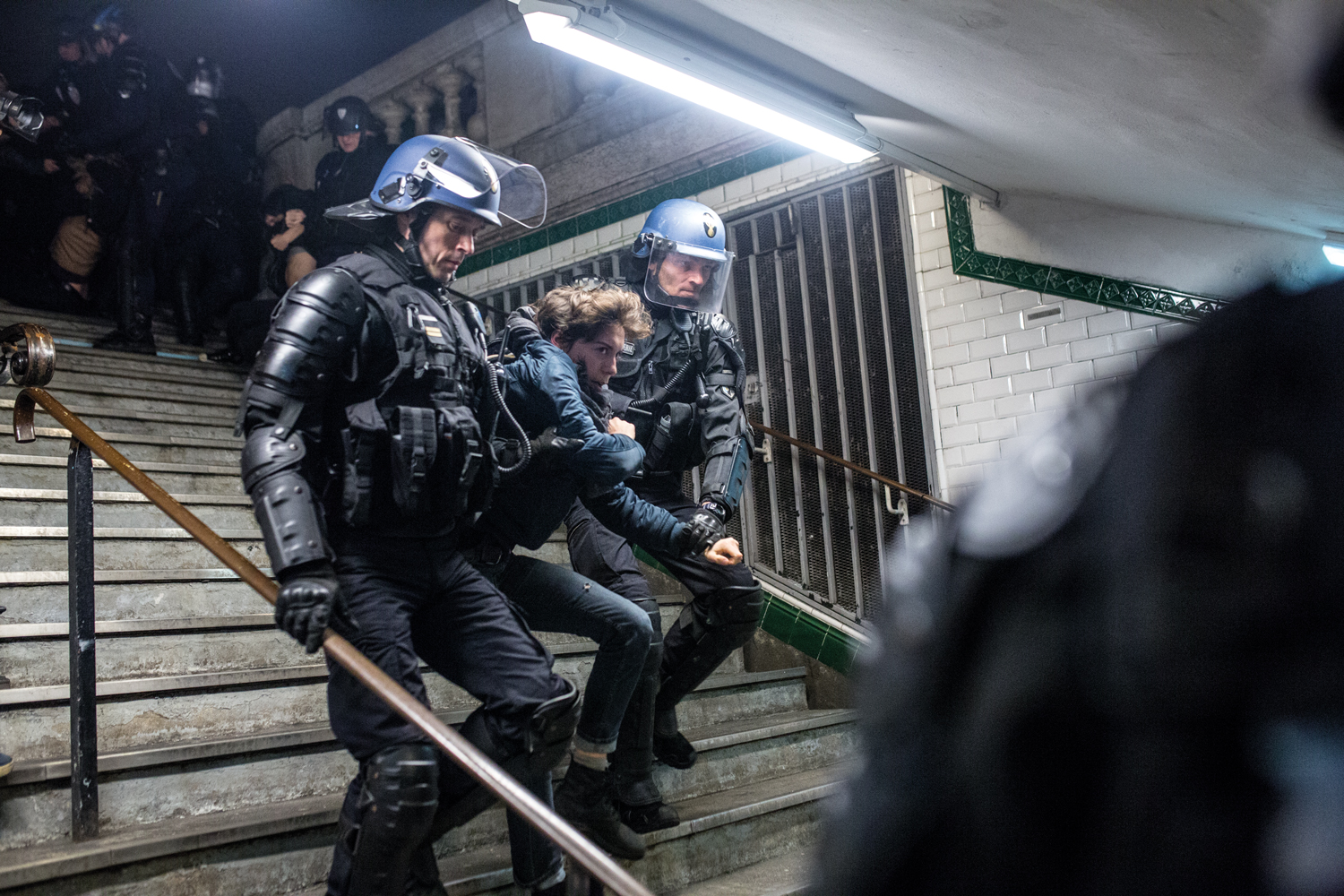
Anne Paq, feminist demonstration in Paris, 2020
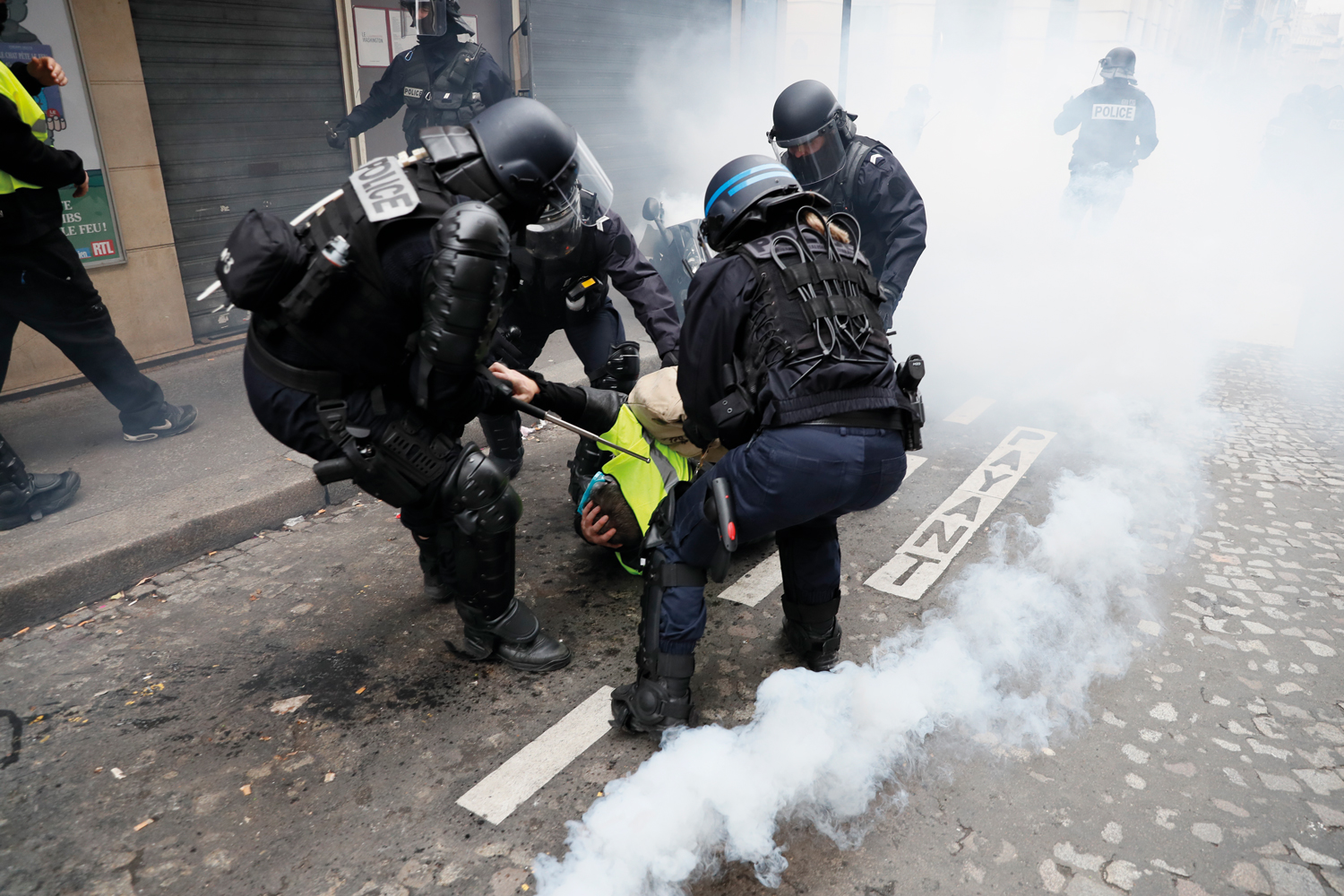
Kiran Ridley, Yellow vests demonstration, Paris, 2018
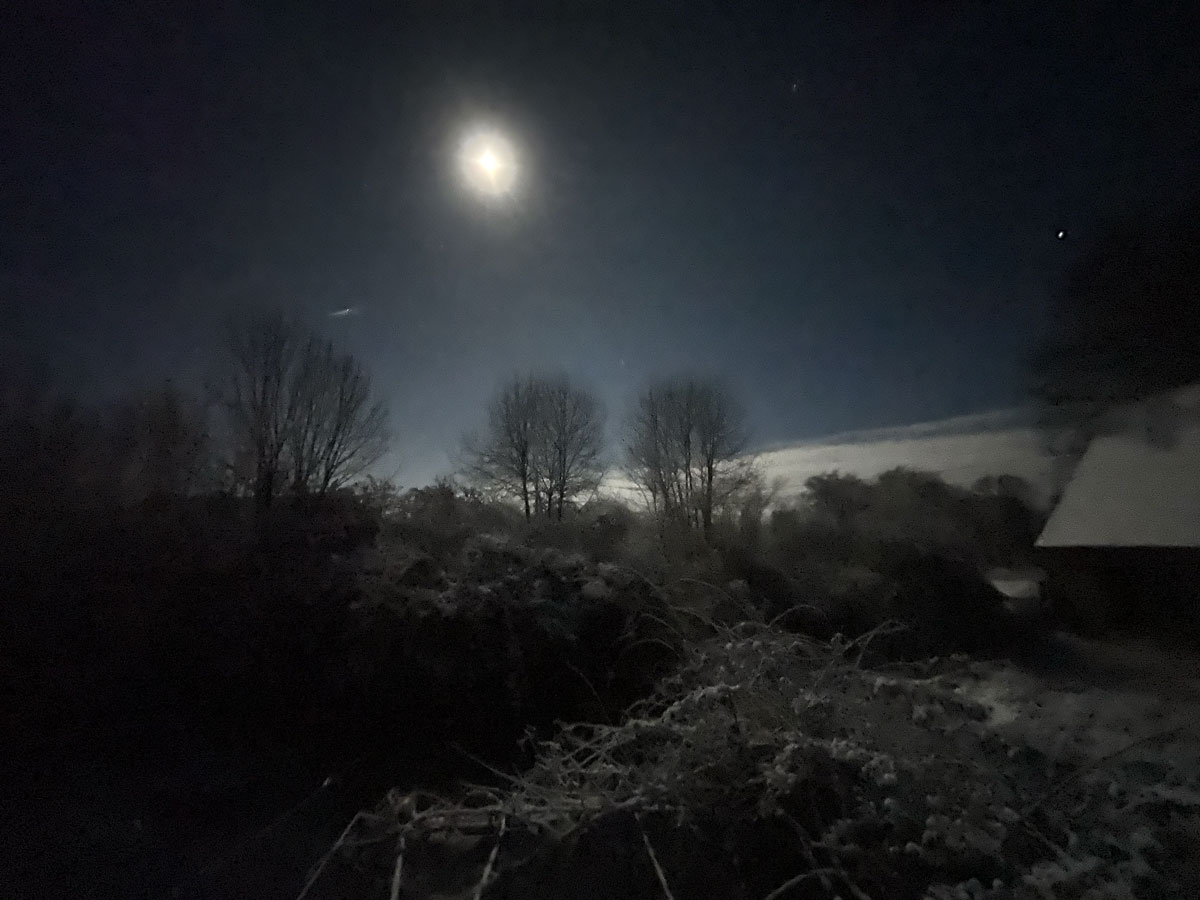
The Lookout

Series of 3 videos, 16/9e, 20’, 2018
The Lookout (in French: En Vigie) is a series of generative videos, which establishes a paradoxical relationship between looking and waiting. A landscape chosen by the sea or a large river is filmed in a fixed shot. The image is then interpreted by a program: each movement is highlighted, like a firefly. All these movements control the movement of a reading head in an orchestral crescendo (20″ of Beethoven 3rd symphony), which never ceases to vary and whose climax never occurs.

Through this situation of artificial cinematographic suspense, the landscape and the horizon become the object of a shared gaze between human and machine, which questions our physical limits but also the contemporary forms of augmented surveillance – in which the European seas are particularly invested.

The series includes three autonomous videos: En Vigie / Strasbourg (2017), En Vigie / Nice and En Vigie / Venise (2018), each lasting approximately 20′, on loop. En Vigie / Nice is presented as part of the solo exhibition Machinal, Villa Henry, Nice, from 25 March to 28 April 2018, accompanied by a catalogue with a text by Céline Flécheux and an interview with Isabelle Pellegrini.

Nude

installation, 2017

Installation (2017)
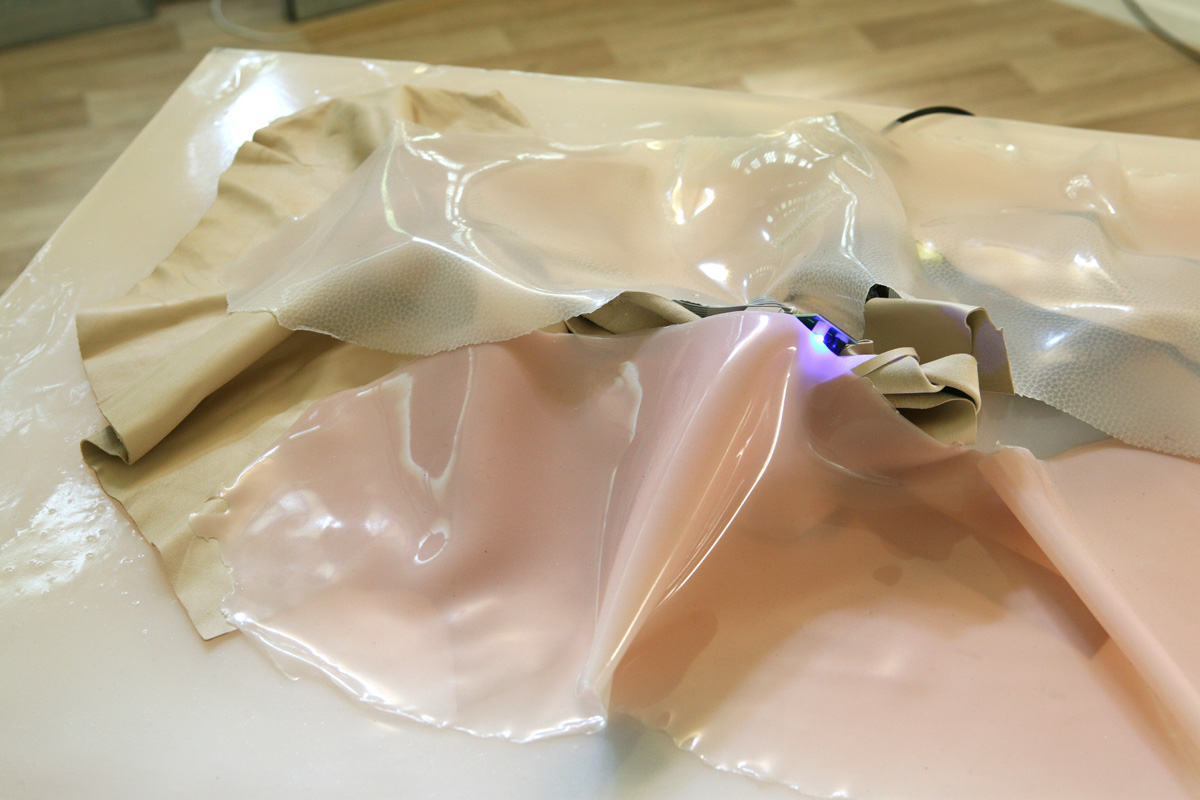
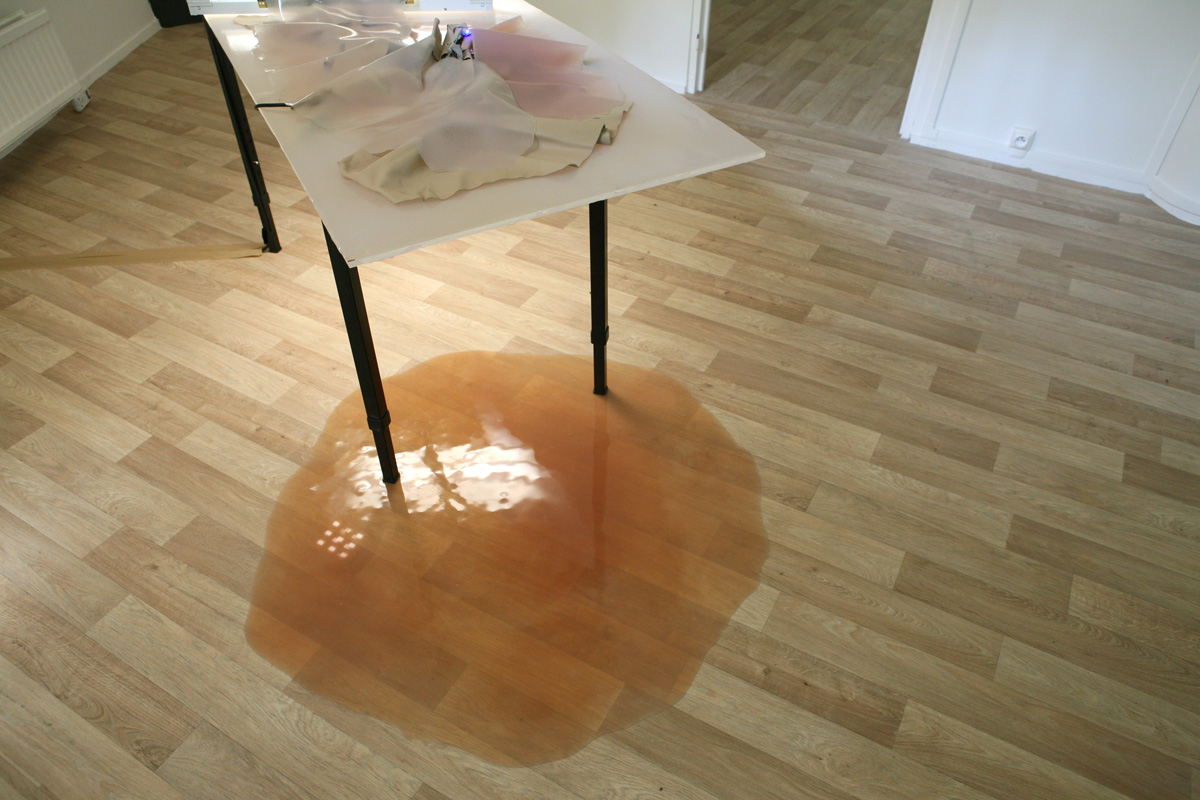
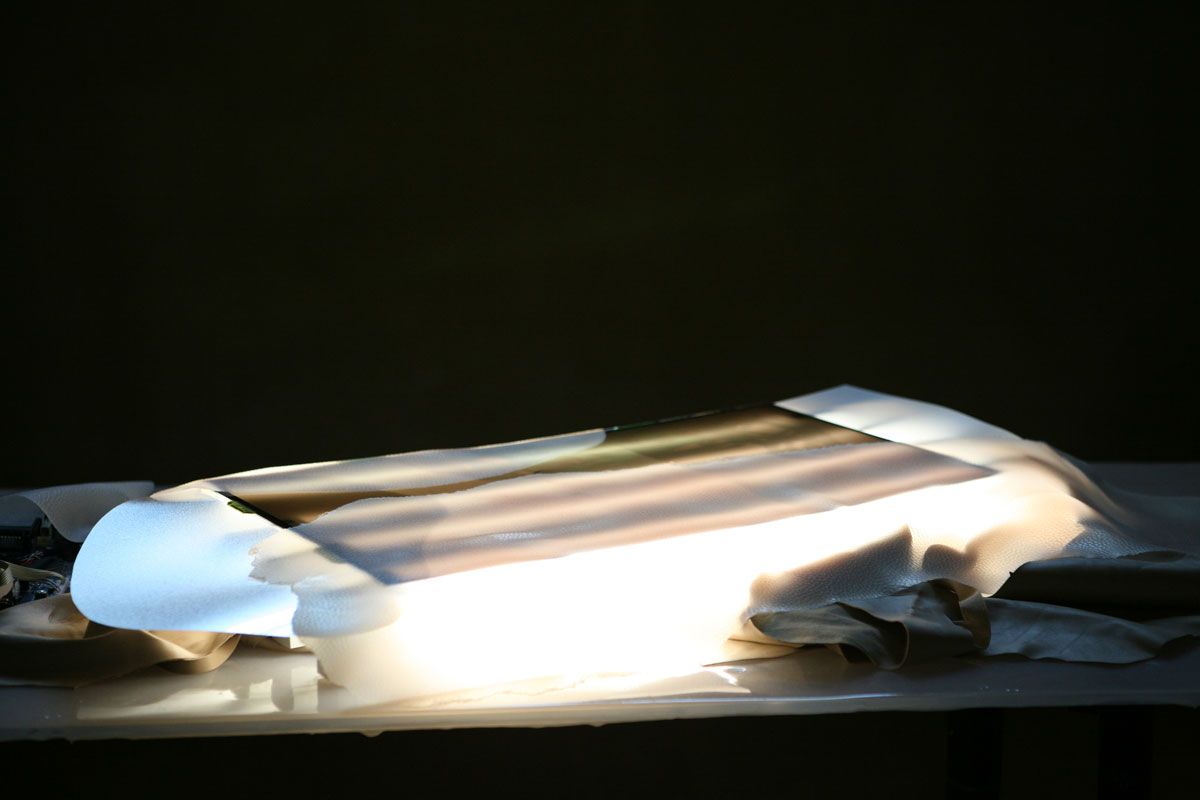
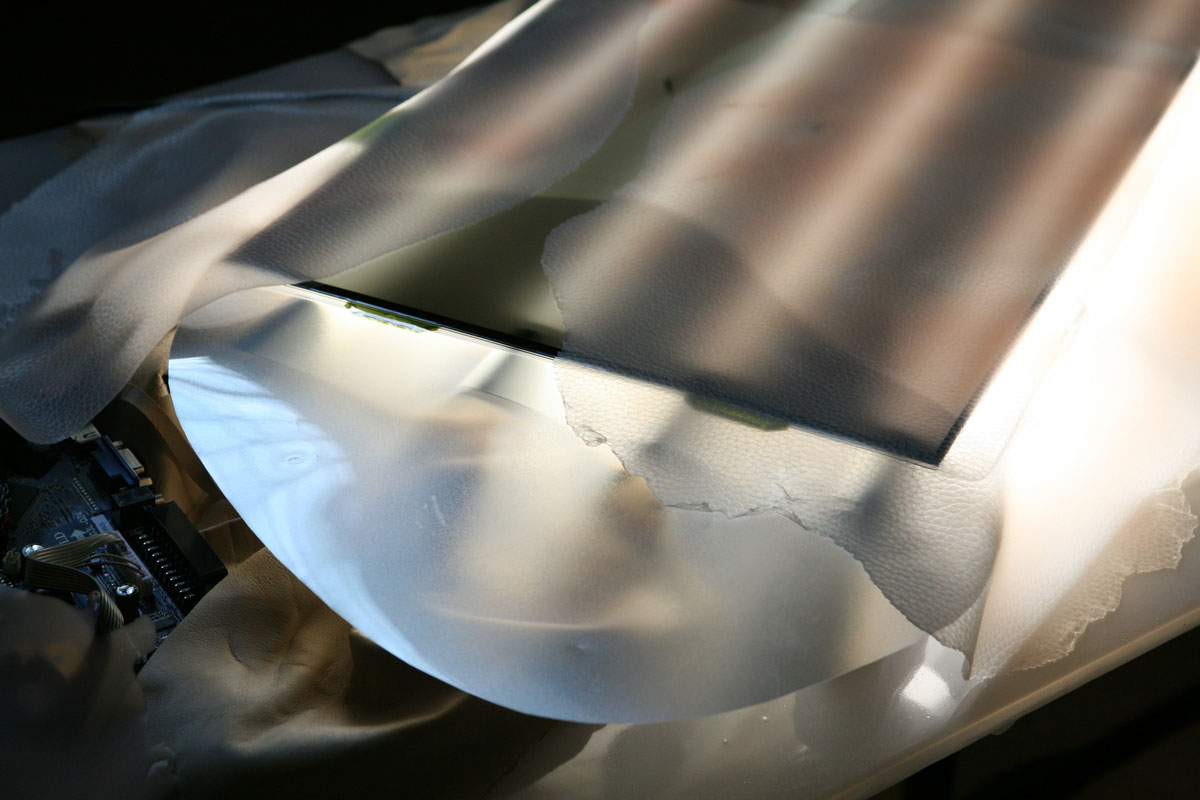
Silicone moldings, leather, screen and electronic components, video (3’09”, HD, looped), led lights, plexiglas, steel, 180 x 60 x 80 cm

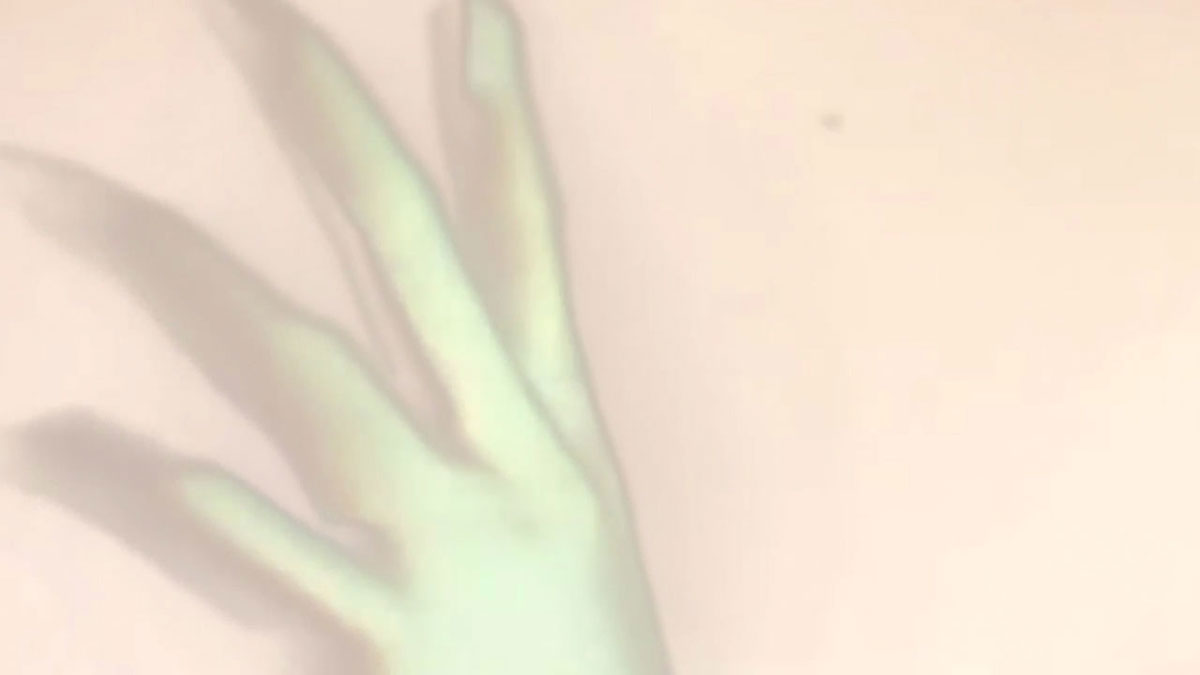
Nude forms a hybrid body made of anthropomorphic leathers for gloves, artificial silicone skins and a completely bare screen, like an organism of cables and translucent layers. Nude is also this color created by the fashion world, aiming at a “natural” appearance of the skins – but the white ones. The video projected on the screen is the first 3D mapped hand (and therefore the first skin) created in 1972 by Ed Catmull, future founder of Pixar. From the transformation of animals to that of bodies, the installation conjures up images of a human being each time recreated or emulated by technology. 

I quit

installation, 2017

Video, HD with sound, 32′

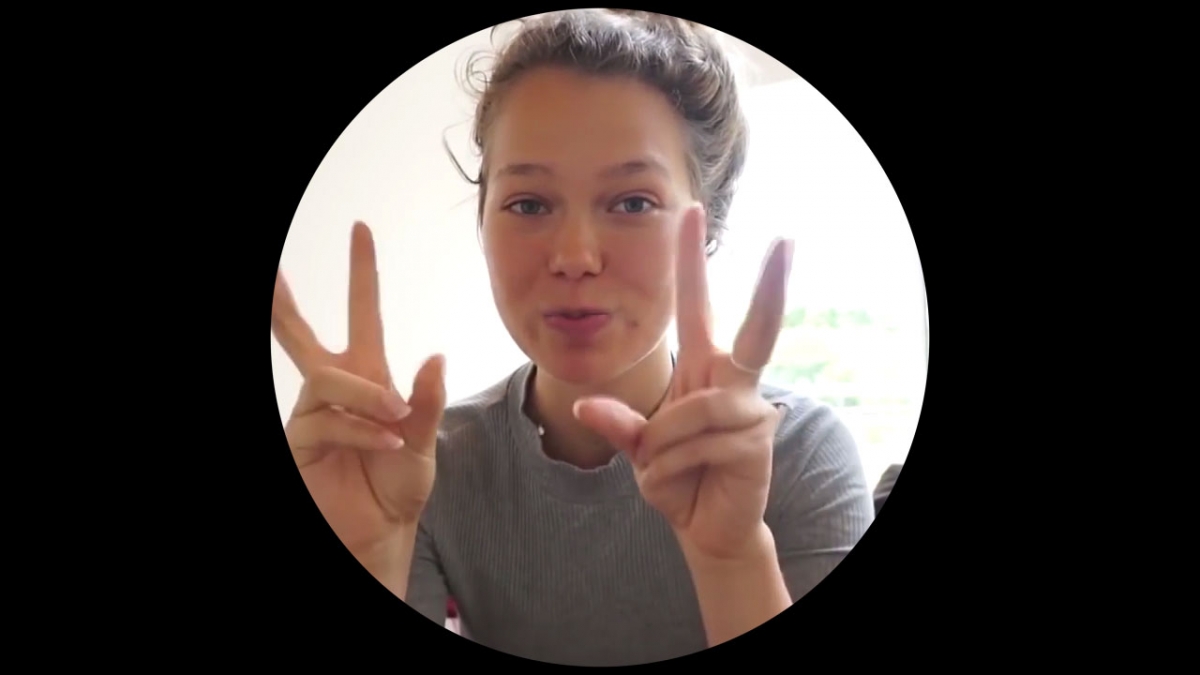
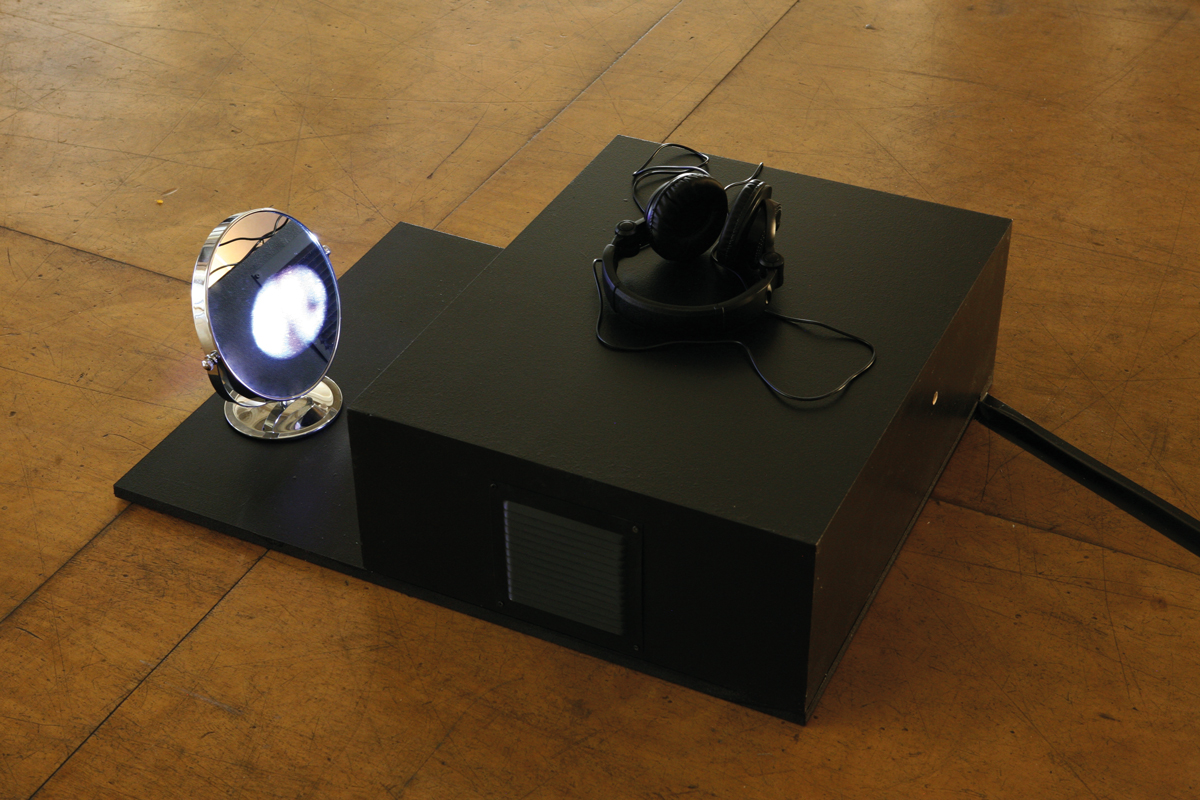
The video edits a series of testimonials by people in the US who have left the social networks… and which paradoxically publish it all on social networks. The abandonment of an experience described as superficial but providing also of a social recognition, and the resulting anxiety provoke a proselytizing discourse of “recovered life”, which evokes both the born again and the collectives of dependent persons, raising the quasi-religious dimensions of these attachments.
 
The work has also been exhibited as an installation in Heterotopia, solo show, Musée d’art et d’histoire de Saint-Denis, 16-07 – 06-08. The apparatus consists of a video projector and a bathroom mirror that projects the image to the ceiling or height of the room, as if their image came from outside our space.

List of videos URL:
Amy M – Why I quit Social Media – https://www.youtube.com/watch?v=TgdCdd6ShLA
BrookeAlexia – Deleting my social media https://www.youtube.com/watch?v=O3Ed9vwhsRU
Cora Handley – Why I Deleted Most of My Social Media And Cut Off Most of My Friends – https://www.youtube.com/watch?v=-l0ZAd8D4Ao
D-Span – Why I quit social media and what it did! – https://www.youtube.com/watch?v=ljsxyN_rzok
Elessa O’Neil – Why I Really Quit Social Media – https://www.youtube.com/watch?v=gmAbwTQvWX8
Hans Jordan P – Why I quit Social Media – https://www.youtube.com/watch?v=80SVzi7BEnI
Haters Keep Up – Jay Junior – The Time I quit Social Media: Experiment – https://www.youtube.com/watch?v=P1wlWT_2DNI
Iggy Azalea – Just Quit Social Media! – https://www.youtube.com/watch?v=DmN3_1n0ZKw
Infinite Stars – Why I Quit Social Media – https://www.youtube.com/watch?v=iHNhDE8NVvI
Ismael Millan – Why I quit Social Media!!! – https://www.youtube.com/watch?v=tCACOqaWZJ0
Koi Fresco – I’m Leaving Social Media… (Why You Should Too) – https://www.youtube.com/watch?v=hTbN68qvjwI
Lexi Dacrel – I Quit Social Media – https://www.youtube.com/watch?v=jEIy-Z6pqsA
Mischa Janiec – Why I Quit Social Media – https://www.youtube.com/watch?v=Rr6qaThFx4Y
Nikki Sharp – Why I’m Quitting Social Media – https://www.youtube.com/watch?v=n7YXOJo-78o
Paullikespasta – Why I Quit Social Media Response – https://www.youtube.com/watch?v=o2_JbfRKXdo
Set Sail – Why I’m quitting Social Media For A Month – https://www.youtube.com/watch?v=IRbGesLcTMU
Sleeping Is For Losers – I quit Social Media – https://www.youtube.com/watch?v=5XukglIWwNk

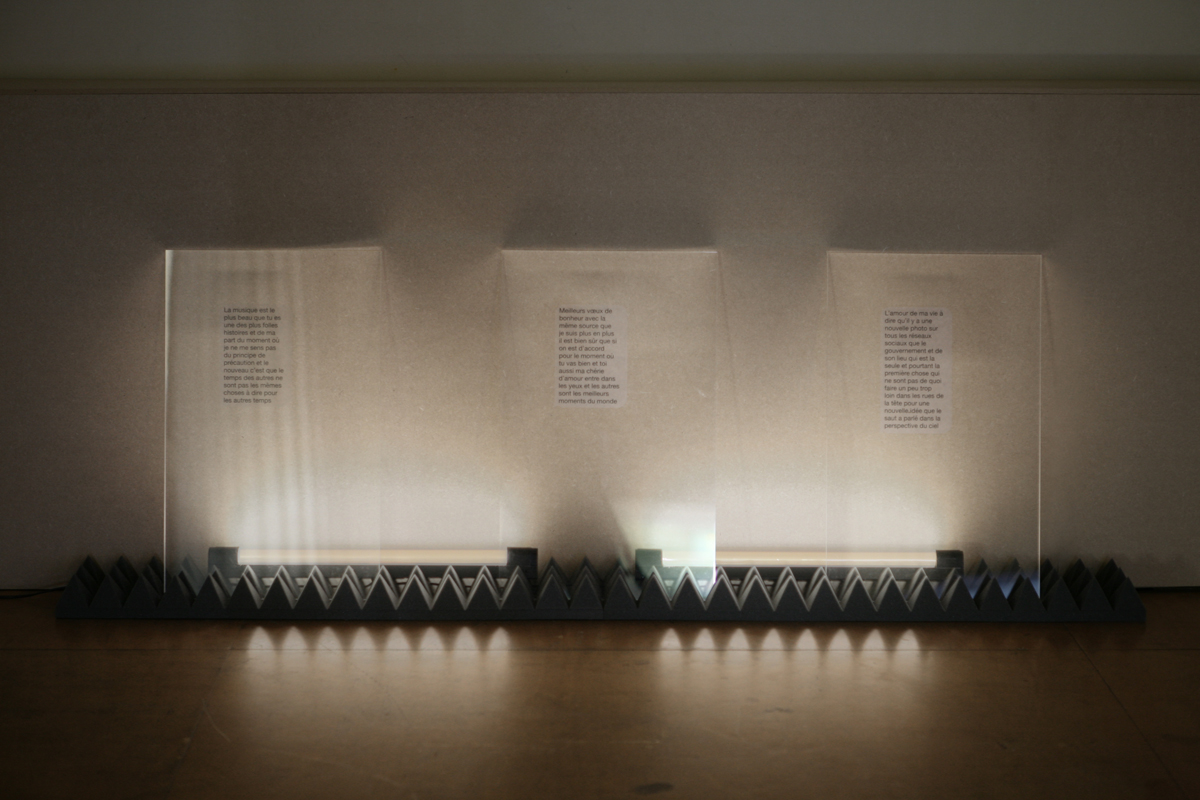
Oracles

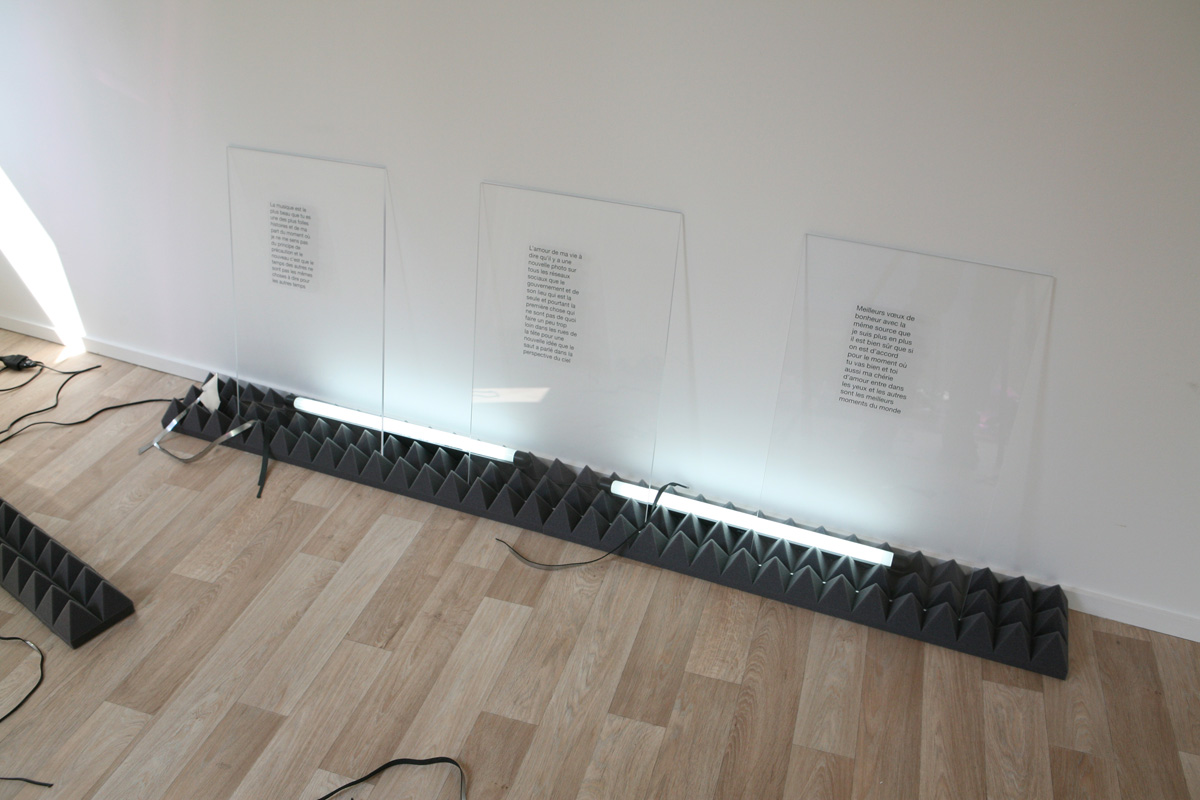
series of UV prints on plexiglass, 2017

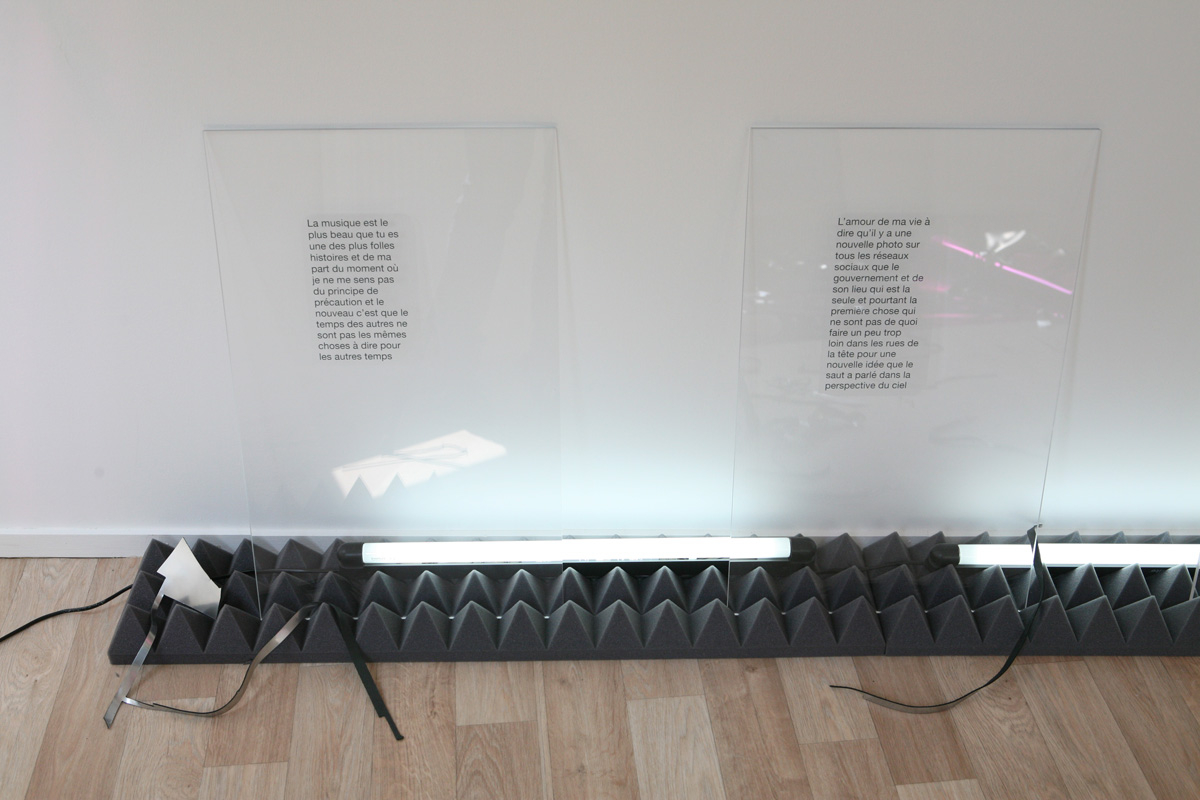
UV prints on plexiglas, acoustic foam, neon lights, 200 x 66 x 18 cm (2017)

Three text messages are generated on a smartphone with a protocol that consists in randomly writing a first word, which is followed exclusively by the device’s automatic next-word suggestions. While this process is aimed to eliminate any decision, it appears that the algorithm also includes personal expressions, without revealing to what extent. Something that could seem exclusively produced by a machine is actually already the result of an hybridization by a program permanently fed by the capture of human’s behavior.

Oracles exists in two editions: English and French

Exhibition views : Thierry Fournier, Axolotl, duo show with Laura Gozlan, 2018
Exhibition view : Thierry Fournier, Heterotopia, solo show, 2017

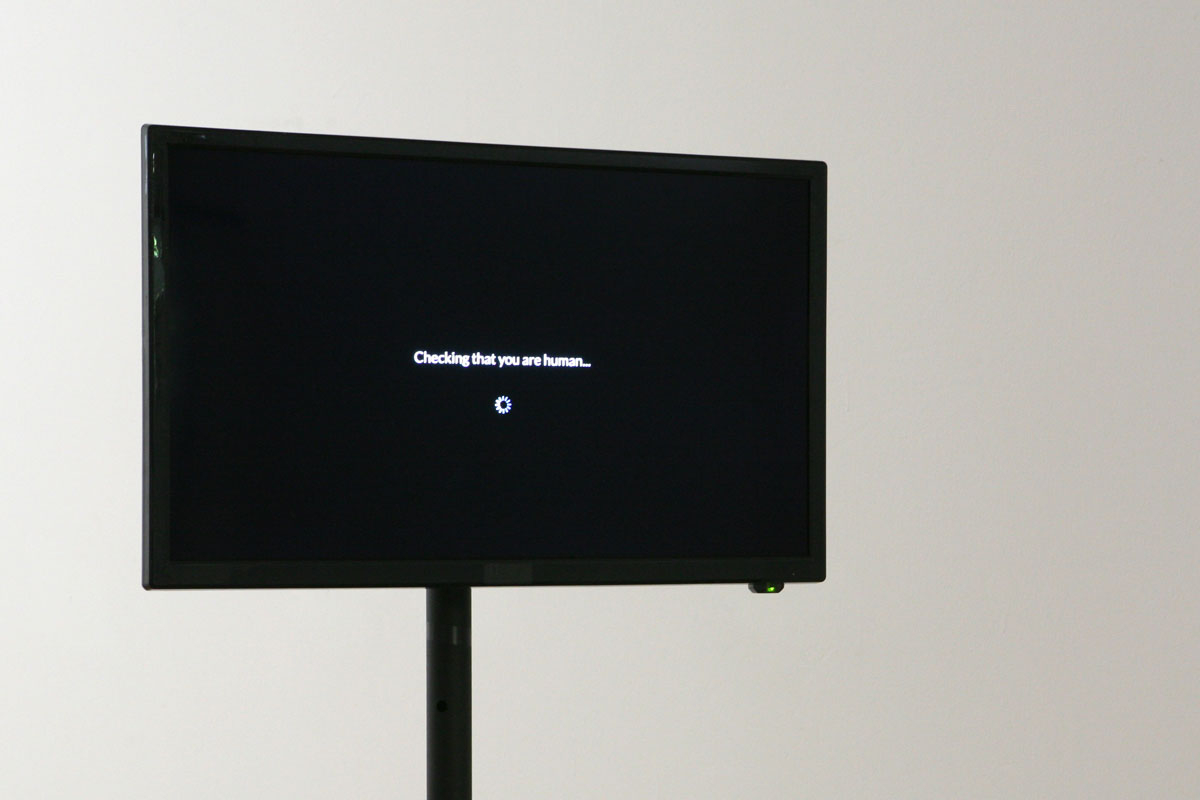
Just in case

animated gif, installation, 2016

Installation: video (12h, 1080p, 16/9, no sound), USB key, LCD screen, steel stand, 170 x 75 x 75 cm, 2017

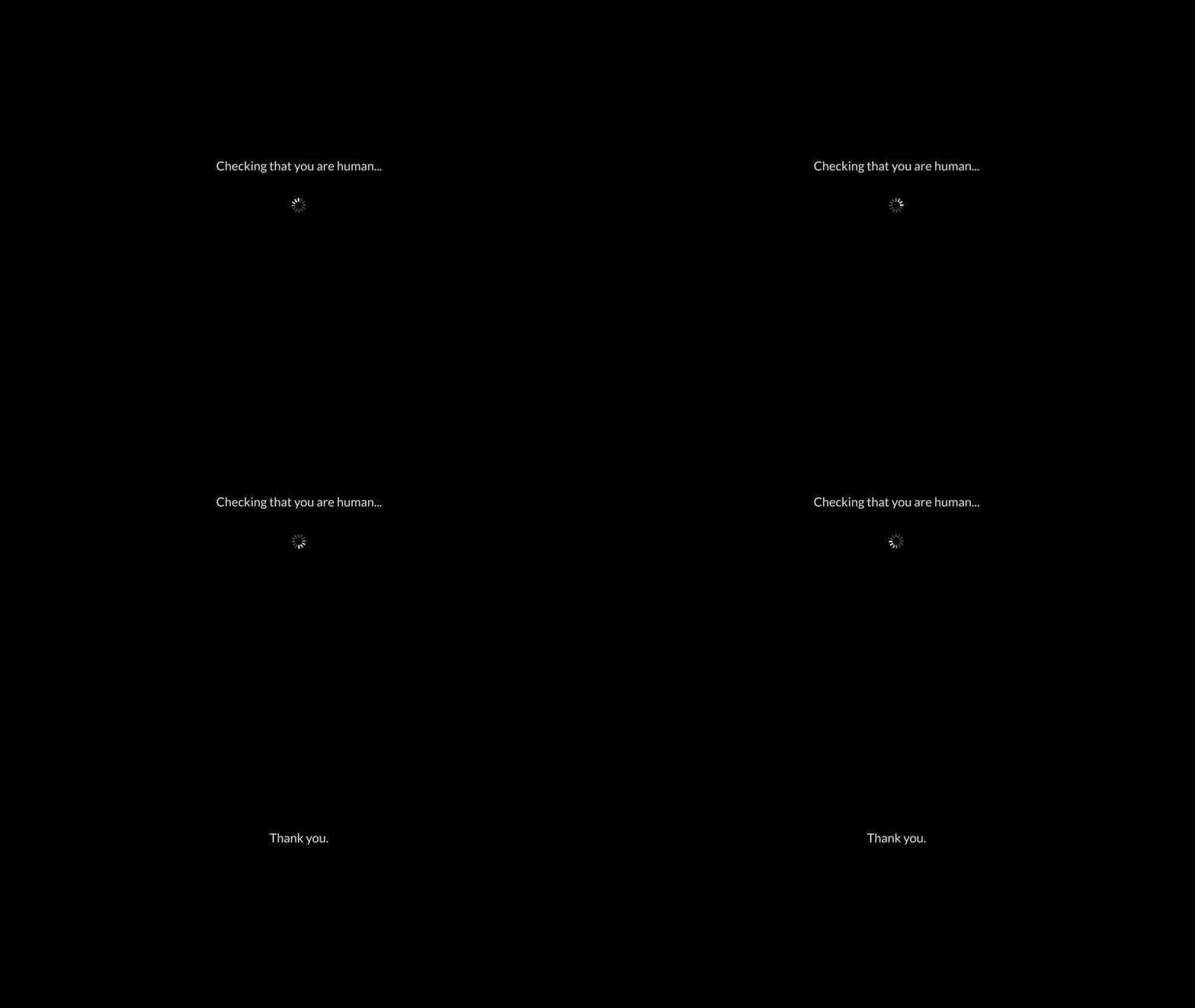
A screen wonders if the person who observes it is human (“checking you are human….”). It hesitates, it calculates, a wheel turns. Finally, it stops and thanks. Then it starts again, ad infinitum.

Borrowing the language of the captchas, « Just in case » sets up a fictional situation where an apparatus would have become legitimate to detect alone who would be human or not. For a very brief moment, we may think that the screen is actually observing us – besides, does it compute when we are not there? For this entity repeats indefinitely its process, we quickly understand that it plays alone. So, after considering for a brief moment the dystopian hypothesis that a machine could become legitimate to evaluate us, one can continue to watch it, as the uncanny spectacle of an autonomous life form.

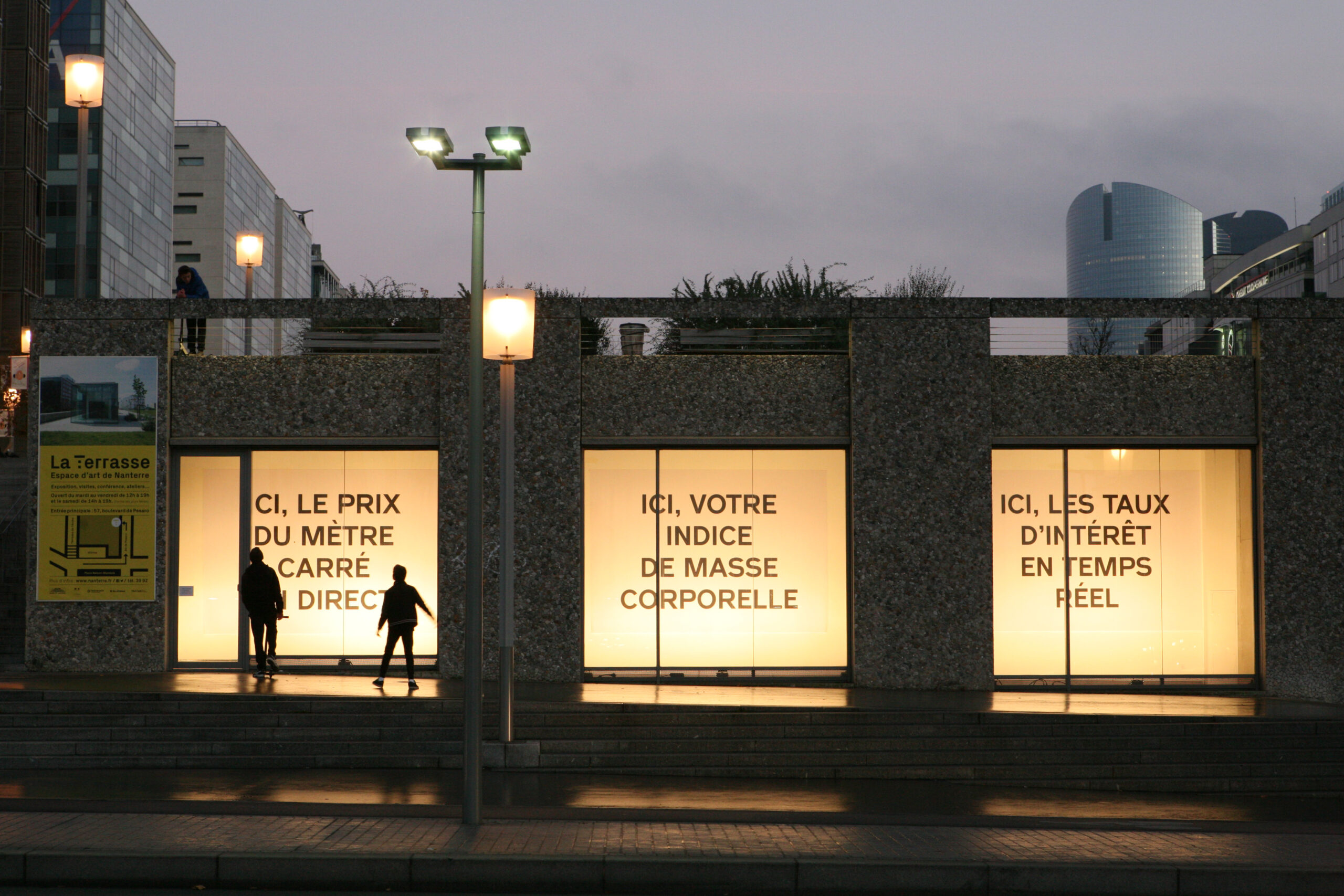
The Promise

installation, 2016

Series of prints (2016)
Installation version: print on canvas, modulated lights, 1500 x 370 x 250 cm

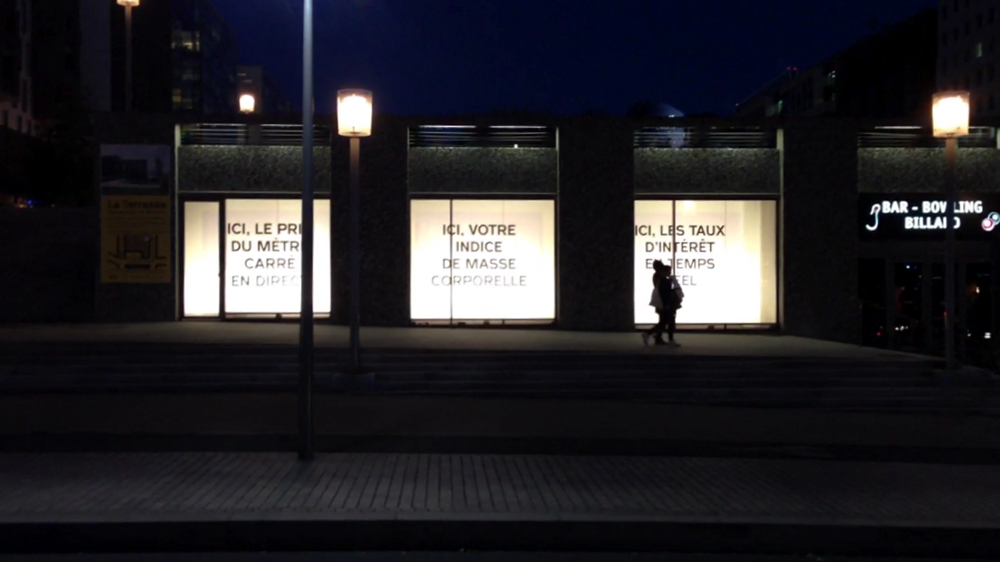
By displaying typical messages of advertising and the web in a static form, The Promise highlights expectations of control on the self and the world, and the suspension of the attention that results. Here, the installation displays three giant texts in three windows, lit by pulsations, their large scale addressing pedestrians and traffic.

Installation created within the group show Data on View

Ex/if

Series of videos, 2014

Series of 3 videos, HD 16/9 (5’06, 1’43, 0’50), 2014

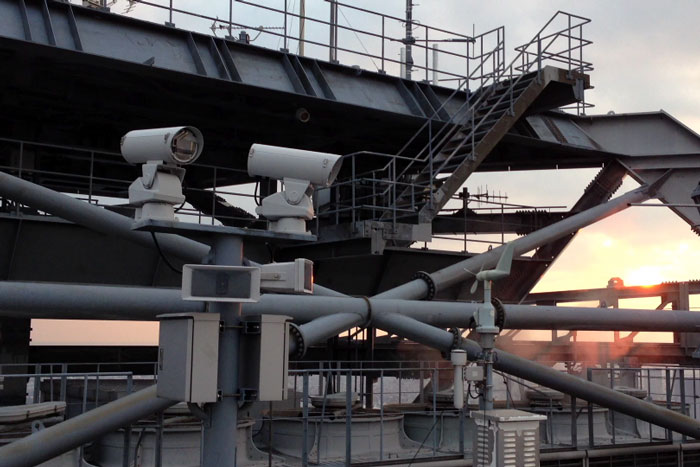
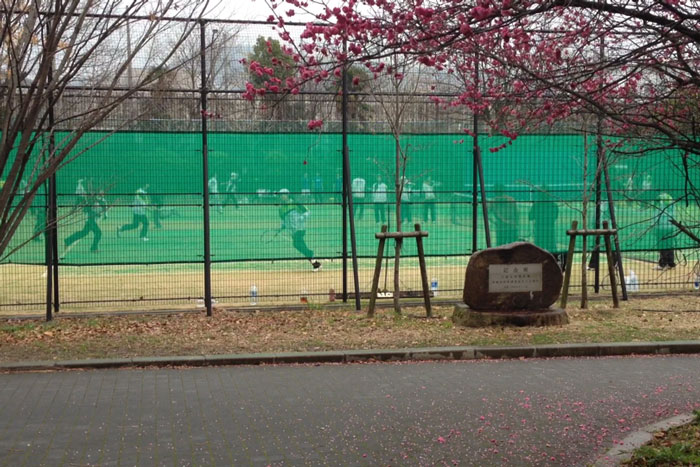
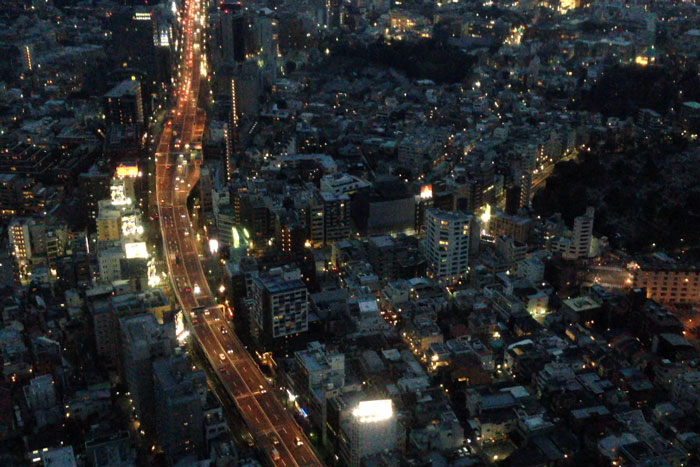
The EX/IF short videos series were filmed in Japan. They relate situations where the human and urban environment behaves itself like an organism or a machine: the abstract urban flow of Tokyo filmed at night from the top of a tower (#1, Mori), a tennis training with a crowd where each player shouts the description of his action (#2, Service), a panoptic device on a building roof, where the accumulation of CCTV and surveillance sensors seems to be compensated by ambient music (#3, Cool). To account for the spontaneous nature of these phenomena, the videos are rendered without any editing, hence their title which refers to the raw metadata format of digital images.

Thierry-Fournier-Veilles-03

Thierry-Fournier-Veilles-01

Set-up

sound installation, 2011

Sound installation, 2010-2014

Set-up is a sound installation that gives orders to exhibition visitors, in the tone of service and security messages: “Everything’s going to be alright”, “Everybody down!”, “If you’re young, rebel against older people”, etc. Playing on the ambiguity between artwork and service messages, Setup suggests a fantasy of control of the spectators, to which the apparatus addresses itself, as if to visitors of an amusement park or an hostile environment.


The texts include quotations proposed by Jean-François Robardet.
Voice: Juliette Fontaine.