Órganon

Solo show
Université Paul Valéry, Montpellier
September 18th to October 23rd, 2020
Series of drawings on iPad, fine art printings on vinyl, variable dimensions

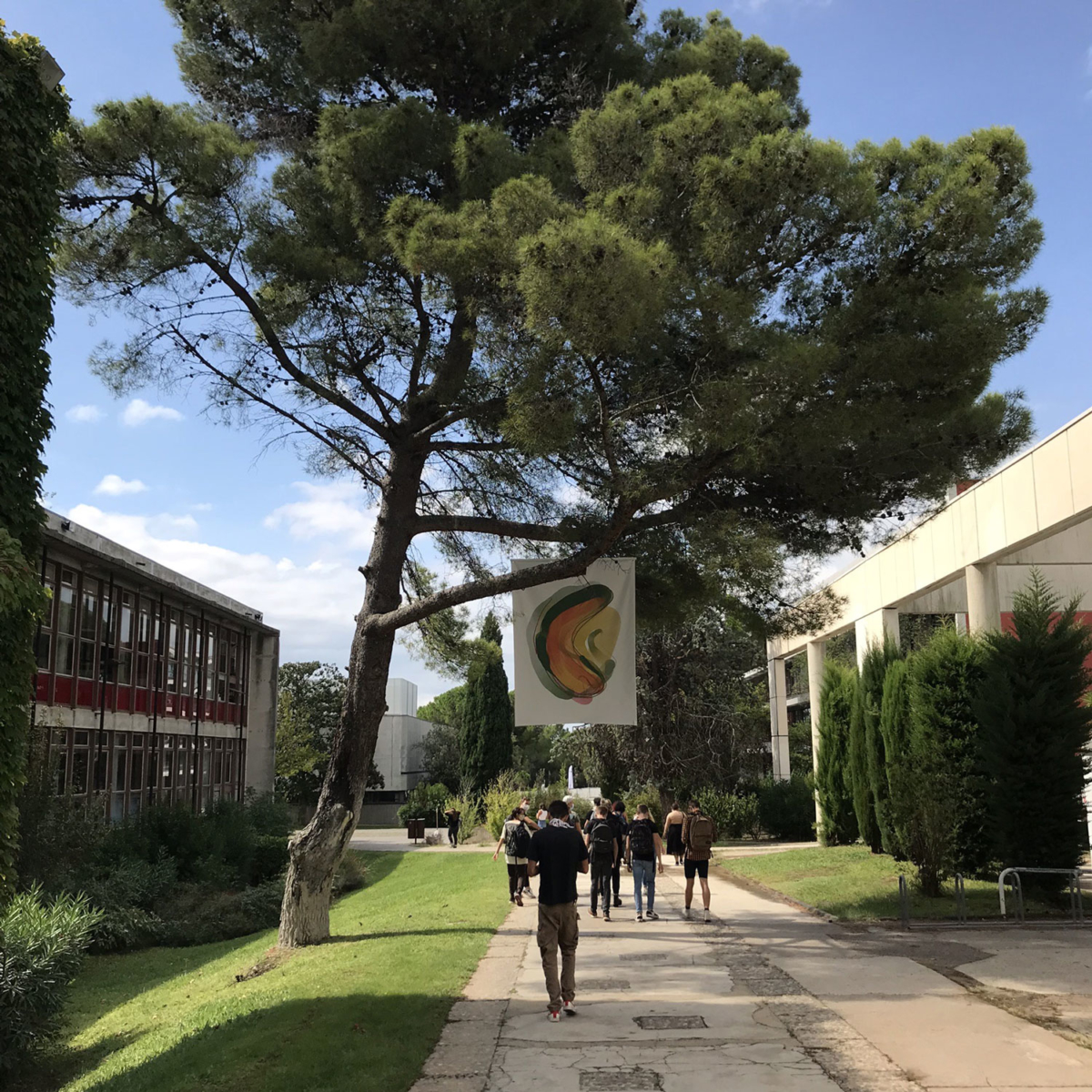
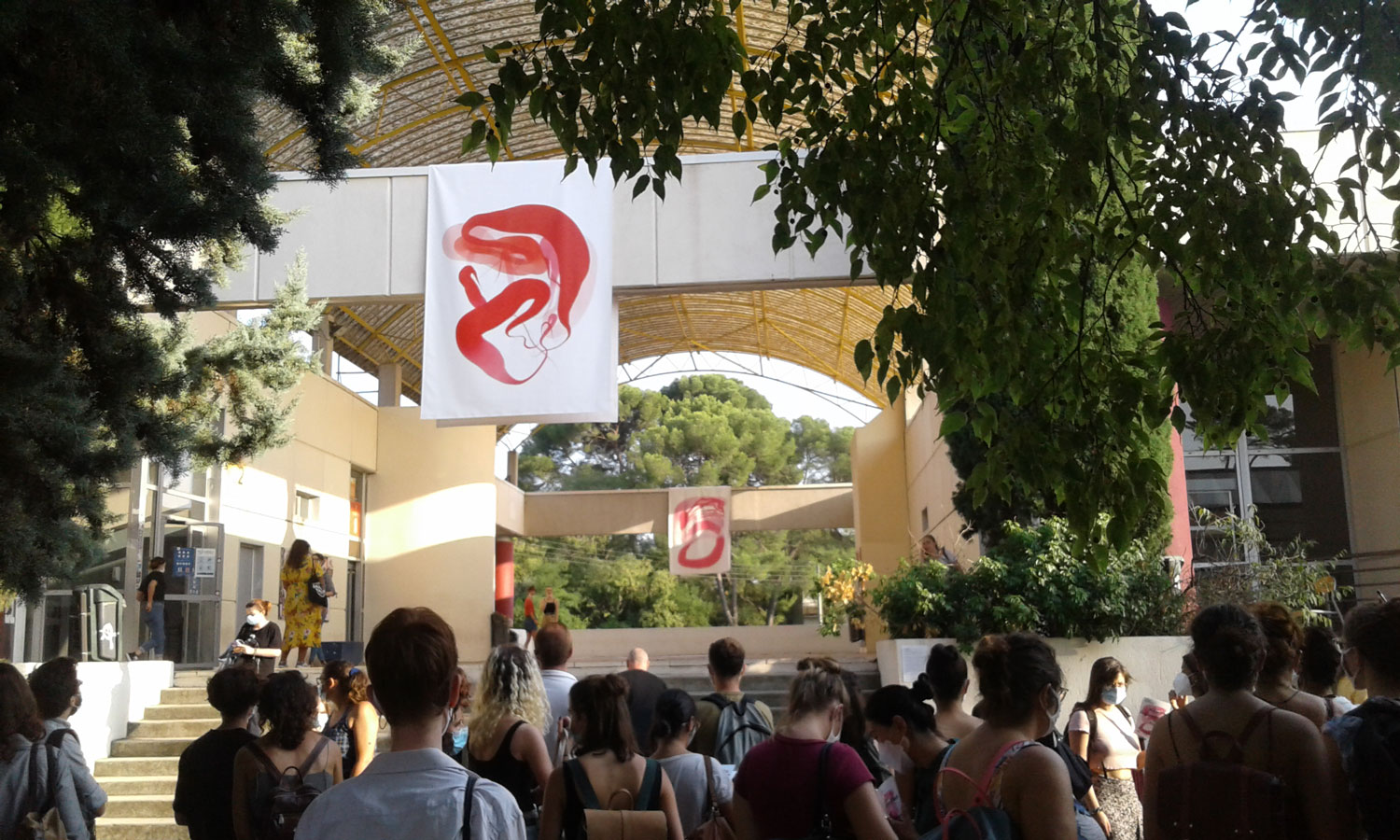
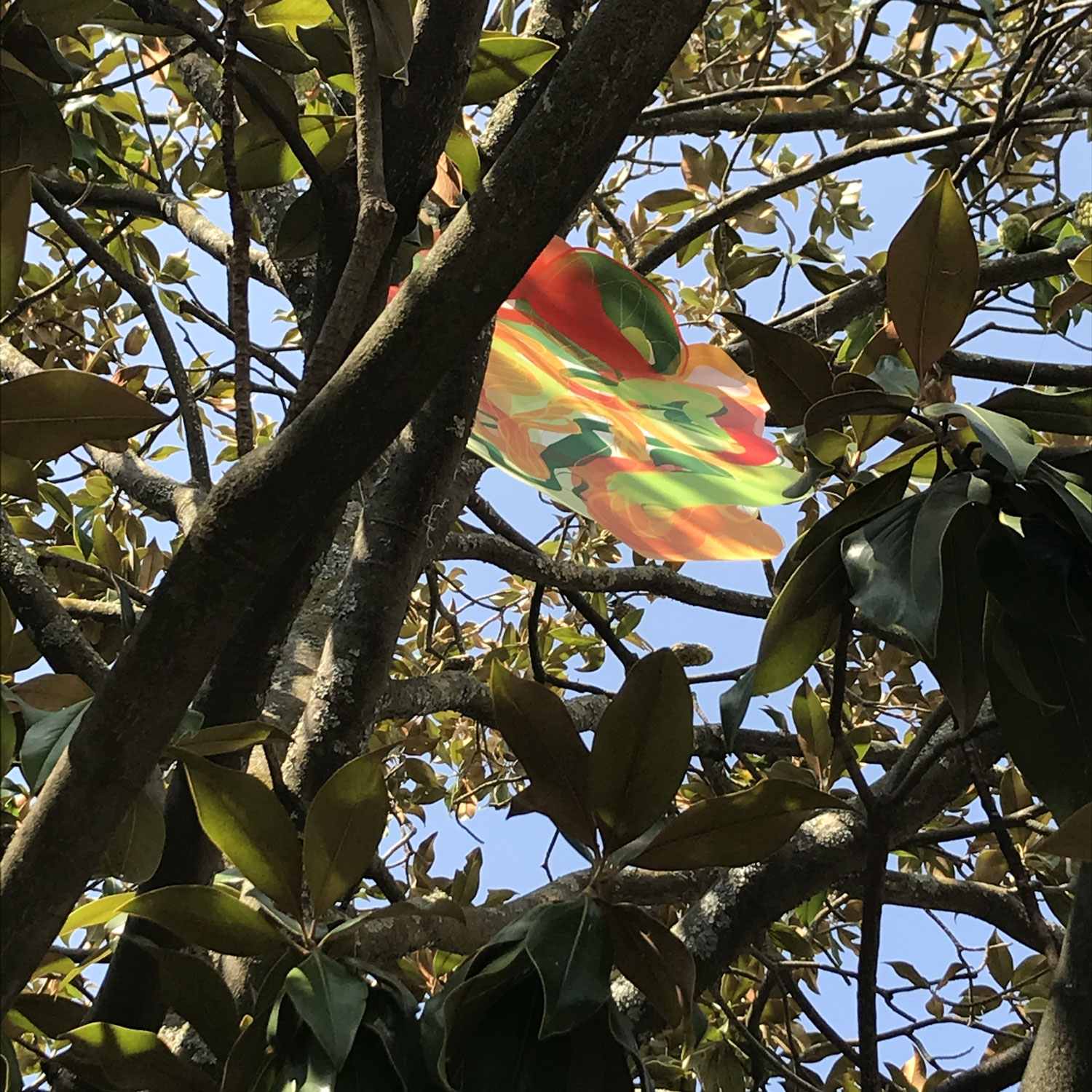
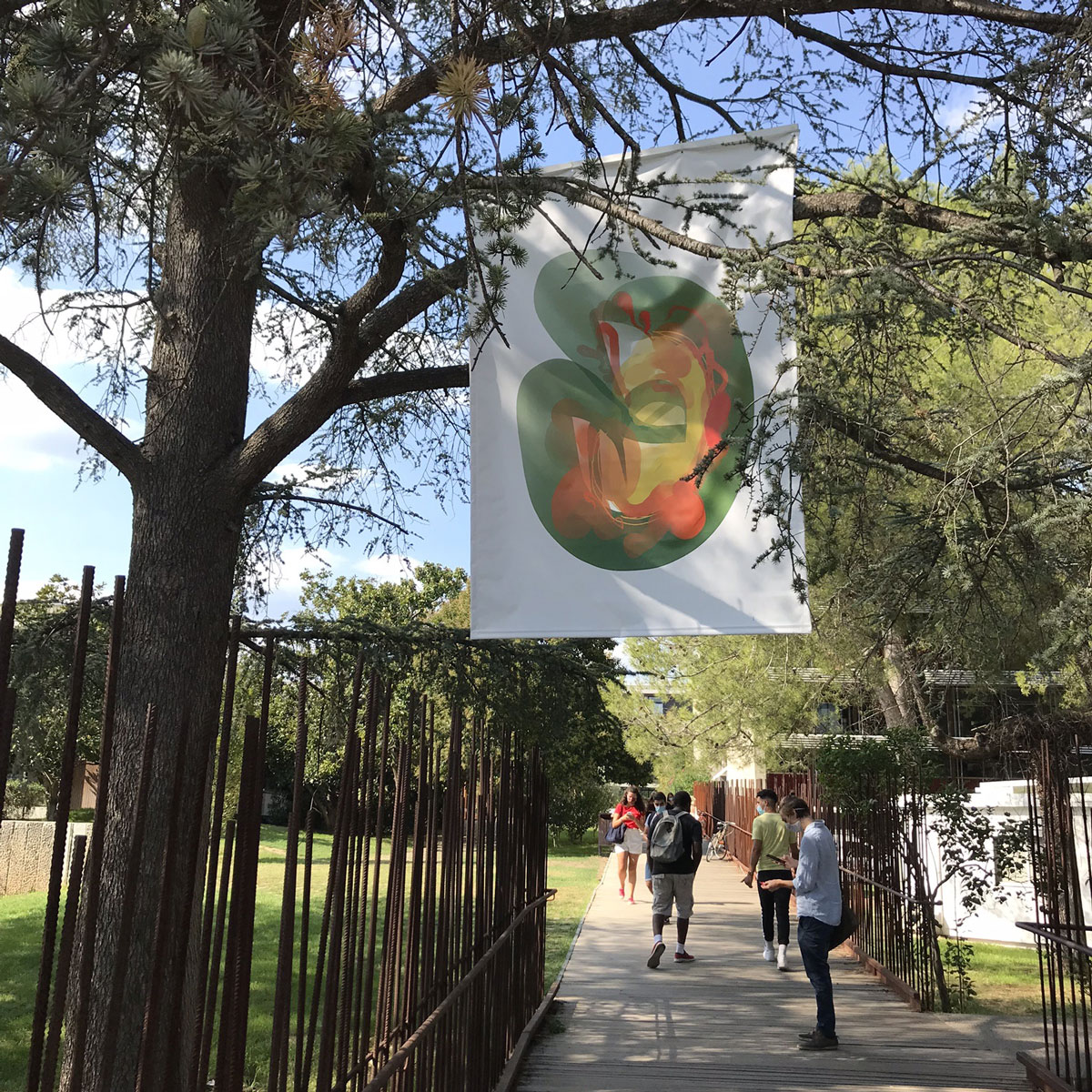
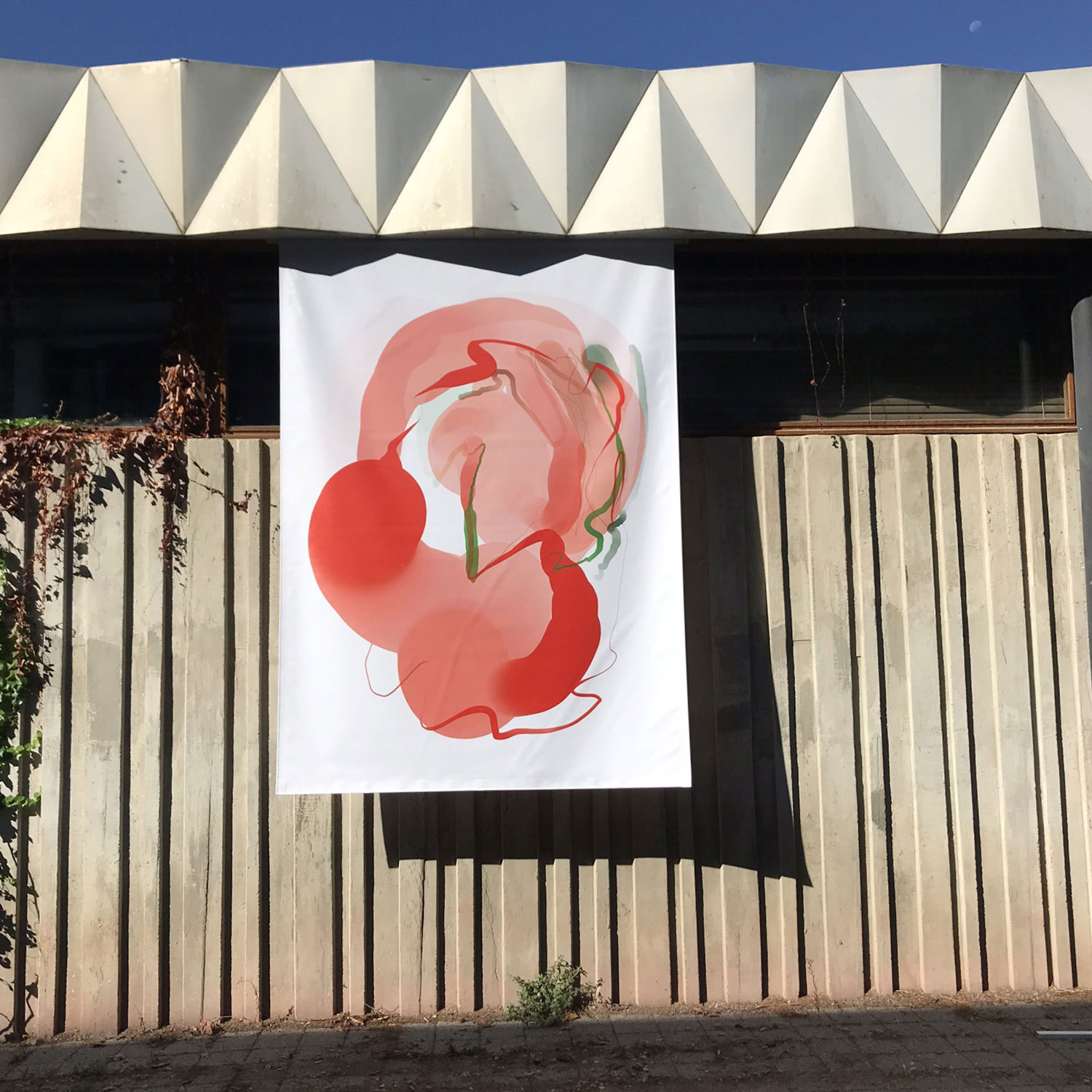
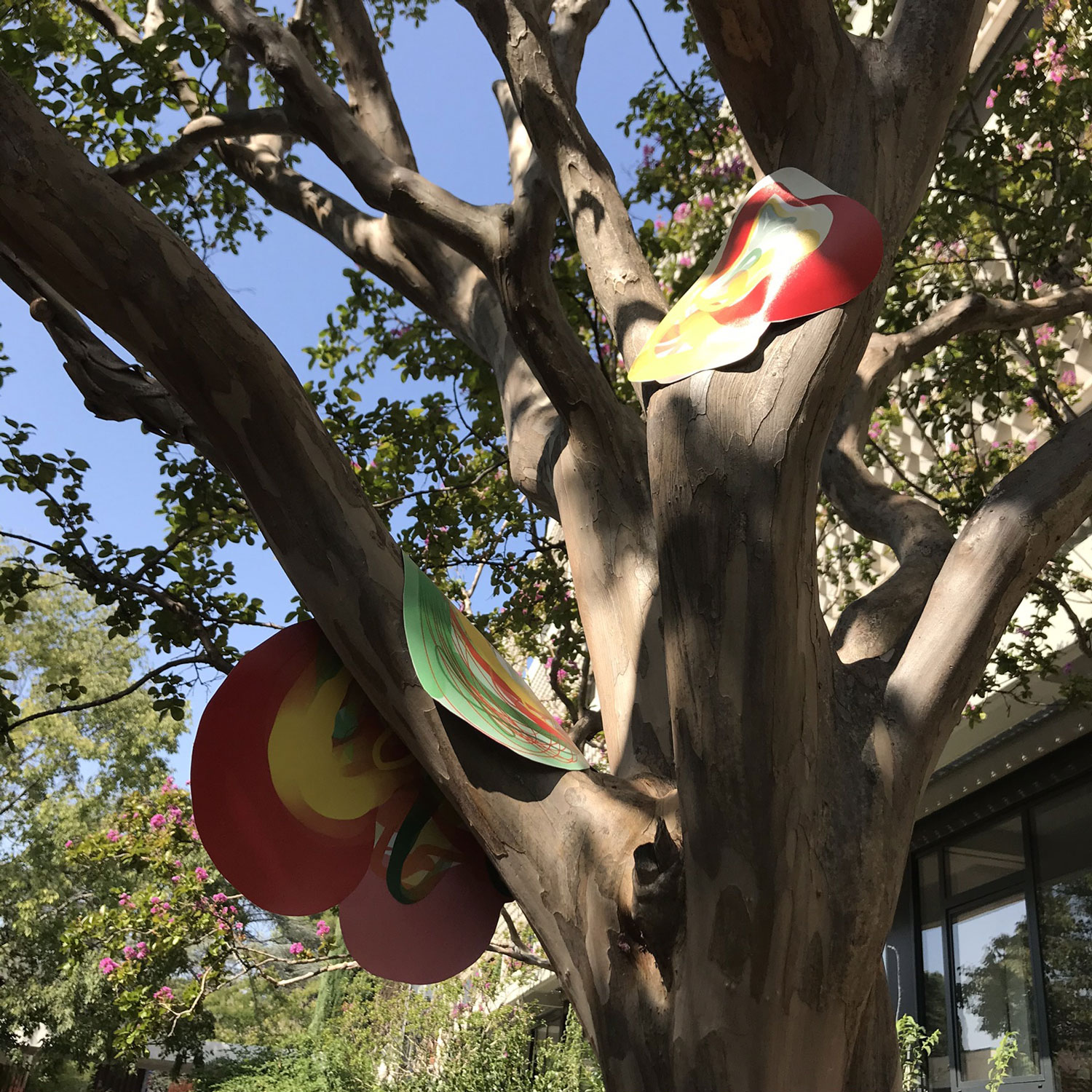
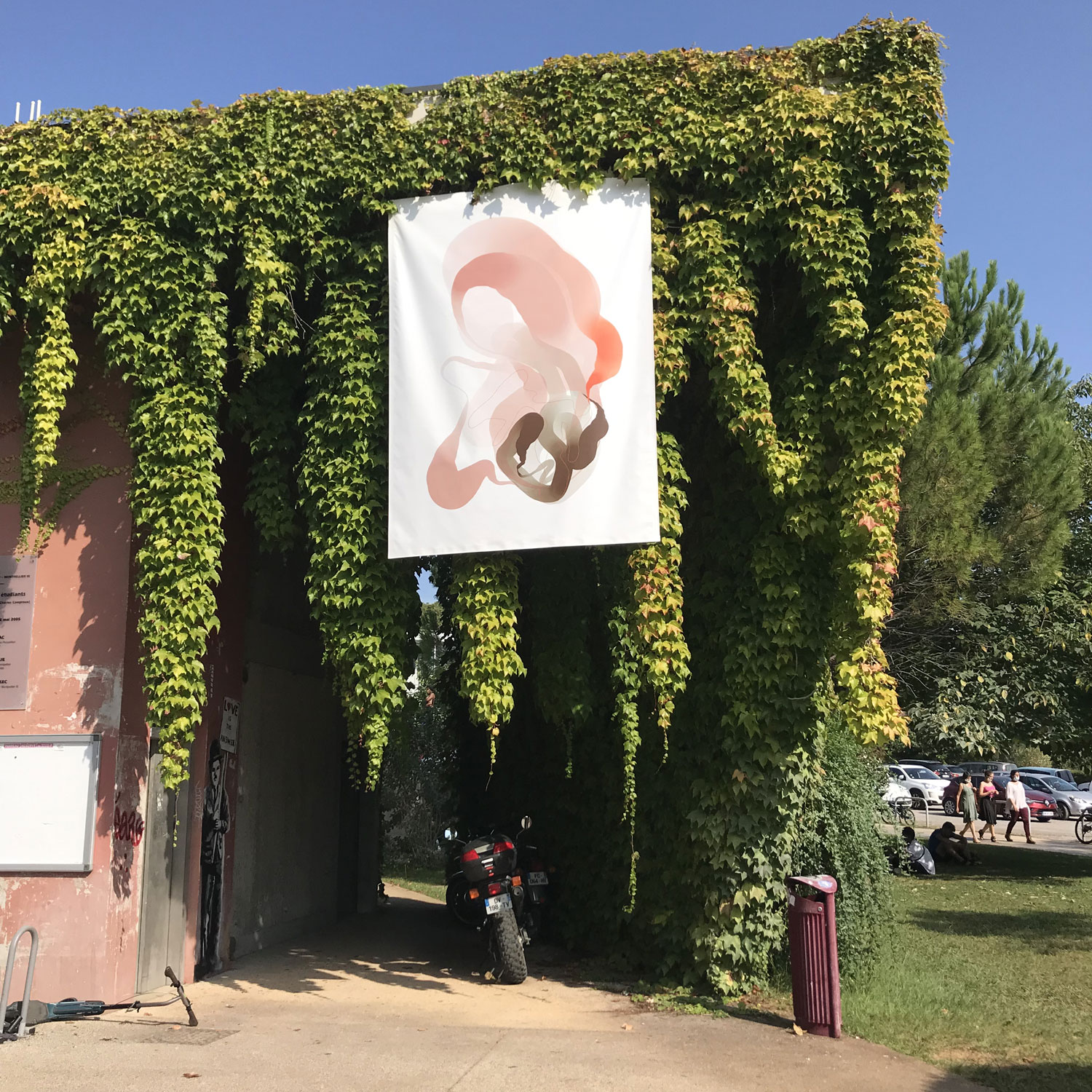
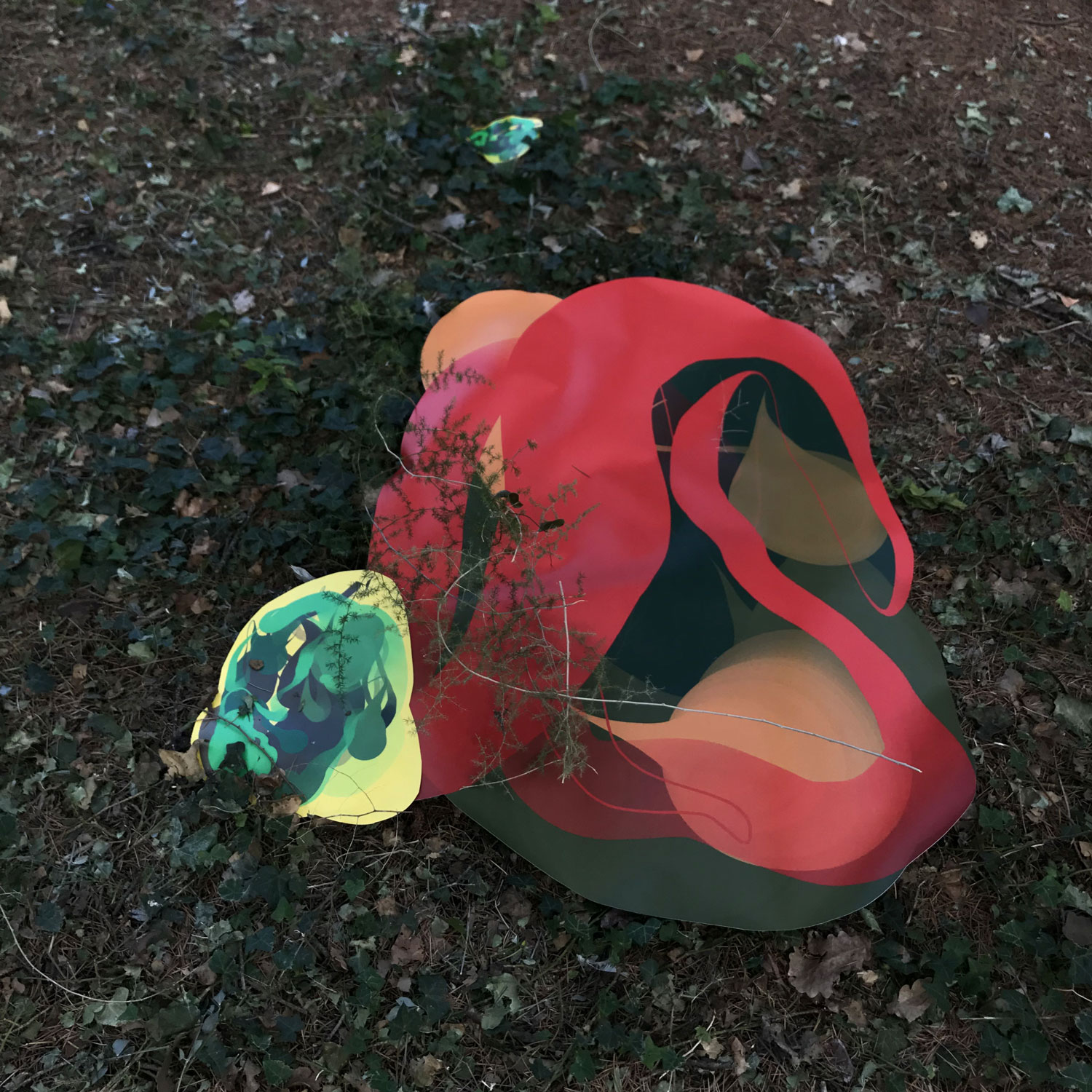
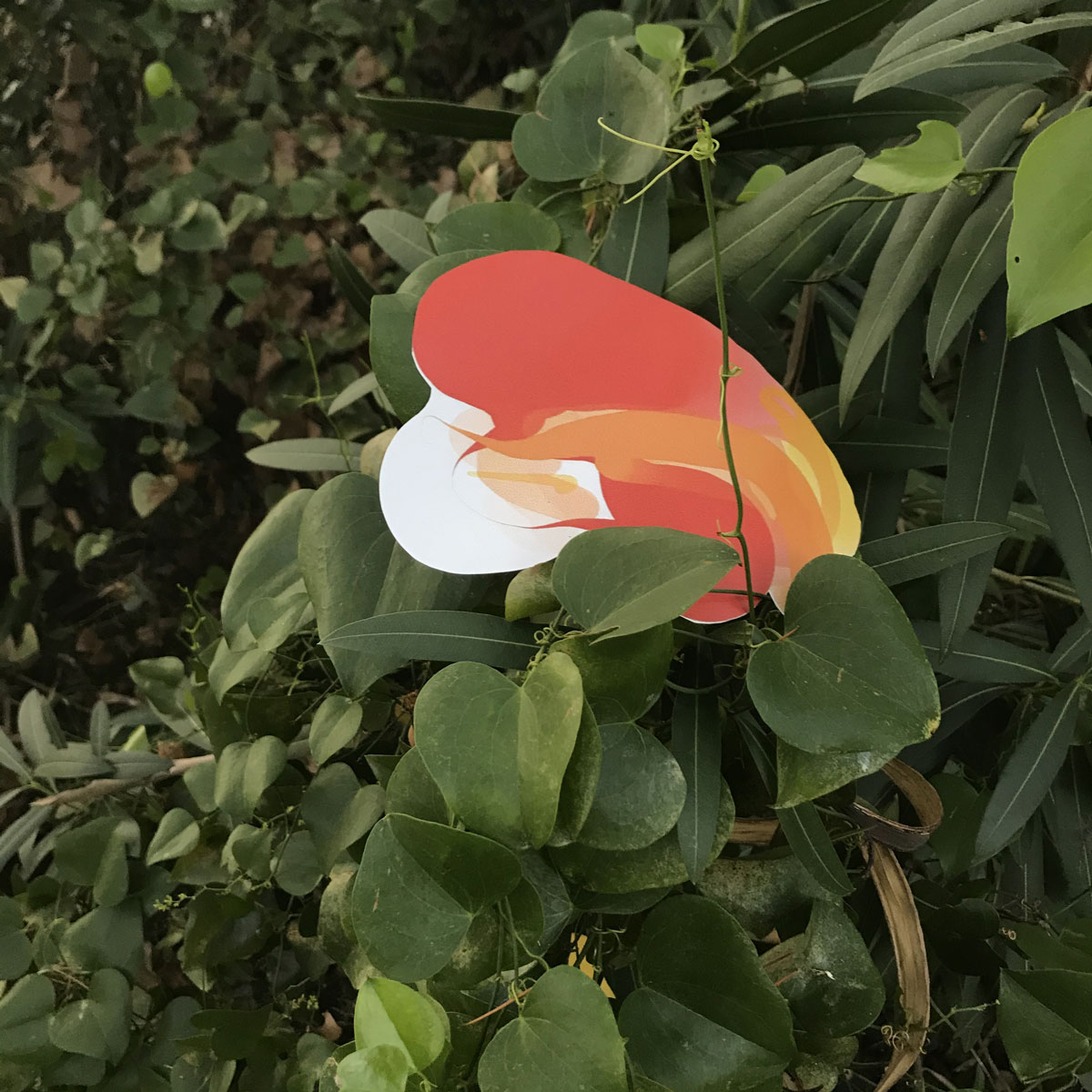
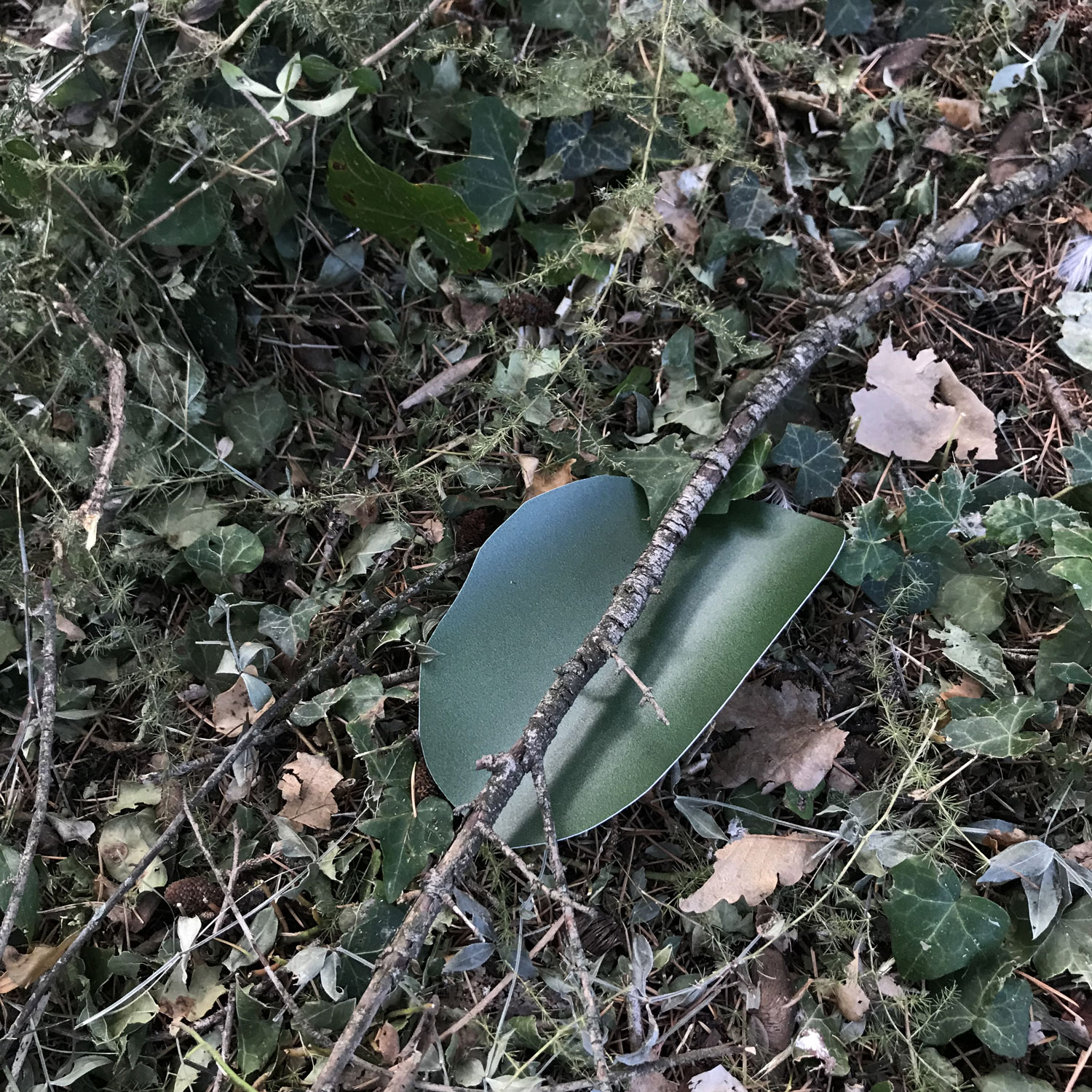
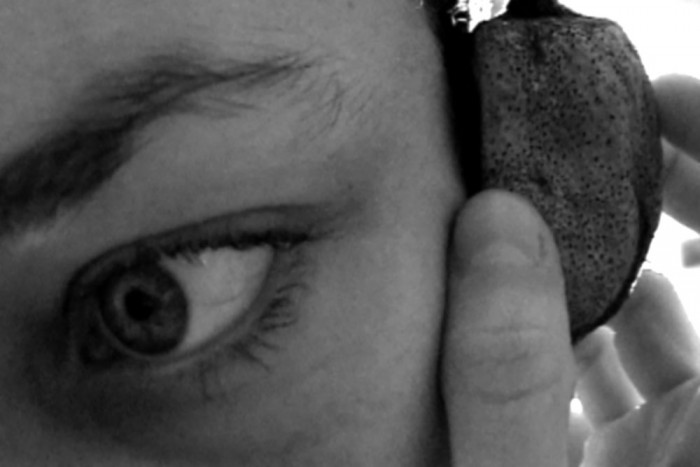
The Órganon exhibition is unfolding on the campus of the Université Paul-Valéry with a series of 32 drawings created on iPad, printed on vinyls of varying sizes and installed outdoors: suspended in trees or buildings, laid on the ground, etc. This series is also an exhibition protocol, which emphasizes the specific qualities of a campus.

Their creation on tablet uses tools derived from analog mediums (pencil, airbrush, oil or wash shapes) transformed by digital processes. In Greek, the word Órganon refers to an organ, tool, instrument or logical sum. Here he evokes entities with ambiguous bodies, human or artificial bodies, which are beginning to proliferate on the campus.

The Probe

Light projector, camera, screen, amplifier and speaker, computer, program, cables
L’Art dans les chapelles festival, Pontivy (FR), Notre-Dame-du-Moustoir, Malguénac, 18 July – 22 September 2020
Please note that the video shows the French version in a church, but the behavior and the text are aimed to be rewritten each time in situ.

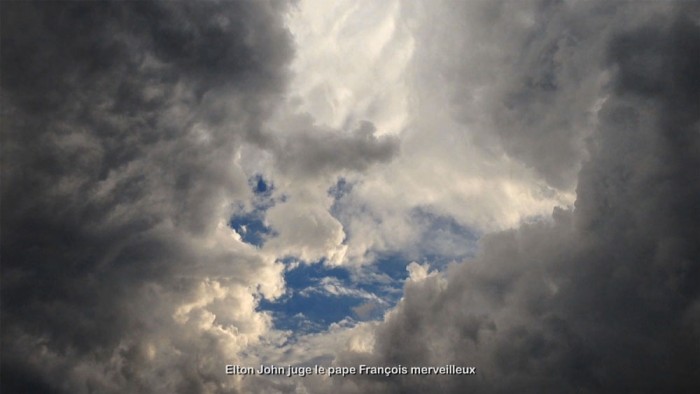
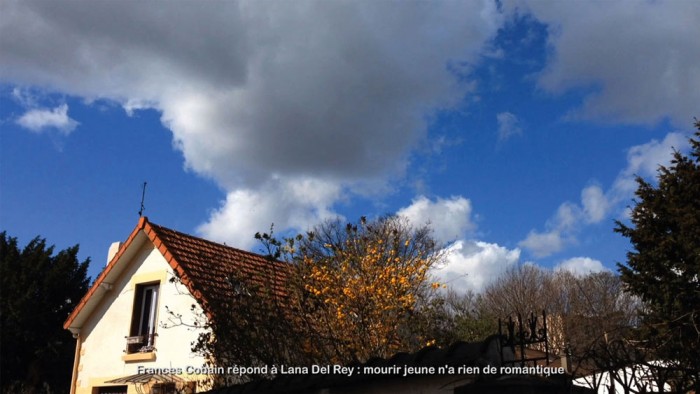
Video capture (French version of the installation, with English subtitles) :

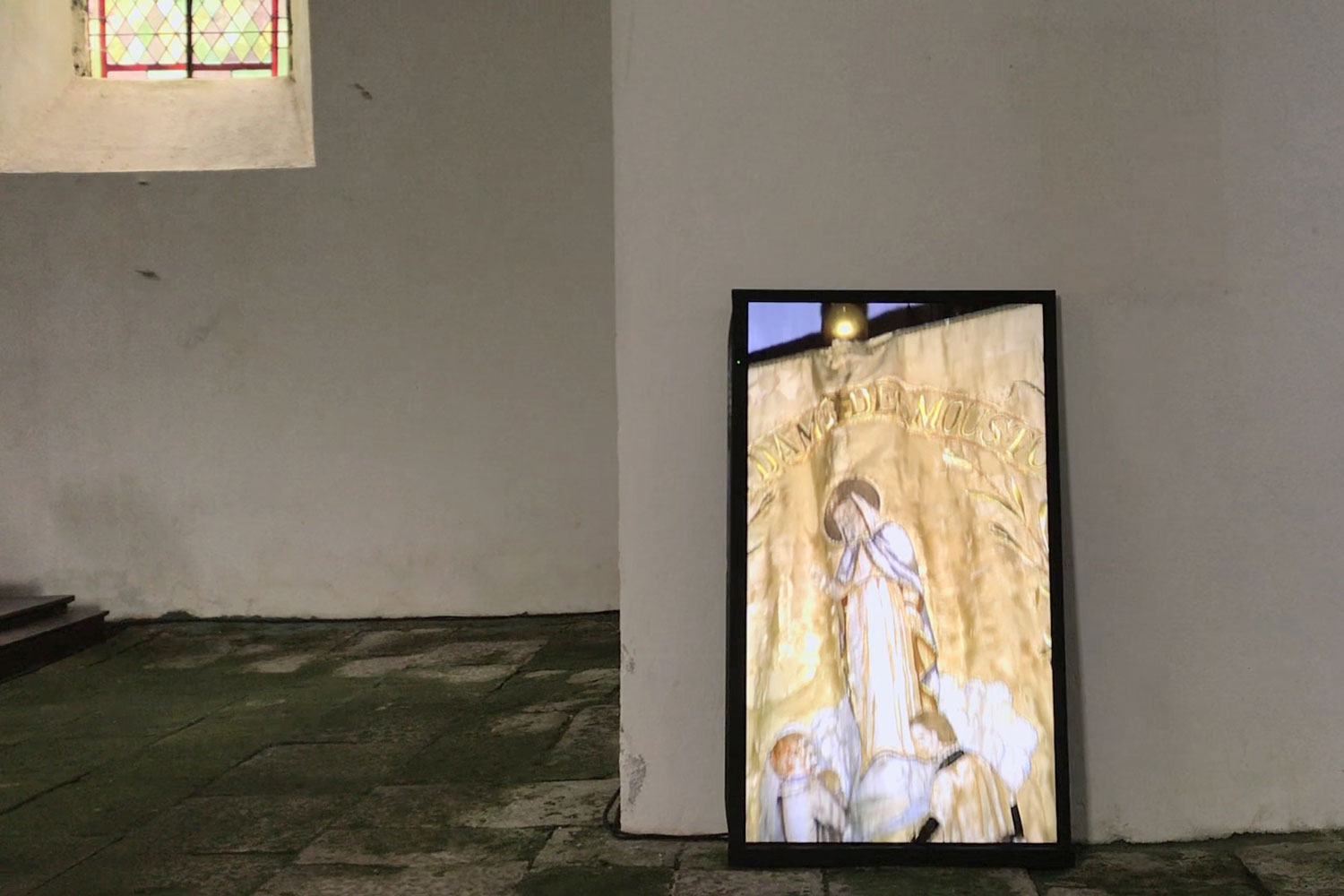
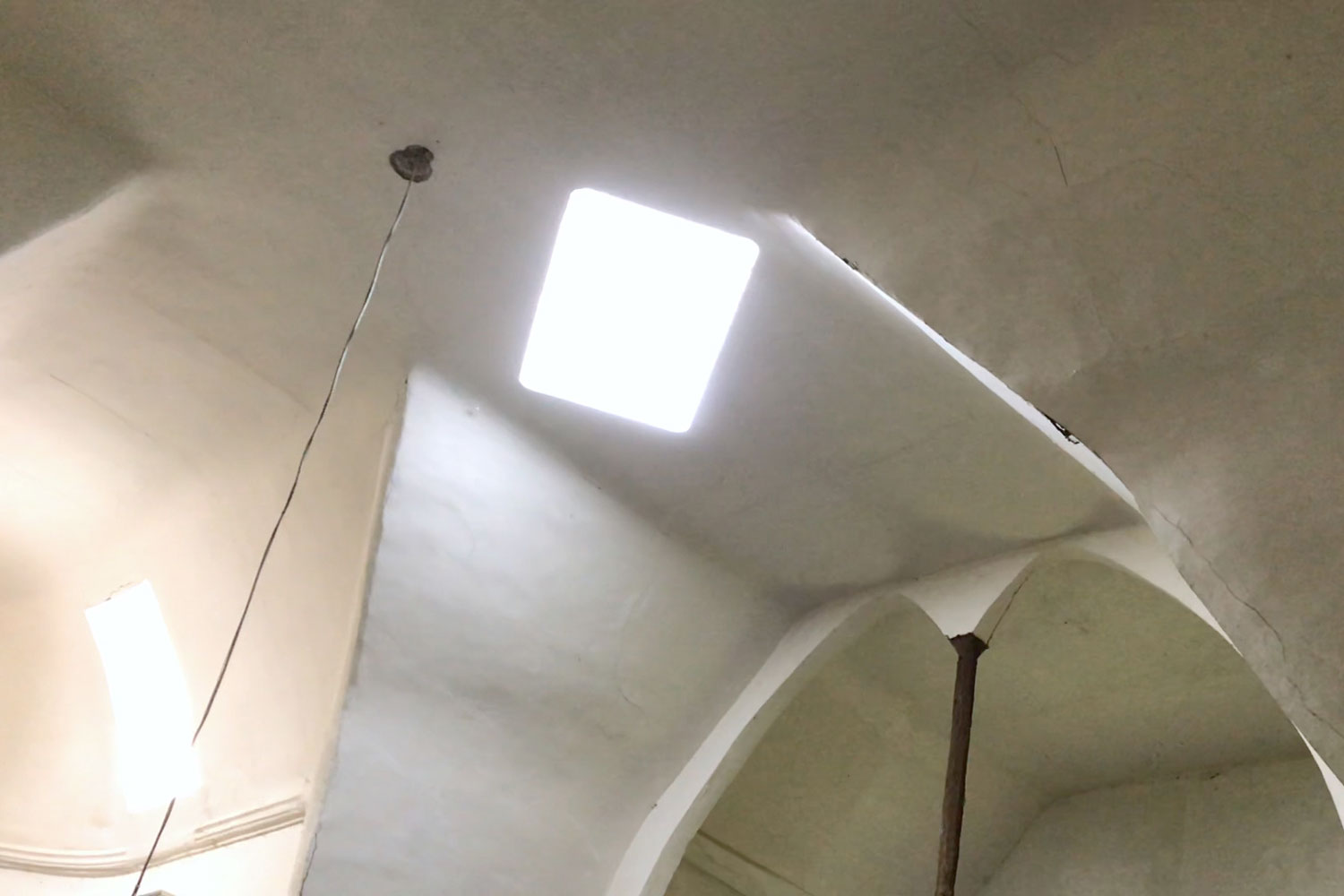
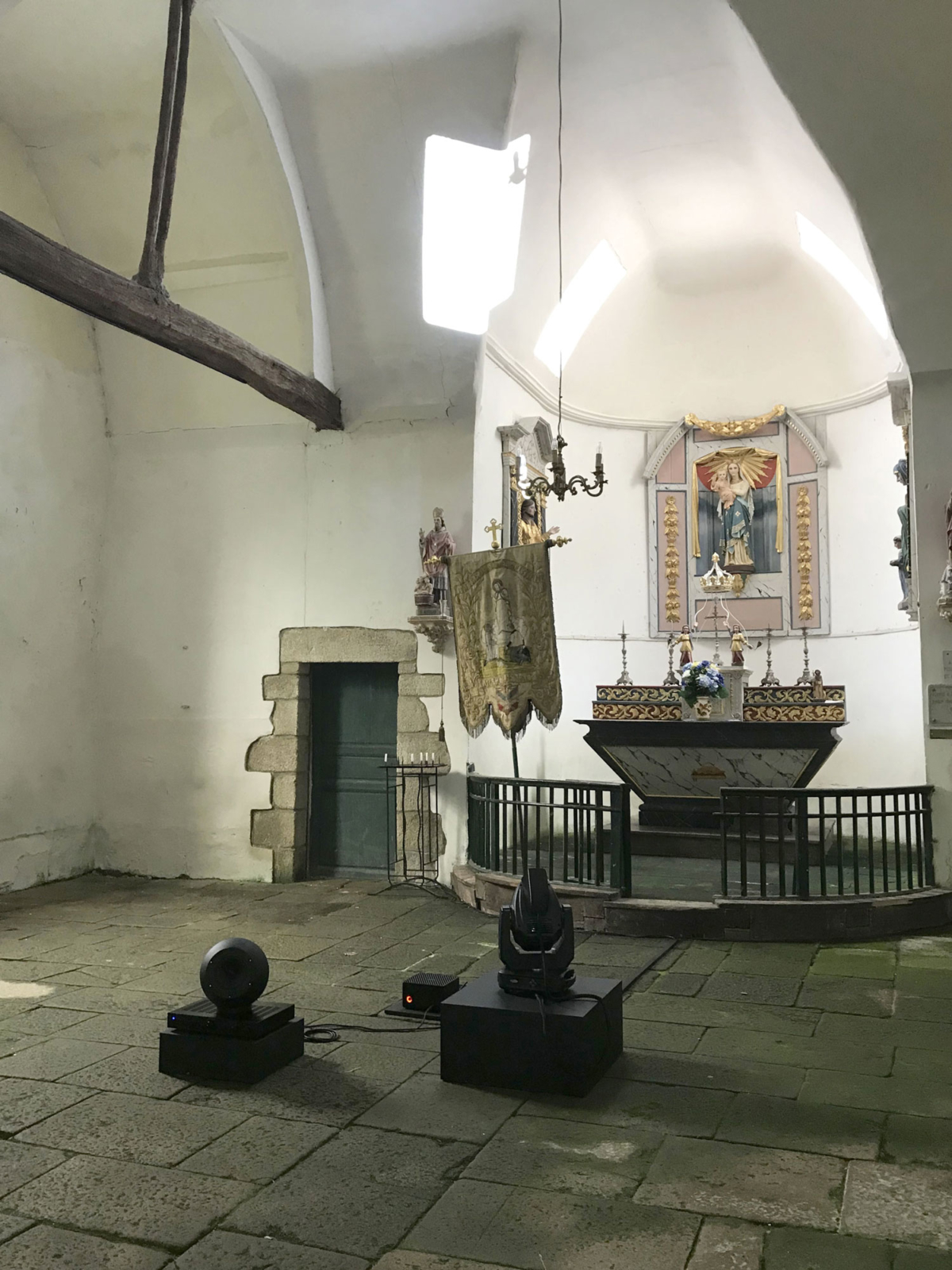
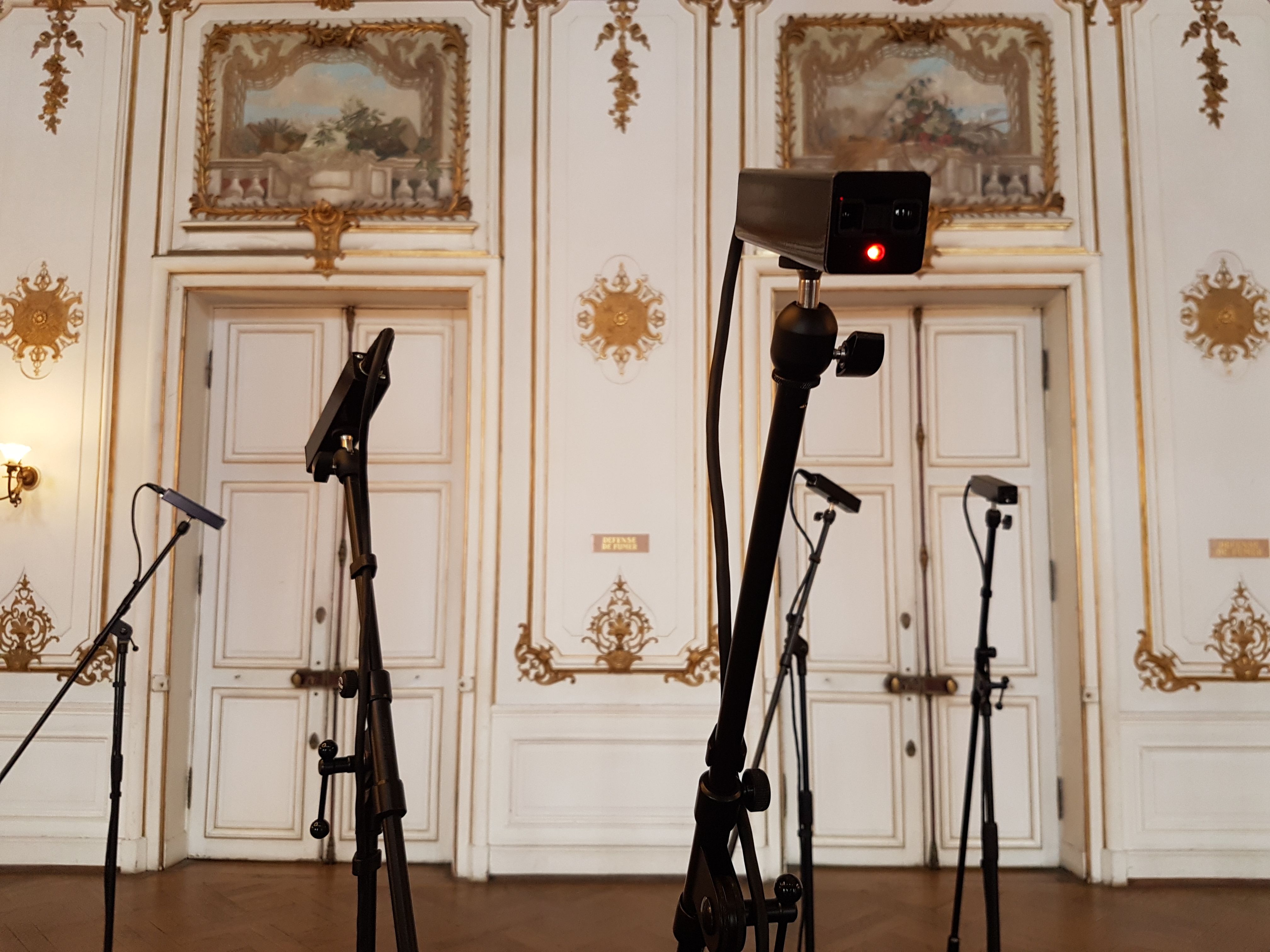
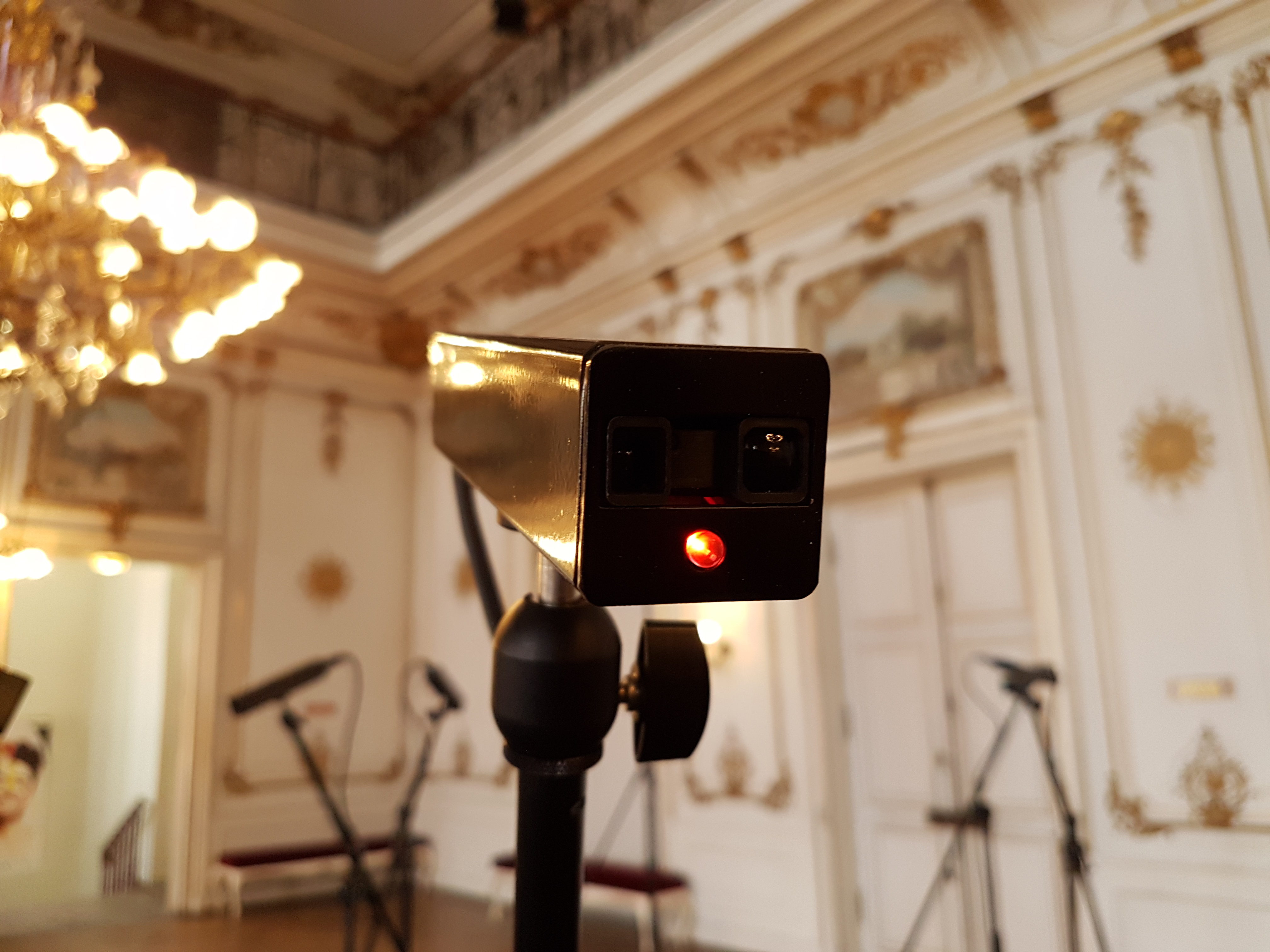
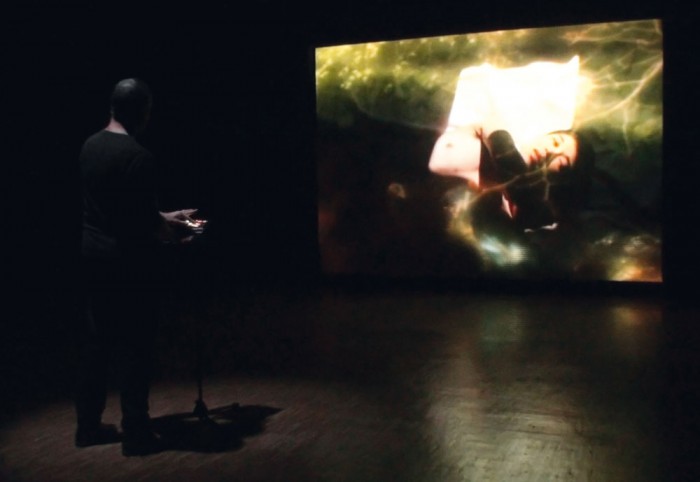
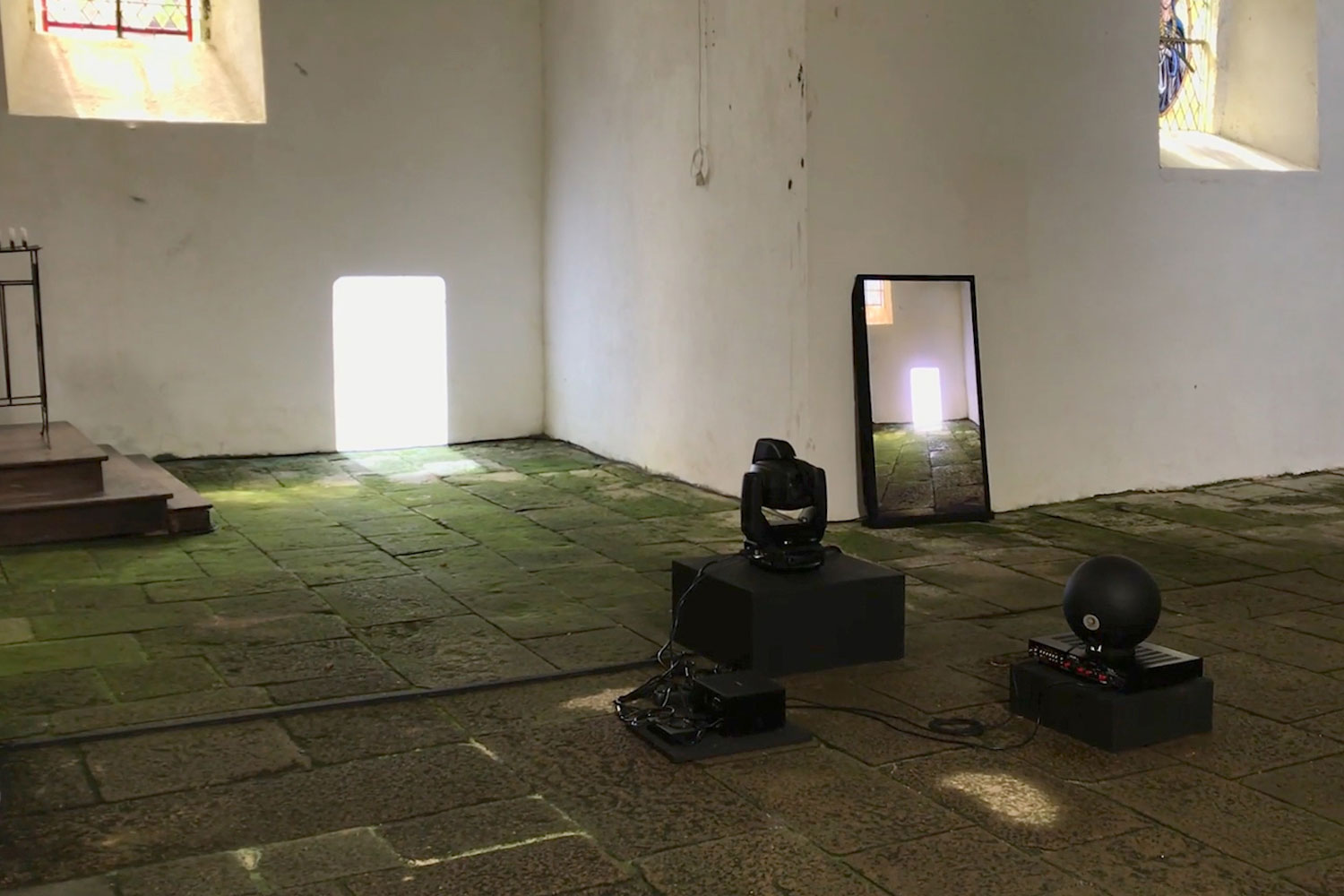
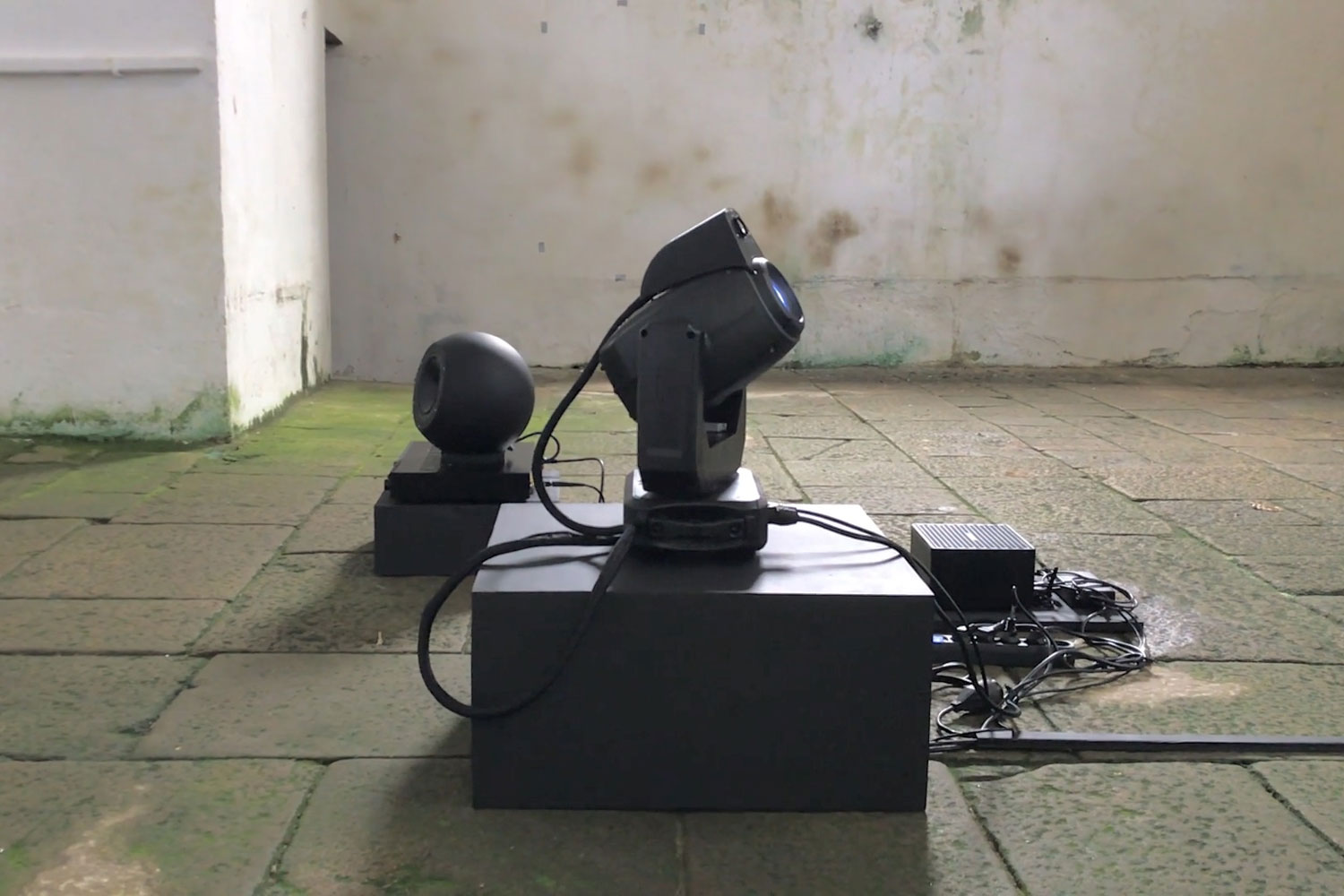
A projector turns on itself, slowly, exploring the space around it. It projects an intense rectangle of white light that it moves over all walls and objects. It also carries a camera, which films exactly what it illuminates. His image is shown on a large screen, placed nearby against a wall, like a painting: we see what he sees.

This apparatus speaks, in a synthesized voice, as if it was thinking aloud and trying to describe what surrounds it. It searches, stops at details, tries to understand space and objects, wonders about this place and its meaning but also about his own status and perception. Sometimes it seems to react to the presence of humans.

The Probe thus installs in a space the fiction of a non-human and living entity that inhabits it, like an artificial and panoptic force. The apparatus can also evoke the religious expectation that we have of technology, especially artificial intelligence, whose recurring motif is the surpassing of human capacities.

The language of the work calls up several registers, from surveillance devices to images of miraculous apparitions in classical painting, where the irruption of a ray of light often represents the emergence of the divine or a revelation. Here, the direction of the light is reversed: instead of coming from the outside, it emerges from the inside, as if the space had been turned upside down to become the theatre of an apparition and a questioning of the visible.

Coproduction by L’Art dans les chapelles
Engineering and programming Etienne Landon – thanks to Ben Kuperberg
Ecotone

network installation, 2015

Network installation (2015)
Computer, internet-connected program, video projection or HD screen
Music excerpt from The Unanswered Question by Charles Ives.

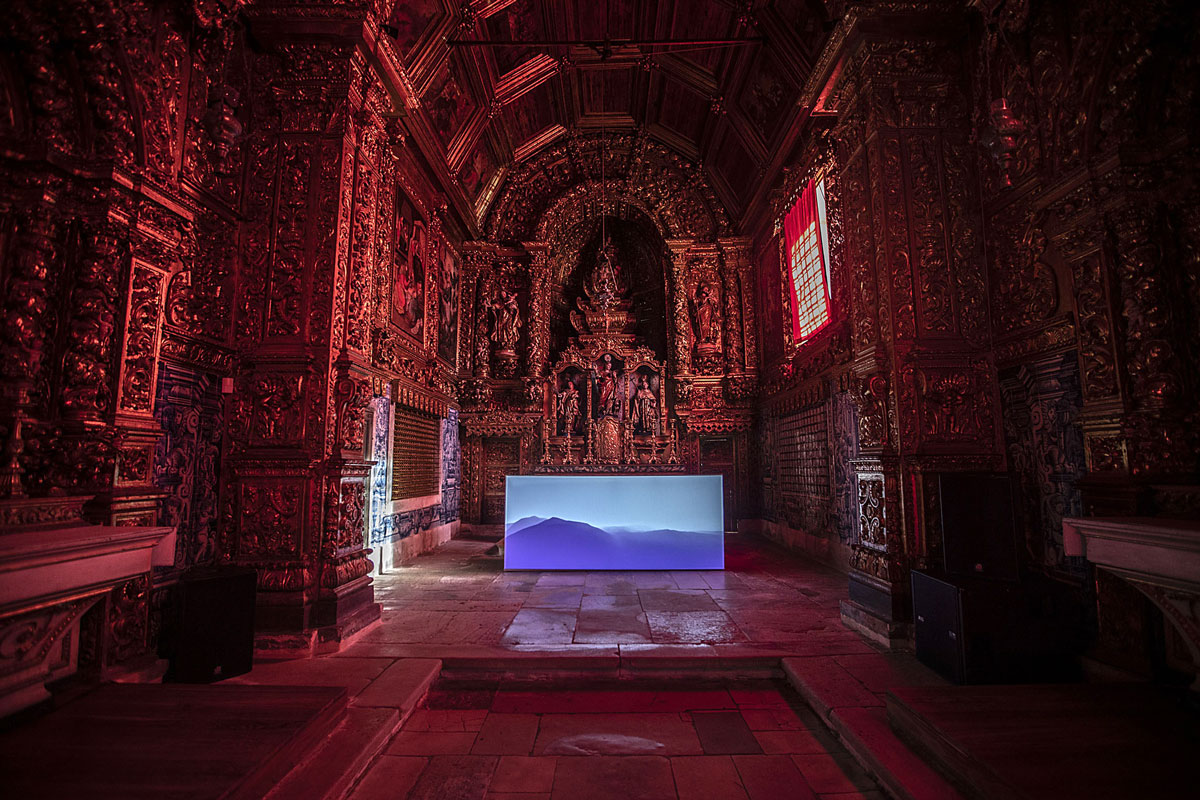
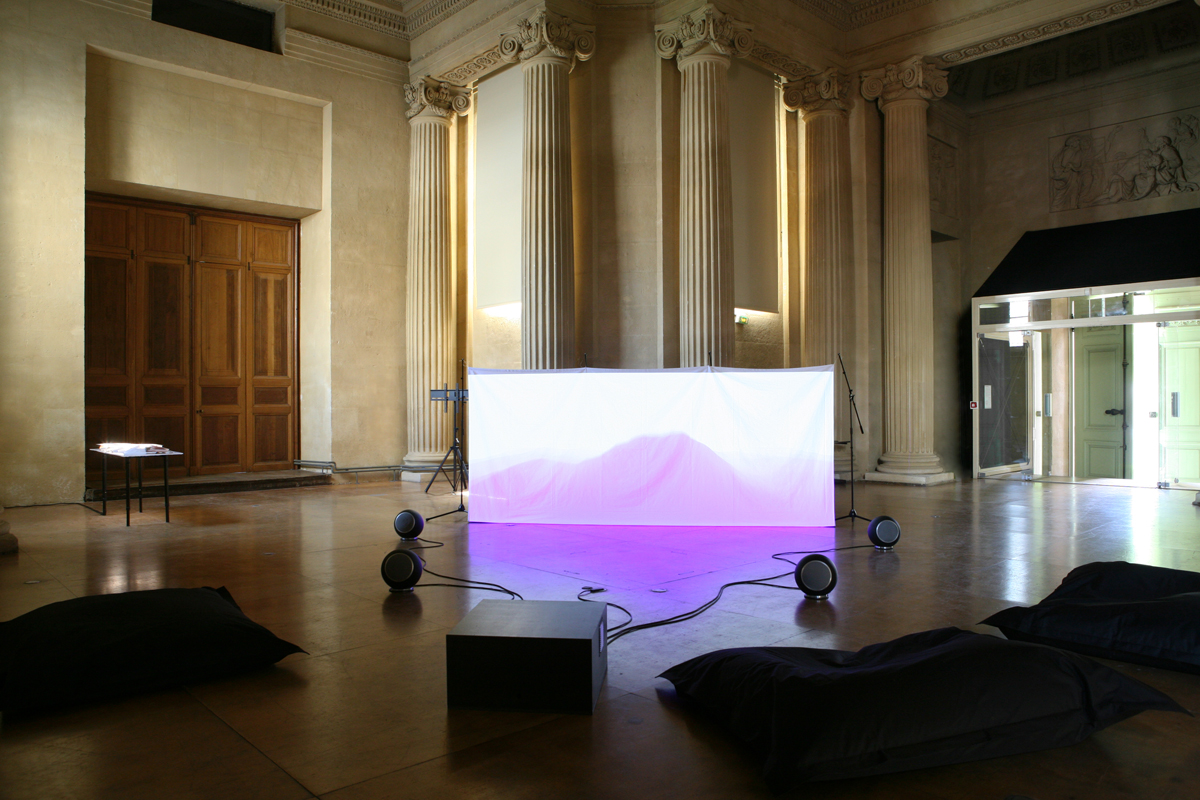
Ecotone addresses the relationship between the infinite need to express one’s desires and the exposure of oneself on the networks. The work captures live all the messages written on Twitter that express desires: “I would like so much”, “I dream of”, “I want too much”…

The messages are read by synthetic voices. They generate an abstract landscape in 3D, where each sentence produces a wave or a mountain. These personal and sometimes very intimate thoughts express as well love desires or life dreams as those of a pair of sneakers. This artificial paradise moves slowly towards us, without ever stopping, like an addiction that would never stop.

Ecotone, exhibition view, Criatec, Carmel church, Aveiro, Portugal, 2019

Programming: Olivier Guillerminet. Coproduction: Thierry Fournier, Lux Scène nationale de Valence, with support from Scan Rhône-Alpes grant, Dicréam grant, with support from Synesthesie.

Sous-ensemble

installation, 2015

installation (2015)

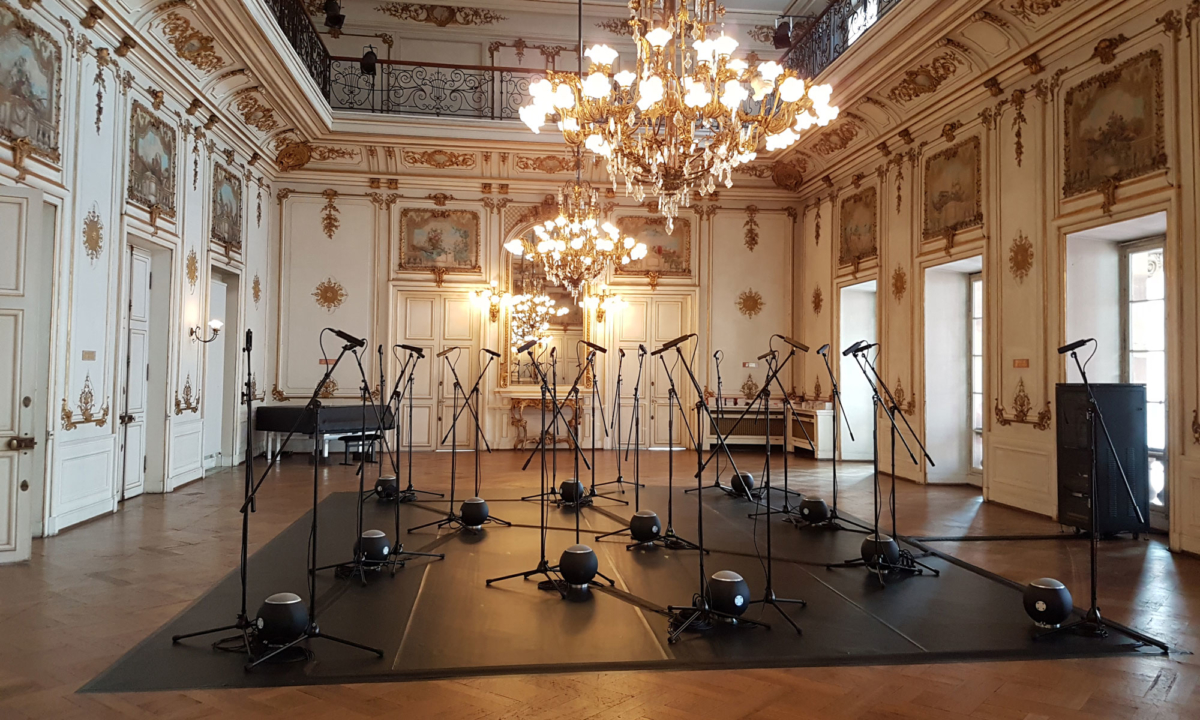
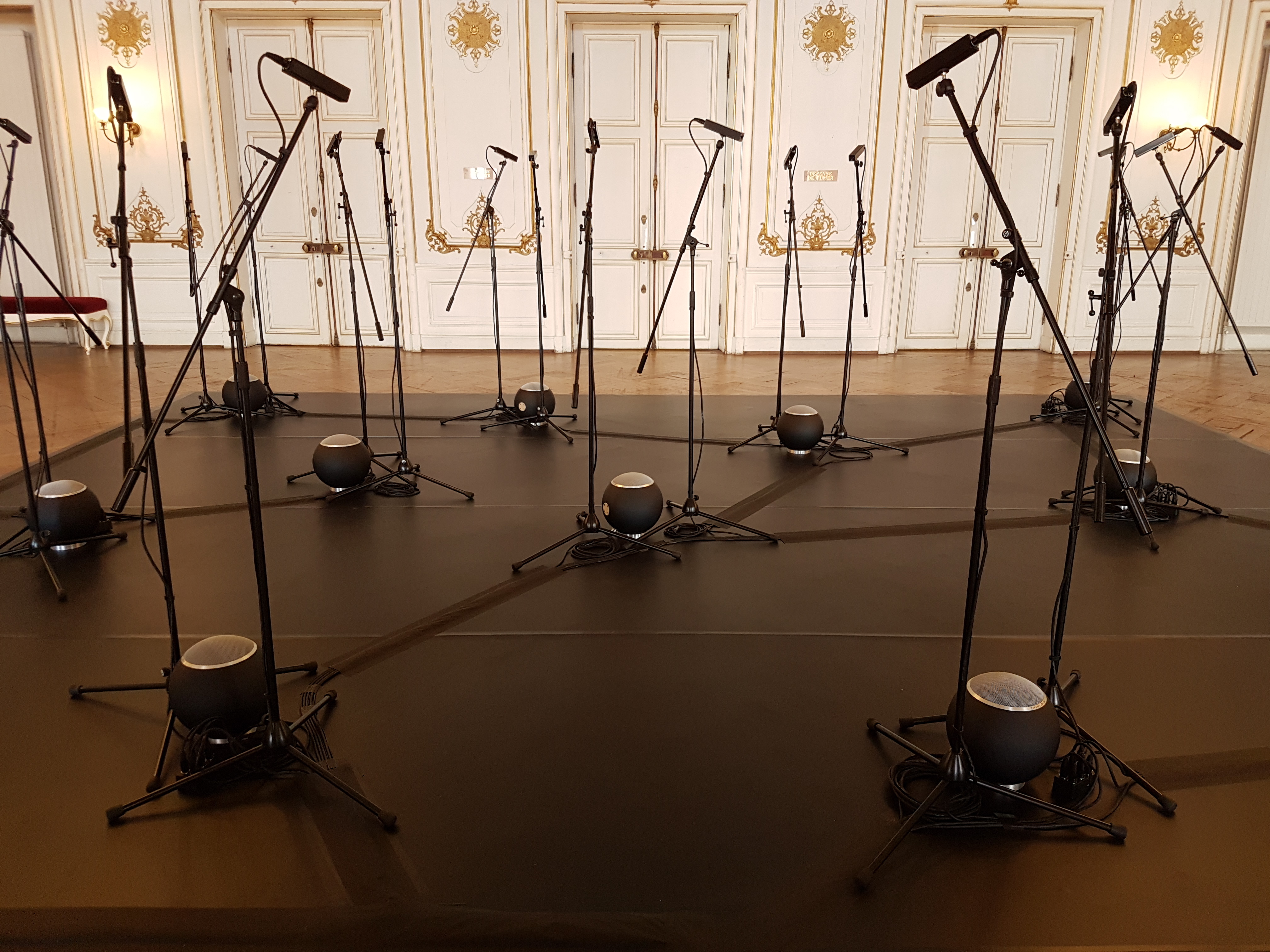
In a space similar as a recording studio, the presence of the visitors makes appear, one by one, the sounds of the instruments of a symphony orchestra during its tuning – until a complete reconstitution when a group is present. However, this warm-up never stops: the sound is held in a perpetual suspense, appearing and disappearing according to the visitor’s behaviors.
Created with the collaboration of the Lille National Orchestra. Engineering and artistic collaboration: Jean-Baptiste Droulers. Computer programming and spatialization: Mathieu Chamagne. Captation apparatus: Alexandre Saunier. Production: Bipolar – Mathieu Argaud. Executive production: SmartFR – illusion & macadam. Coproduction: Pictanovo Interactive Experiences Grant, Lille3000, Lille National Orchestra. With the support of Le Fresnoy, National Studio for Contemporary Arts and DICRéAM (CNC – Culture and Communication Ministry).

Orchestra photograph © Ugo Ponte 2015

Precursion

network installation, 2014

In situ and network installation, 2014

The installation Precursion questions the relationships between democracy, communication and spectacle. A program randomly assembles: video footage made in the surroundings of the exhibition; news feeds in real time; and excerpts of blockbusters’ musics. It generates an infinite video, by combining these three elements. The resulting layering of meanings – sometimes comical, sometimes tragic – highlights a general storytelling shared by TV, reality shows and the blockbusters, that are always centered on the imminence of events or even disasters : the attention economy at work. The work always implies a 2-days session on location to shoot the videos.

Thierry-Fournier-Precursion-02

Thierry-Fournier-Precursion_EMO4282

Precursion was created within a residency in digital arts at Maison Populaire (Montreuil, FR) in 2014. Photograph by Emile Oroumov.

Ultima Thulé

series of 4 videos, 2013

Series of 4 videos, 2013
Created with Augmented Window 03 project, Marseille, 2013
Christine Breton, Jean Cristofol, Thierry Fournier and Jean-François Robardet

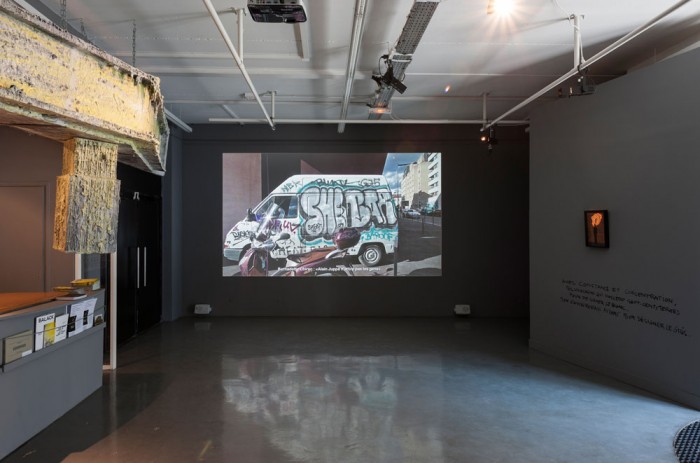
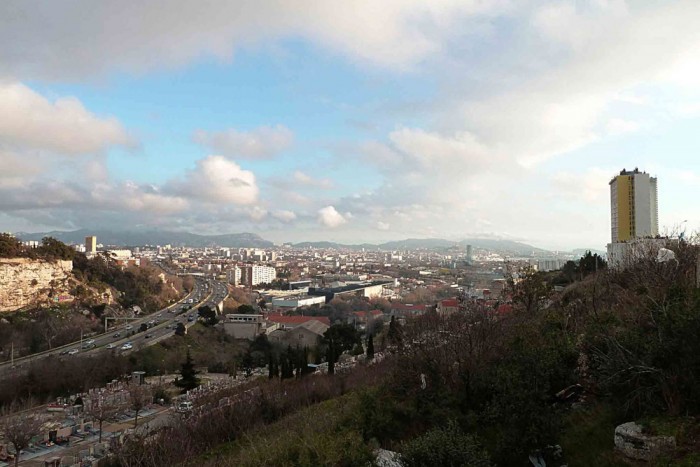
The Ultima Thulé series consists in four video loops shot in Northern districts of Marseilles: the Viste ravine; Oppidum of Castellas ; the Tour Sainte district and the Lyon and Zoccola streets with the Coptic church and the clandestine flea market. The viewer access to the course of a view drawed by a body in these urban spaces.

The Greek explorer Pytheas, who was based in Marseilles, is the first to have written of “Thule” after his travels between 330 BC and 320 BC to the undiscovered islands of the North beyond Britain. Since the Medieval period, the word refers to the borders of Europe and by extension to the farthest lands we could point out.

Production : Zinc / Friche de la Belle de Mai, with the support and guidance of Dominique Poulain in Höfn. Many thanks to Emil Elias, Father Aghnatyous Ava Mina and the community of the Coptic Church of Marseilles.

Dépli

installation, 2013

Installation, 2013
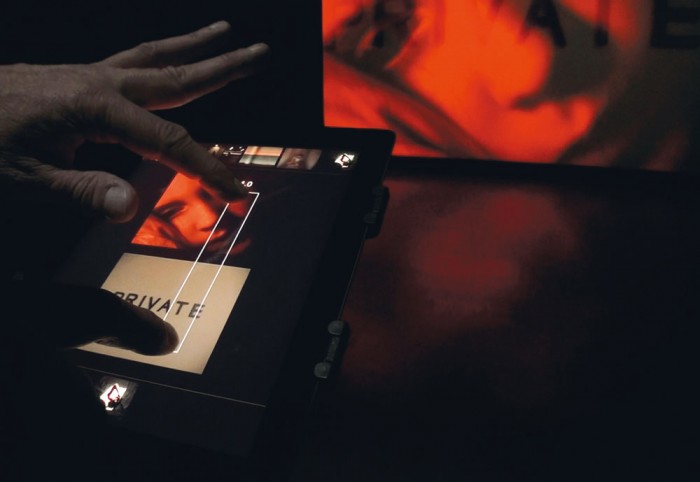
In dialog with the movie Last Room by Pierre Carniaux

Artist Thierry Fournier teamed up with director Pierre Carniaux to create together a diptych, composed of the interactive artwork on iPad Dépli and the film Last Room, both based on the same footage in Japan. The project proposes a new form of cinematographic writing that engages the viewer’s gaze, status and practice.

The film Last Room combines stories shot in hotel rooms with a collective history surrounding the abandoned island of Gunkanijima. It deals with the relationship between the collective and the intimate, the spoken word and the landscape.

Dépli enables viewers to navigate through the film’s shots and space-time, using a tactile interface. A “playable” cinema, in which the viewer reclaims, through his gestures, part of the cinematographic writing. Developed on iPad, Dépli can be experienced individually at home or collectively, in an exhibition context or in a movie theater – after or before the film. The film’s space-time is treated as a seamless on-going matter in which the spectator navigates, through a tactile interface that involves him physically. This navigation can be felt as the path of a body and a gaze : moving within temporality, sliding or mixing from one shot to another, playing variations of the shot’s speed… Using an interface on tablet, Dépli can be showed and played in movie theaters, exhibitions or at home.

Fournier-Depli-11

Publications and prizes

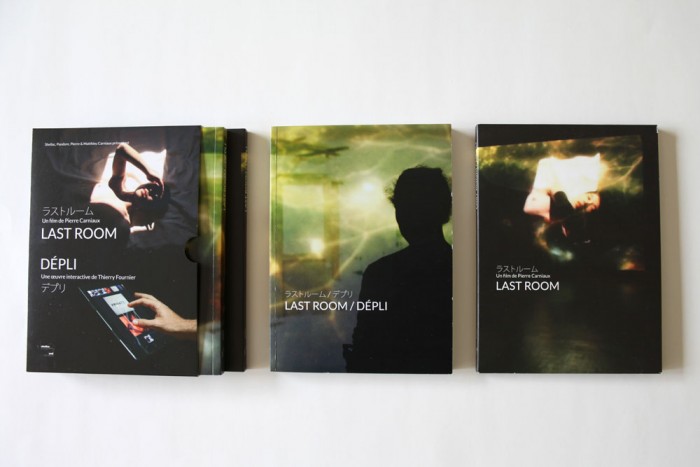
In March 2013, Shellac and Pandore have published a collector box
In 2013, Shellac et Pandore Édition published trilingual special box Last Room / Dépli including the film DVD, the Dépli iPad application and a critical book dedicated to the project, with texts by Philippe Avril, Nicolas Feodoroff, Jean-Pierre Rehm, Anne-Lou Vicente, Pierre Carniaux and Thierry Fournier.

Depli-publication_8014

Last Room / Dépli was selected by Hors Pistes Festival (Centre Pompidou, Paris), ZKM Karksruhe within the “10 best art apps” competition and exhibition in 2013. It received the “special jury prize for interactive cinema” at Festival du Nouveau Cinéma (Montréal Canada) in 2013. See also special issue of Archée online art magazine dedicated to the project.

Programing Olivier Guillerminet and Jonathan Tanant. Production: Lux scène nationale de Valence – Pandore – DICRéAM – Scène nationale d’Evreux Louviers.

See you

installation, 2008-2012

Installation, 2008-2012
French title : A+

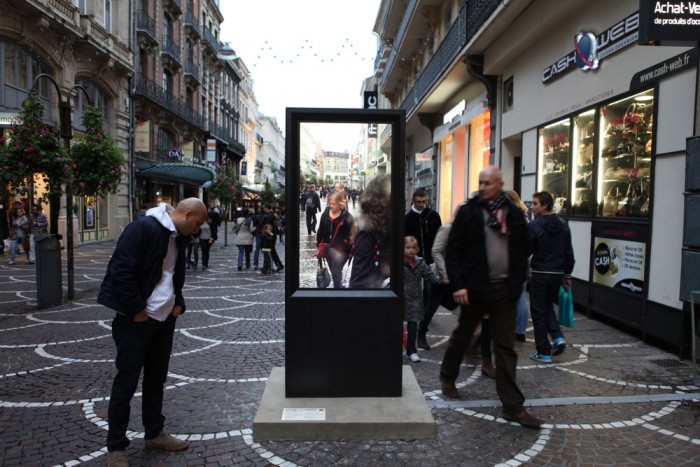
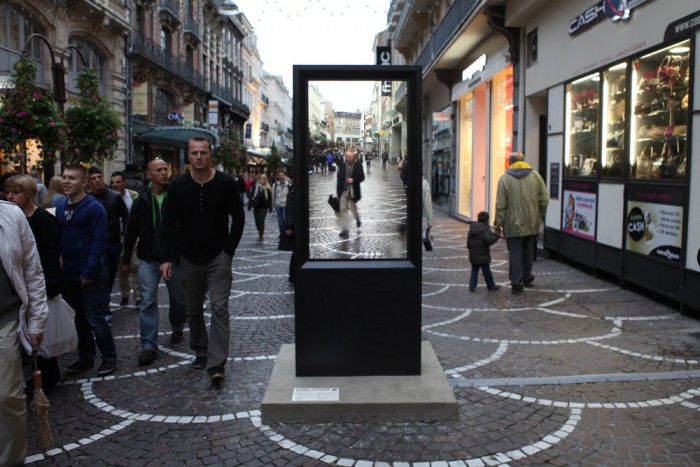
In an urban space, a large steel stele shows a screen that broadcasts exactly the image seen behind it, like a window – but constantly delayed by 24 hours. The public is in turn actor and viewer of the same scene, between those who pass in the image and those who observe them. A future and a past face each other, through a screen.

Thierry-Fournier_A+_7746

Production Lille3000 and Pandore Production, executive production Bipolar. With the sipport of Le Cube.

Limbo

installation, 2011

Installation, 2011
Camera, computer, real time program, IR lights, projection, variable dimensions.

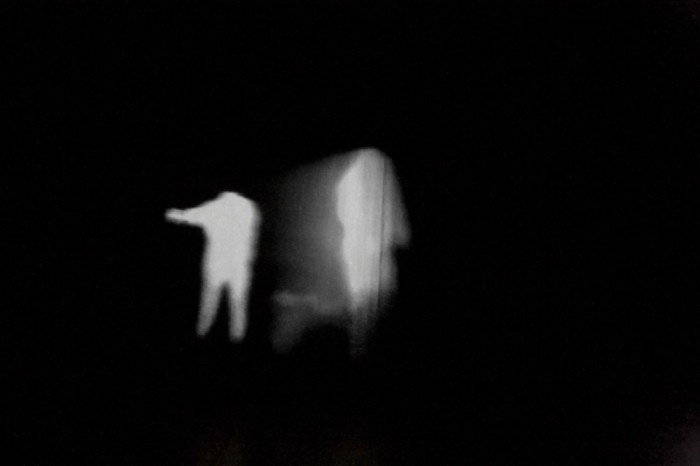
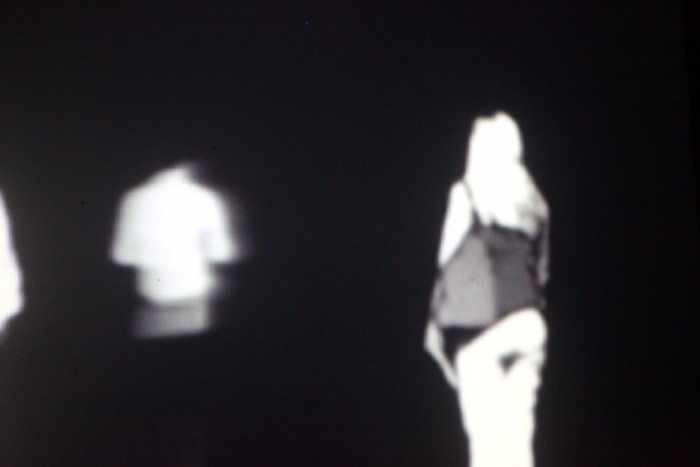
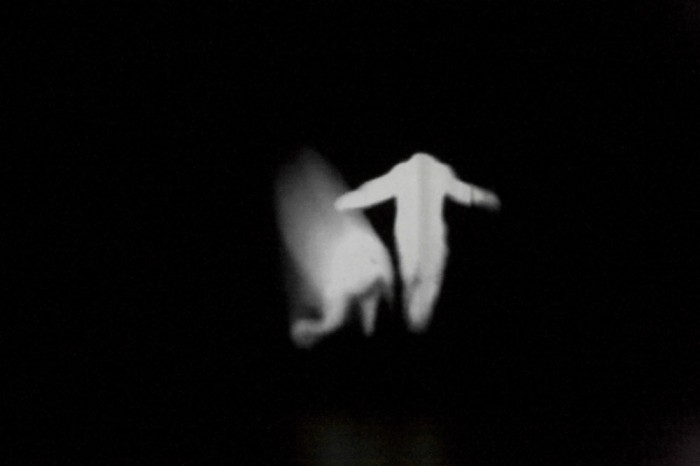
Limbo confronts the audience with spectral shapes that seem to be generated by their own movements, but in a different space and temporality. Blurred and saturated, reversed, delayed and extremely slow, these white shadows look similar to the humans, as they seem irreducibly foreign.

Thierry-Fournier-Limbo_5475

Thierry-Fournier-Limbo_7077

Fermata

installation, 2009

Installation, 2009

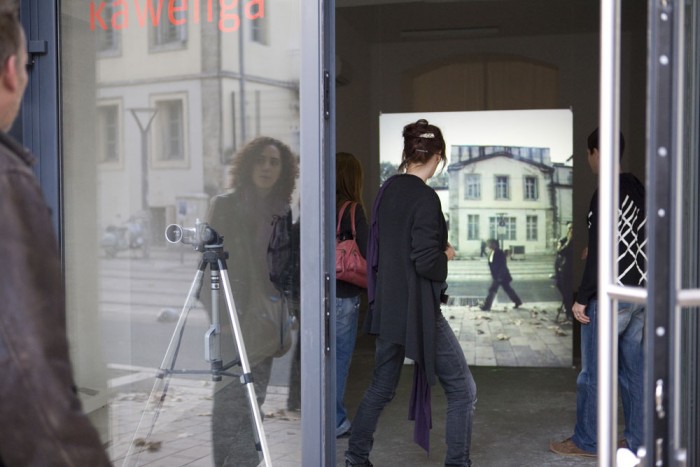
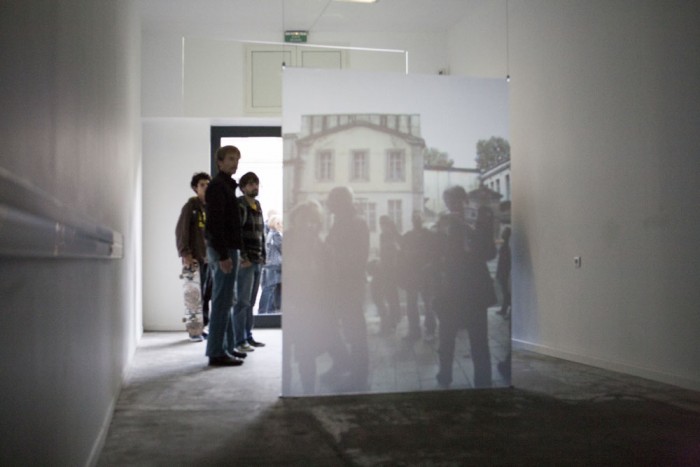
In a gallery’s window, a camera films the street. Its image is projected on a large screen behind it. As soon as one or more visitors enter the room, the video’s speed is disturbed by their movements and gestures. If the visitor stops, the image is frozen but a vibration, which reacts to the slightest gesture, lives on. While image and sound are frozen, the camera goes on recording the image of the street: if the visitor moves again, the video starts up again, speeded up, and becomes gradually synchronized with the real time outside. Passers-by see themselves in a mirror controlled by other observers, who are themselves part and parcel of the scene seen through the window. The illusion of a power over time becomes the springboard for a generalized loop of exhibition and collective interaction.

Thierry-Fournier-Point-dorgue_5937

Thierry-Fournier-Point-dorgue_5867

Point d’orgue was created in 2009 within the frame of a residency at Kawenga (Montpellier, FR).

Infocus

installation, 2009

Installation, 2009

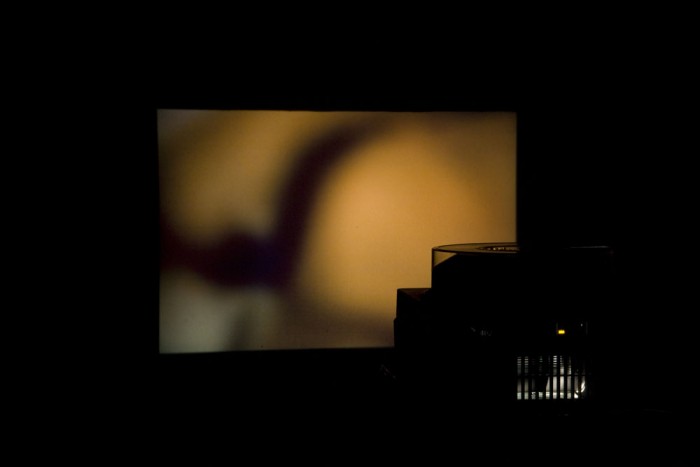
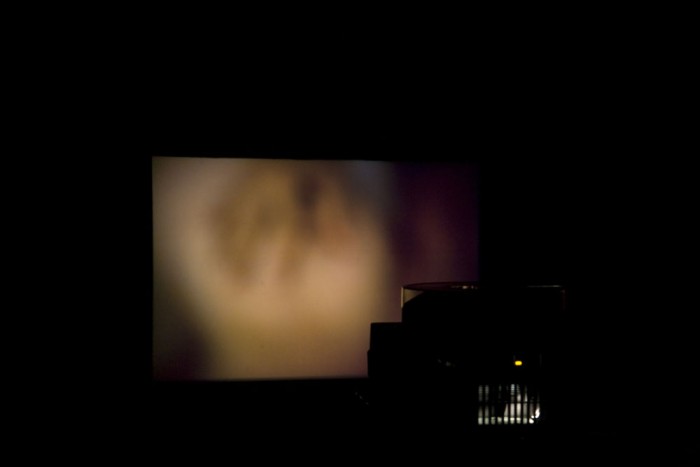
A series of fixed-focus photographs of the body are taken with an extremely short depth of field, the position of the operator being the only variable parameter. Almost entirely blurred, these photographs are projected with a slide projector on autofocus mode, thus unable to stabilize itself. A slight movement results from this permanent oscillation. The apparatus associates three instabilities and focusing concerns: from operator, the projector and the spectator.

Thierry-Fournier-Infocus_6788

Thierry-Fournier-Infocus_1571

Frost

performance, 2008

Performance, 2008
Thierry Fournier (apparatus and performance) / Jean-François Robardet (sculpture and text). Part of the Outside lectures performances series.

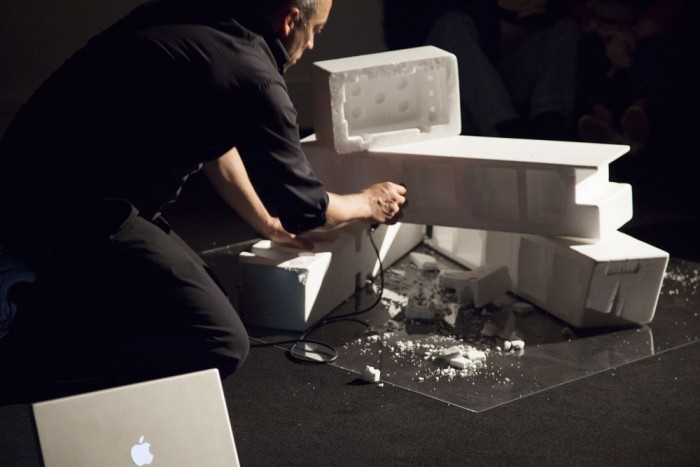
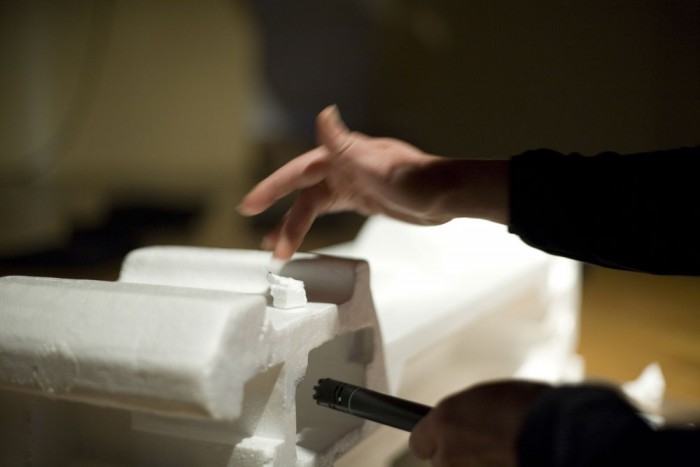
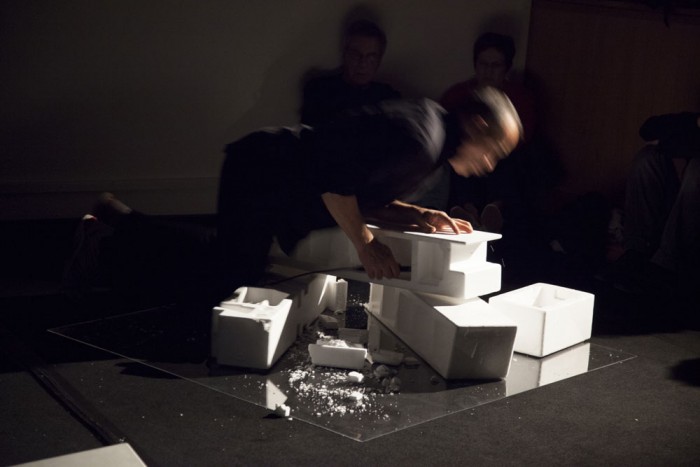
The journey done by a performer with a microphone on a polystyrene sculpture, becomes the sound metaphore of a polar landscape and architecture. The sculpture faces a bass amplificator on which the microphone is plugged, at the limit of the feedback, its sound transformed by a program into grans, rumblings and cracklings. The sound is permanently modulated by the performer’s gesture who modulates and excites the resonances in the sculpture’s holes. A gesture and a dance result of these actions, searching a balance between motion, sound and protection against the sound threats of the apparatus.

Thierry-Fournier-Frost-Nauczyciel_6899

Thierry-Fournier-Frost_1708

Thierry-Fournier-Frost_1726

Photographs by Samuel Bianchini.

Closed Circuit

performance, 2008

Performance, 2007
Part of the Outside Lectures performances series.

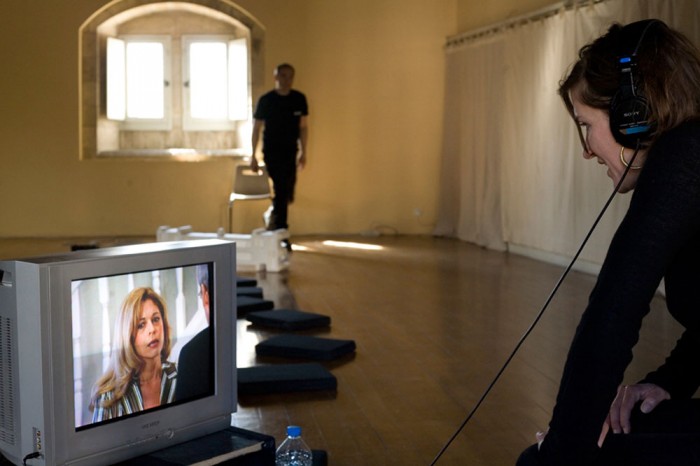
Seated with headphones in front of a TV during the commercial break and the evening news, Lafon must respect a certain protocol that demands that she exhaustively repeat everything she hears and describe everything she sees, which is physically impossible. The flow of speech and resulting stuttering directly express the tension between the spew of information that is delivered and a saturated individual attention span.

Video documentation:

Recording, October 25th 2008 – TF1 live 7:50 to 8:03 pm

Photograph by Frédéric Nauczyciel

Step to step

installation, 2008

Installation, 2008

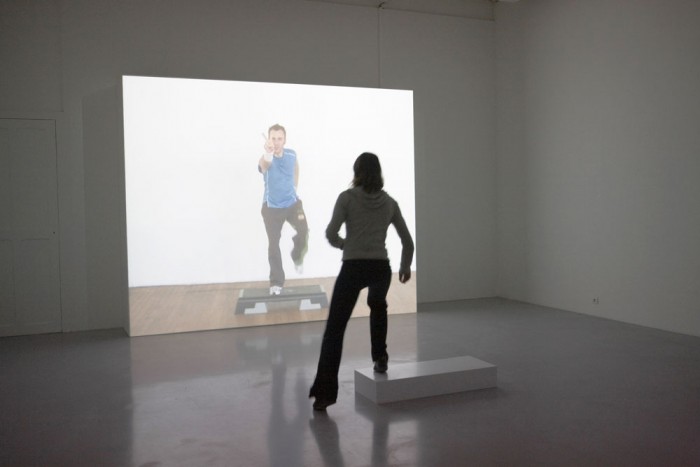
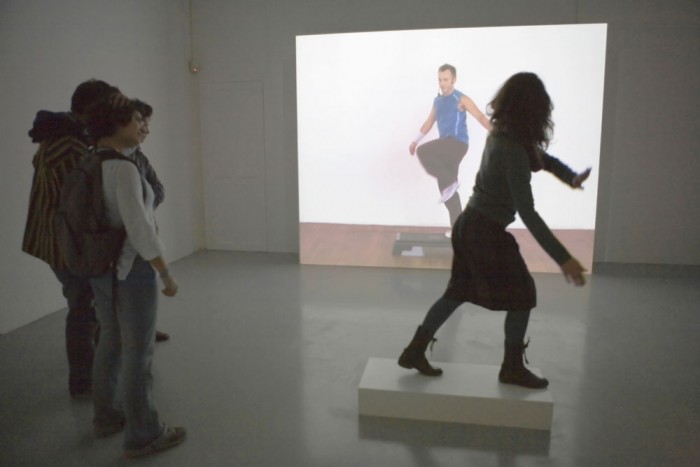
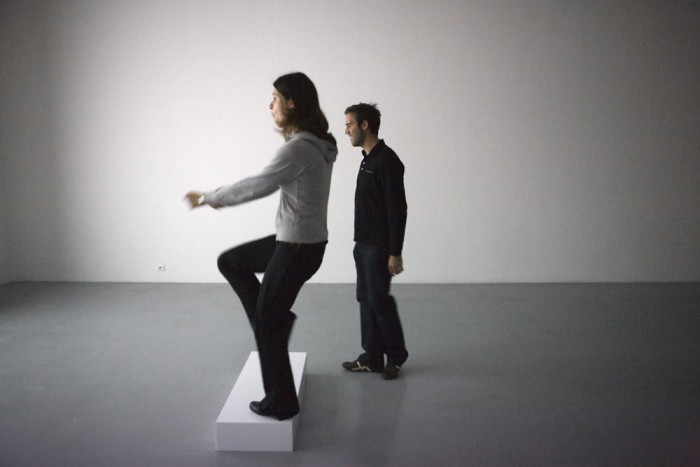
A video shows a fitness lesson, given by a coach with techno music and costume, facing a low white pedestal in a room. A soon as a visitor puts a foot on the plinth, the speed of the video begins to slow down, until getting completely freezed if the spectator climbs on it. The sound is reacting as well, the voice remaining comprehensible but slowing down until its extreme limit. A general and paradoxal loop is established between the coach and the audience : the “double bind” of an impossible imitation, and the never-resolved transfer of the artwork between the image and the spectator’s body.

Thierry-Fournier-Step-to-step-02

Thierry-Fournier-Step-to-step-20

Thierry-Fournier-Step-to-step-06

Vers Agrippine

music piece and performance, 2004

music piece and performance, 2004
Duration 12′. With the voices of Hiromi Asaï and Véronique Gens.

Performed as a solo piece on laptop, Vers Agrippine (toward Agrippina) is based on Handel’s opera Agrippina. It experiments a real time navigation through the temporality of a music. Playing with a computer program created for this work, the artist composes a navigation in an extreme slow-motion, through three musical layers: the first seconds of the overture, the first sentence of the first recitative, and the first seconds of the first soprano aria. This microscopic movement reveals all the musical matter but also its lines of forces and details, as in the aerial approach to a landscape.

Excerpt:

Photograph: Hiromi Asaï by Frédéric Nauczyciel.

Sweetest Love

film music, 2002

Musical piece (3 male voices and electronics), 2002
Composed for the feature film Ce qu’ils imaginent by Anne Théron
Performers: Jean-François Chiama (tenor), Jean-Christophe Jacques (baryton), Jean-Loup Pagésy (basse), Thierry Fournier (electronics).

Sweetest Love has been composed on three poems by John Donne, the 16th-17th century poet and philosopher, a contemporary of Shakespeare (Song, Women’s constancy, A fever). Written for three male voices (tenor, baritone, bass) and real time electronics, the piece alternates solos and trios, with a cappella and electronic sections. It explores the most fragile register for each voice, while every section is written in the same tessitura for the three singers. This required a very special care and work on tonality for the singers. The electronics are mostly based on pulsations and oscillations. The electronic relation with the voices becomes principally organic, evoking both solitude and the constant presence of the body.

Excerpts:


Core

musical piece and performance, 2000

Musical piece and performance, 2000
With the voice of Alyson Wishnousky

Core was composed after an interview with the Canadian dancer and performer Alyson Wishnousky, talking about her sensation during movement and dance. The composition of the piece is written like a counterpoint between spoken voice and electronics: vibration and momentum, changes from stillness to movement, phases of keeping and losing control, in the very substance of the music. The piece is very gestural, where the interplay with the computer and the analog filters plays an important part in the concert.

(…) it’s all about time and movement and space they all form the same patterns together at the same time so it makes the heart beat faster and the breath speed up and the body warm up and it generates heat like fire so thats where the movement and gestures relate (…) its all about air and breath and breath generates life and allows more space opens up more space in the body in the pores enters air and water and fire they mingle a continuous spiralling of the spine spiral waves waves continuous waves (…)

Extracts :


Photograph: performance with Emmanuel Berriet, ISEA / Divan du monde, 2000